

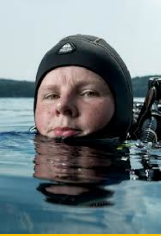
As important as corals are to marine ecosystems, scientists know very little about these slow-growing life forms because they’re so difficult to reach. Deep-sea ecologist Rhian Waller studied deep-sea corals for ten years through portholes and on video feeds sent from robotic submarines more than 3,000 feet below the ocean’s surface. A few years ago, some of the same coral species she saw in the deep sea turned up in shallow water in Alaska fjords. The only problem was that Waller didn’t know how to dive, and nearly freezing water wasn’t exactly the easiest place to learn. That didn’t stop this intrepid scientist.
“Within five minutes of being in the water your head and hands are so numb you can’t feel them,” she says.
But now there’s no place she’d rather be. “I instantly thought of all the ecological work that could be done if you could go back to the same spot twice, which is all but impossible in the deep ocean. I’m still wading through the data, but it appears many of these corals reproduce on a significantly longer time scale than we thought, making them—and, by extension, their ecosystem—even more vulnerable to human impact.”
Close