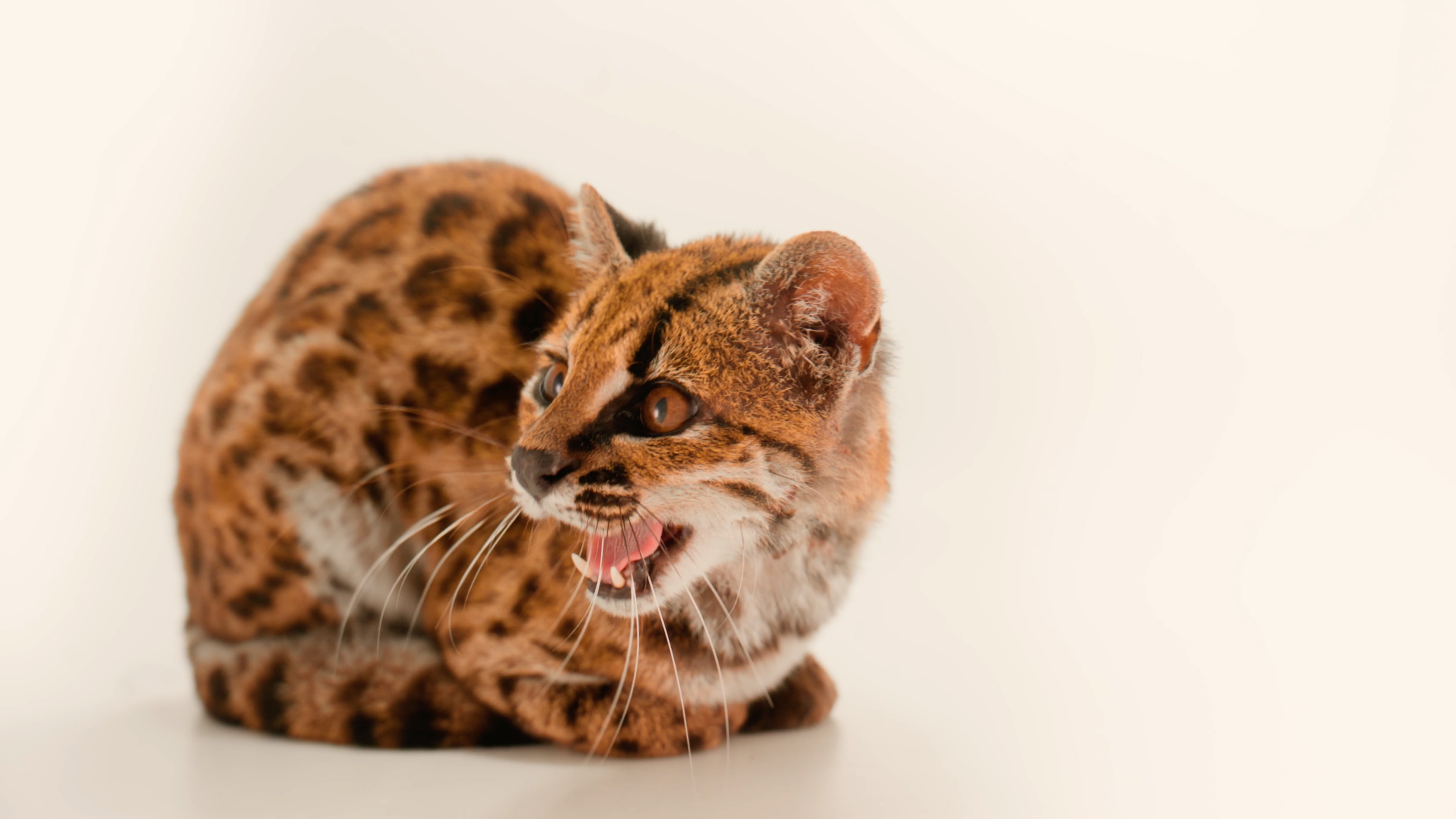
Meet the First New Cat Species Discovered in 100 Years
A small, spotted tiger cat from Bolivia may just be
the beginning of a wave of new small cat species.
In 2017, Paola Nogales-Ascarrunz, a biologist and National Geographic Explorer working in Bolivia, received a call from a local wildlife sanctuary that had just been given what they described as “a weird cat.” It came from a local man who found it as a kitten on a road near a forest. The man took the animal home, believing it to be a domestic breed. But after about a year of living with the clearly wild animal, he realized it would be better off at a sanctuary.
As the lead scientist and founder of the Bolivian Felids Research Program (Programa de Investigación de Félidos Bolivia), Nogales-Ascarrunz was intrigued. The animal had a small, scrunched-up face, short and round ears, and long whiskers. It was, indeed, too small to be a housecat, and, most notably, it was covered in leopard-like spots. So she went to visit the creature at the Senda Verde wildlife sanctuary on the subtropical flank of the Bolivian Andes.
“I took a hundred pictures of it,” remembers Nogales-Ascarrunz. “I was so fascinated.”
What she couldn’t know at the time was that this curious cat had a secret. It would become the first new species of felid (i.e. the cat family) discovered in over 100 years, according to a study published today in the journal Current Biology. What’s exciting is the discovery is not a validation of a species proposed in the distant past, nor a previously recognized subspecies raised to species status—which are both more commonly reported and important findings. No, this cat was something totally new to science.
At the time though, Nogales-Ascarrunz assumed the unusual cat was a member of the species Leopardus tigrinus. Sometimes called tigrinas, oncillas, tigrillos, or little spotted cats, this species was described back in 1775 from a single illustration of an animal seen in French Guiana and was subsequently presumed to exist across Central and South America, including, at the time, Bolivia.
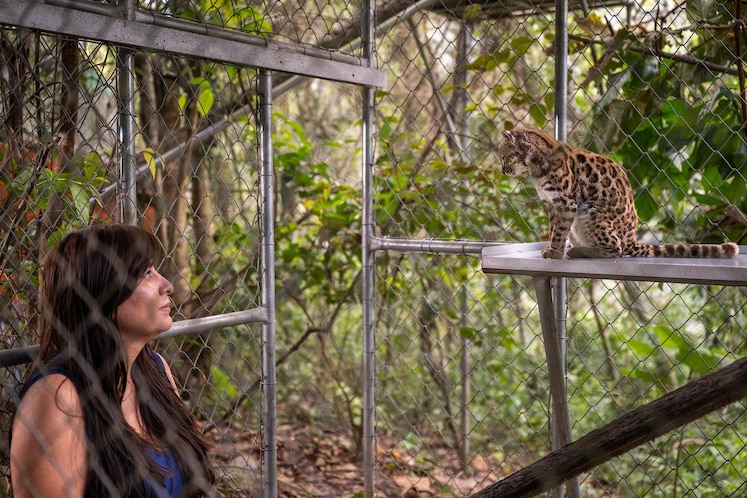
But then in 2019, while she was preparing a booklet about Bolivia’s cat species, she realized the cat she’d photographed didn’t look like a guidebook reference photo from neighboring Brazil. Her tiger cat had rosettes that were much larger than the ones across the border. “This is so wrong,” she thought.
It would take another few years before Nogales-Ascarrunz developed her skills in genetic analysis to the point where she could investigate the mystery cat’s genome with any accuracy. Then, working with Eduardo Eizirik, a geneticist at Pontifical Catholic University of Rio Grande do Sul in Brazil, and study co-lead author Jonas Lescroart from the University of Antwerp, the team was able to find its distinct place on the cat family tree.
In their paper, the researchers propose the cat should be known as Leopardus tilcayo, in honor of the word local people know it by. "We asked the local people, ‘Why do you call it tilcayo?’” says Nogales-Ascarrunz, who is herself from Bolivia. “And they said, ‘I don’t know! My grandpa called it tilcayo, so I call it tilcayo.” (The name does not appear to mean anything particular in Spanish or the Quechua language spoken in Bolivia.)
So far, all scientists can say is that L. tilcayo lives in Bolivia’s Yungas forest ecoregion, which lies on the eastern slope of the Andes Mountains. But as to what these cats eat or get eaten by, how they reproduce, and many other facets of their day-to-day lives, much mystery remains. “So many basic things are not known,” says Nogales-Ascarrunz, who is co-lead author of the new study.
But the discovery is monumental, and not just because it’s the first new cat discovered since the pampas cat in 1923. The new paper doesn’t just name a new species; it redraws the cat family tree to have a lot more branches than previously thought. What’s more, the researchers hope the methods used to identify L. tilcayo may soon be used to find even more cat species spread across the world, and even transform how we protect them.
While physical differences such as tail length, rosette size, or teeth shape are always important indicators for scientists looking to delineate species, genomic analyses are increasingly the gold standard, simply because they can tell a story hidden from the naked eye.
“We’ve been working on tiger cats for 25 years or so, trying to sort out the whole genus, Leopardes,” says Eizirik. The deeper these scientists look into these cat’s genomes, the more hidden variation they find.
In 2013, scientists provided evidence that Leopardus tigrinus — the species Nogales-Ascarrunz originally assumed the new cat to be a member of — were actually made up of two distinct species. Then in 2024, the landscape changed again with the proposal that another genetically distinct species be peeled off from the previous two. Now, the newest study makes five tiger cat species. “What we once thought to be a single species, we’ve started to see that it was actually a species complex,” Eizirik says.
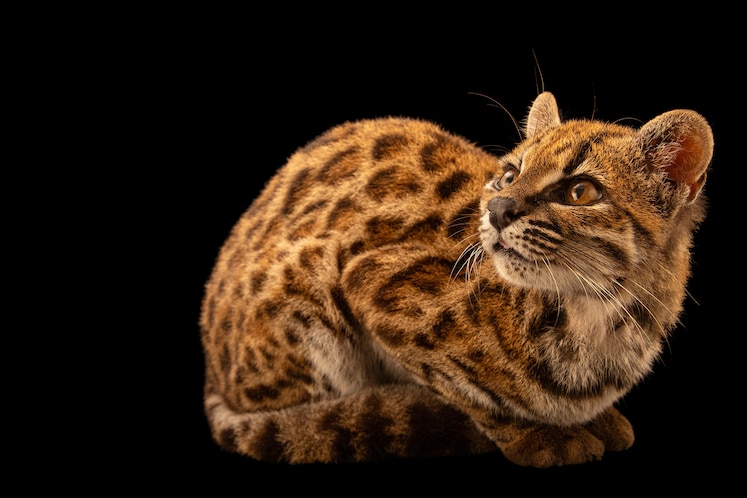
While this kind of confusion would be unheard of in, say, the Panthera genus — which includes cats such as tigers, snow leopards, and lions — the world’s small wild cats are much less studied. They are also exceptionally good at remaining out of sight. Even photos taken by remote trail cameras may not provide enough evidence to distinguish the species. For instance, one of the museum specimens included in the new study was originally thought to be another small, spotted cat called a margay, until it was later identified as a tiger cat (L. tigrinus) due to the direction of its nape hairs.
Modern genomics lets scientists see deeper differences photographs and fieldnotes miss. In the new study, when the researchers compared complete genomes from 38 individuals across the Leopardus genus, the results showed that not only was L. tilcayo different from the other tiger cat species, but it had diverged from them around 1.4 million years ago—an evolutionary distance comparable to that between modern lions and extinct cave lions.
While the discovery of yet another new tiger cat “is itself surprising news, the results obtained profoundly change how small cat specialists group small cat species in genus Leopardus,” says James Sanderson, founder and director of the Small Wild Cat Conservation Foundation who was not an author on the new publication. To that end, the study also provides evidence for a new sub-species of tiger cat in Peru, Leopardus tigrinus antisuyo, and according to Sanderson, its findings also hint that the margay—which scientists have assumed to be one species spread across Mexico through Argentina— is not one species, but four.
“This study hints that, having split from a common ancestor close to [one million years ago], four distinct margay species exist,” says Sanderson, who is also a member of the IUCN Cat Specialist Group, in an email. For his part, Eizirik says a more focused study of margay genetics will be needed before he’d make such a claim.
Sanderson says this is likely just the beginning of more discoveries. “It’s by no means a stretch of the imagination that the improved methods used in this study will reveal new species of small wild cats in Africa and Asia,” he says.
All of these additional branches on the cat family tree will have real world consequences for conservation.
One of the key factors to establish a species’ conservation status is its geographic distribution. “If you think [the tiger cat] is a single thing from southern Brazil all the way to Costa Rica, you’re going to find it’s not endangered,” says Eizirik. “But if we find that it’s not a single thing, but actually five things, each of them must be assessed separately.”
According to Sanderson, such distinctions add urgency to conservation efforts. “Once three species become five species, each population is reduced,” he says. “Therefore conservation efforts must increase, perhaps urgently, depending on estimated population sizes.” (For now, scientists are unsure of how many tilcayos exist in the wild.)
Genetics and questions of taxonomy aside, Nogales-Ascarrunz doesn’t want to lose focus on the wonder. “Our world is extremely complex,” she says. “Sometimes we think that most of it is known, that there's not a whole lot to discover, but in fact, it's the other way around.”
It is now commonplace for scientists to announce the discovery of new species, though the description of new insects, microbes, and other small organisms dominates the literature. And that makes sense, because they are easily hidden, hard to find, and often evade our understanding. But a five-pound felid?
“Even in the cats, there are things out there that are undescribed, things that people haven't found yet,” says Nogagles-Ascarrunz. “So let's go out and find them and protect them.”
Joel Sartore is a National Geographic Explorer, photographer and founder of the National Geographic Photo Ark, which uses the power of photography to inspire people to help protect at-risk species before it’s too late.
