Inside the New Zealand Wars: When the Māori battled the British
As British colonists seized Indigenous land in 19th-century New Zealand, the Māori fought to protect their ancestral territory and political authority.

In the history of human migration, to be populated were those of New Zealand. The Māori arrived there in the mid-13th century from eastern Polynesia and occupied the entire territory, dividing themselves into tribes and subtribes. To survive, they hunted the moa (an ostrich-like bird), which was eventually driven to extinction, and also introduced crops, rats, and dogs as food sources. To deal with the islands’ cold climate, they took to wearing fur and using the natural hot springs.
The archipelago was sighted by the expedition of Dutchman Abel Tasman in 1642, and Cook’s expedition set foot there in 1769, but Europeans didn’t begin to arrive until the late 18th century. The settlers were whalers, seal hunters, and traders from whom the Māori purchased fabrics, nails, and even firearms, to settle long-running tribal feuds.
Missionaries who arrived shortly afterward were shocked by the chaos of the settlements, where alcoholism, prostitution, and scams to obtain cheap land from the Māori were rife. They soon called on the British government to intervene. Some Māori chieftains also petitioned the British Crown for protection in 1831, fearing invasion by the French, who had massacred as many as 250 Māori in retaliation to a skirmish in 1772. After some reluctance, authorities in London concluded that the best solution would be to annex the islands. This would kill two birds with one stone: protect the Māori by controlling the lawless settlers and, crucially, secure British commercial interests in the region.

In 1833, the first British government official arrived on the islands. Settling in Waitangi, James Busby forged alliances with local chiefs with a view to paving the way for annexation. Then, in 1840, Captain William Hobson arrived, tasked by the British government with obtaining “the free intelligent consent of the natives” to make New Zealand a British colony. It was decided that a treaty should be made between the United Kingdom and the tribal chiefs of the archipelago, whereby the Māori would accept Queen Victoria as their sovereign and, in return, she would recognize the Māoris’ ownership of their land, purchase that land at a fair price, and promise the Māori people all the rights and privileges of British subjects.
(What is colonialism? How the exploitative practice shaped the world)
Subjects of Queen Victoria
The Treaty of Waitangi, considered the founding document of New Zealand, was drafted by Hobson, his secretary, and James Busby, and signed by about 40 Māori rangatira (chiefs) on February 6, 1840. Over the following months, another 500 rangatira signed the document, but only 39 put their names on the English version of the text. Most believed that the British Crown would rule over the pākehā (foreigners) and leave the Māori to control their own communities, lands, and resources.
The Treaty of Waitangi: Lost in translation?
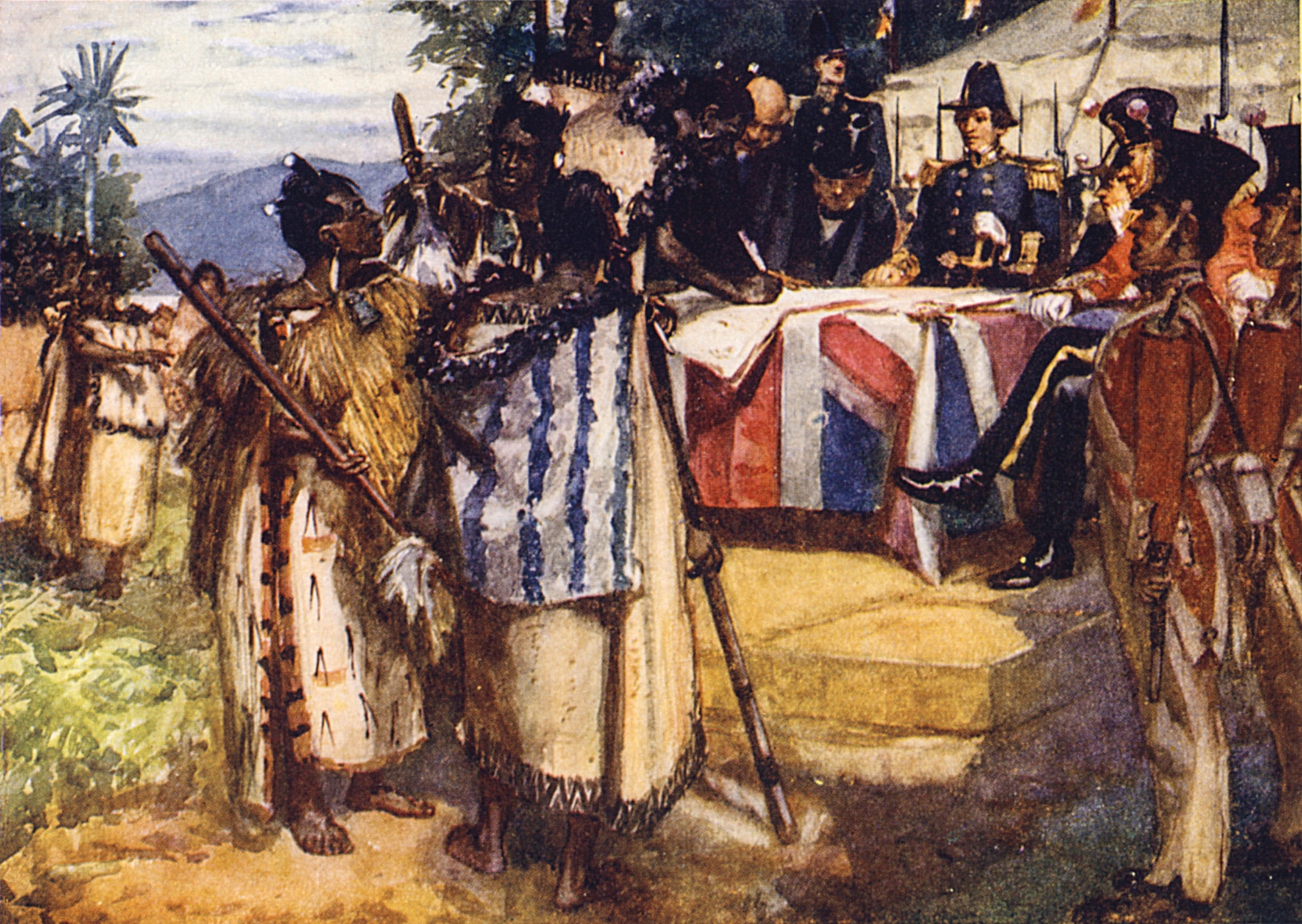
While the English version states that the Māori had transferred “sovereignty” (a modern concept without direct translation) to the British Crown, the Māori translation used “kawanatanga” (governance). The Māori read that the British Crown promised to protect te tino rangatiratanga (the exercise of chieftainship) over their lands, villages, and taonga katoa (all treasured things). Many Māori believed the treaty would allow them to retain their autonomy while providing guarantees in their relations with settlers. One Māori chief, Nōpera Panakareao, reportedly thought “the shadow of the land would go to the Queen and the substance remain with them,” but he was wrong, and disillusionment soon set in.
But things changed rapidly after Hobson proclaimed British sovereignty over New Zealand in May 1840. The influx of settlers was so great that land became scarce. Under pressure from the powerful New Zealand Company, whose business model was based on systematic colonization, the British government began buying Māori land at meager prices, then selling it to settlers at a profit. The 1840 Treaty of Waitangi had promised the Māori the same rights as all British subjects, but when New Zealand’s first Parliament was established in 1852, the Māori were unable to vote because that right depended on individual land ownership, and Māori lands were communally owned. It would not be until 1867 that universal suffrage was extended to all Māori men over 21.
(The Māori saved their language from extinction. Here’s how.)
Māori nationalism
The Māori tribes, forced to sell their land at a pittance, felt betrayed. The land was not only their means of subsistence but also the source of their traditions and culture. Selling it meant giving up their past and their future. The tribal chiefs who had not signed the agreement launched the Kīngitanga movement, deciding to appoint their own king to act as a local alternative to Queen Victoria. Pōtatau Te Wherowhero was anointed Māori king in 1858, but was never recognized by the British. At that time, there were already more settlers than Māori in New Zealand.


Violent conflict now seemed inevitable. In 1844, the Northern War broke out when Ngāpuhi chief Hone Heke Pokai (the first signatory of the treaty) and his men chopped down the British flagpole at Koroāreka and looted the town. The rebellion, also known as the Flagstaff War, was quelled in 1846. Over the following years, other minor conflicts and skirmishes would continue to pit the Māori against the colonists.
From 1860 onward, tensions escalated rapidly. Around Taranaki Mounga, a volcano on the North Island, the Māori launched a guerrilla war. Fighting in the hostile land they knew so well gave them an advantage, and they proved to be formidable adversaries. Military historian J.W. Fortescue considered the Māori the most extraordinary warriors the British ever encountered. Admired for their chivalrous treatment of the wounded and sporting attitude toward war, the Māori allegedly asked their enemies for ammunition or water so they could continue fighting, or sent food to the British so they could continue the battle.
The fearsome Hauhau Warriors
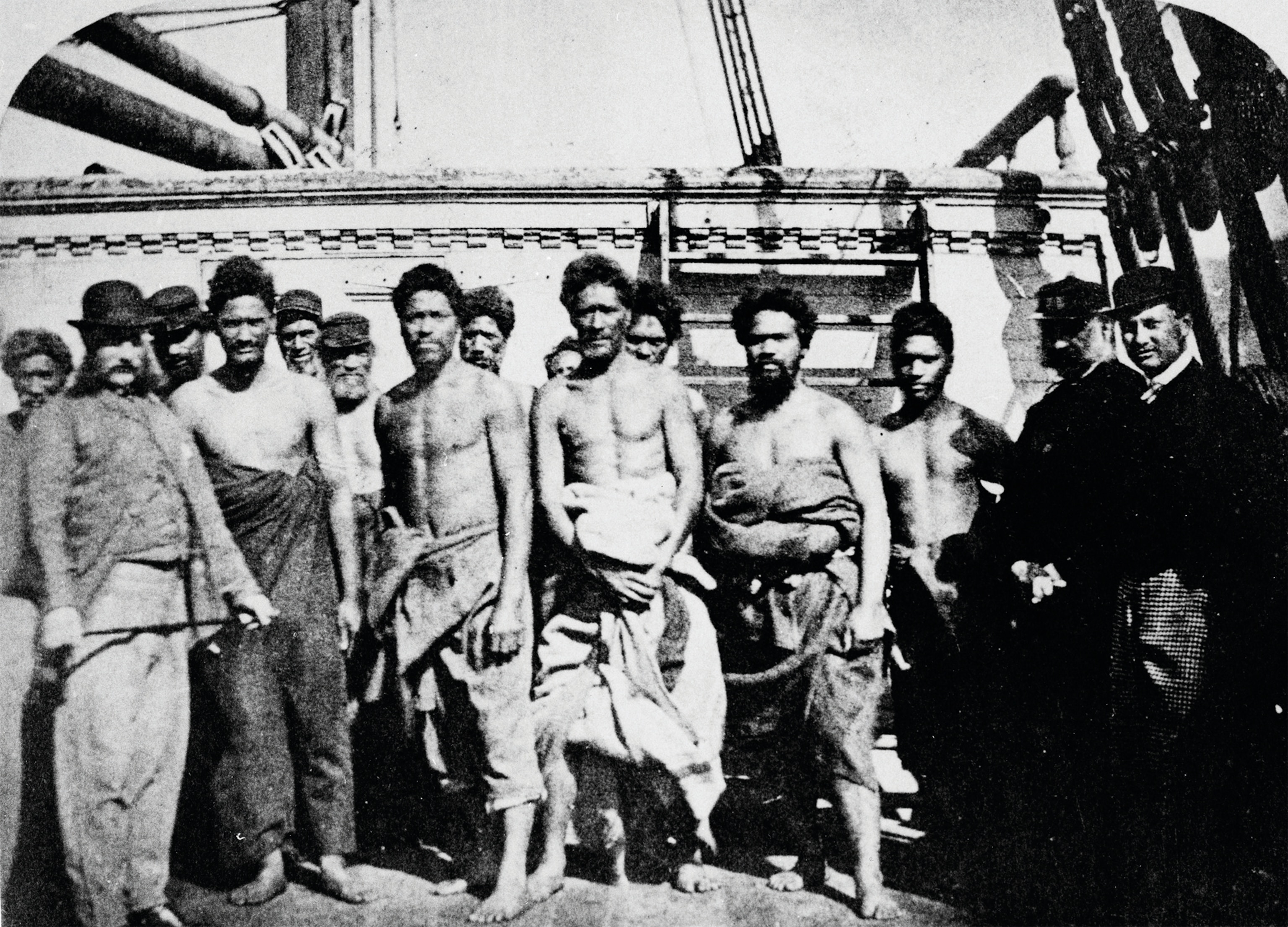
Te Ua’s followers were known as Hauhau, after the war cry they gave invoking Te Hau (the spirit of God in the wind). Contrary to Te Ua’s ideal of resistance based on divine intervention, the Hauhau turned to violence and began launching attacks on settlers and British soldiers. In April 1864, they ambushed a regiment, carrying off their severed heads. Almost a year later, German missionary Carl Völkner was tried and hanged at the Ōpōtiki mission, and one of Te Ua’s followers swallowed the missionary’s eyes, allegedly naming one Parliament, and the other the Queen and British law. The settler population, outraged, pursued the movement and imprisoned many Hauhau. Te Ua was placed under house arrest, and died soon after his release in 1866.

Fierce resistance
One of the defining moments of the war was in 1864, during the siege of Orākau, a Māori fortification where nearly 300 men, women, and children took refuge under the leadership of Chief Rewi Maniapoto. When General Duncan Cameron, with more than 1,400 soldiers at his command, offered them surrender, the response was “Ka whawhai tonu mātou, Ake! Ake! Ake!” (We will fight on forever and ever!), and when he offered safe passage to the women and children, Ahumai Te Paerata (daughter of Chief Te Paerata), replied that they would stay to fight alongside the men. That afternoon, the Māori evacuated in full daylight, and more than half were killed as they escaped. The British then proceeded to confiscate almost half a million hectares of Māori land, some even belonging to tribes that had remained neutral. These were called the raupatu lands (land taken by force).

In 1865, a new law allowed the Māori to sell land directly to settlers without mediation by the Crown, contrary to the Treaty of Waitangi. Despondent about the impossibility of keeping their land, the Māori became demoralized. The novelist Anthony Trollope, who traveled through New Zealand in 1872, at the end of the war, described what he saw as the Māori’s lack of a future: “They will gradually sell even the lands from which we are at present banished.” By the end of the 19th century, the Māori represented only five percent of New Zealand’s population, and their lands had been reduced to 15 percent of the country’s surface area. During the 20th century, however, they fought for self-determination and the recovery of their ancestral lands. Today the Māori continue to demand that the New Zealand government honor the Treaty of Waitangi.
