Is it time to reevaluate the legacy of Pancho Villa?
Despite being celebrated by his supporters and immortalized after his assassination, Mexican revolutionary Pancho Villa's enemies tell a much different story of the caudillo they considered a villain.

"His reckless and romantic bravery is the subject of countless poems,” wrote journalist John Reed about the man who became, for many Americans, the face of the Mexican Revolution (1910–1920). In one such poem about Pancho Villa, recounted by Reed in 1913, the outlaw-revolutionary saunters into a town to take revenge on a man who had betrayed him—but before doing so, he unhurriedly eats ice cream in the town square.
Villa’s significance in Mexican history is indisputable, but his legacy is contested. To some he was a violent opportunist who exploited the revolution for his own advancement. To many others he was a hero. “He fed whole districts,” Reed wrote. “Everywhere he was known as The Friend of the Poor. He was the Mexican Robin Hood.”
(Mexico's Independence Day marks the beginning of a decade-long revolution)
Peasant rebel
Doroteo Arango Arámbula was born in 1878 in the state of Durango, Mexico, and was later baptized as José Doroteo. The future revolutionary’s father worked as a hired hand on a hacienda (estate), but he either died or abandoned his family when Doroteo was a child. After this, the young Doroteo felt a deep sense of responsibility toward his mother and four siblings. At age 16, he attacked and injured—some sources say shot—a young overseer from the hacienda who had tried to rape his sister. He later fled to the mountains, where he joined a gang of cattle rustlers.

For the next few years Doroteo lived as an outlaw, until his arrest for cattle rustling and his forced enlistment in the Mexican Army. Following his desertion in 1902, he settled in the state of Chihuahua, where he adopted the name Pancho Villa, possibly taking the name from a relative. An excellent horseman, Villa gained a reputation for his marksmanship and built up a wide network of contacts that would later become invaluable in the looming revolution.
Hero or villain?
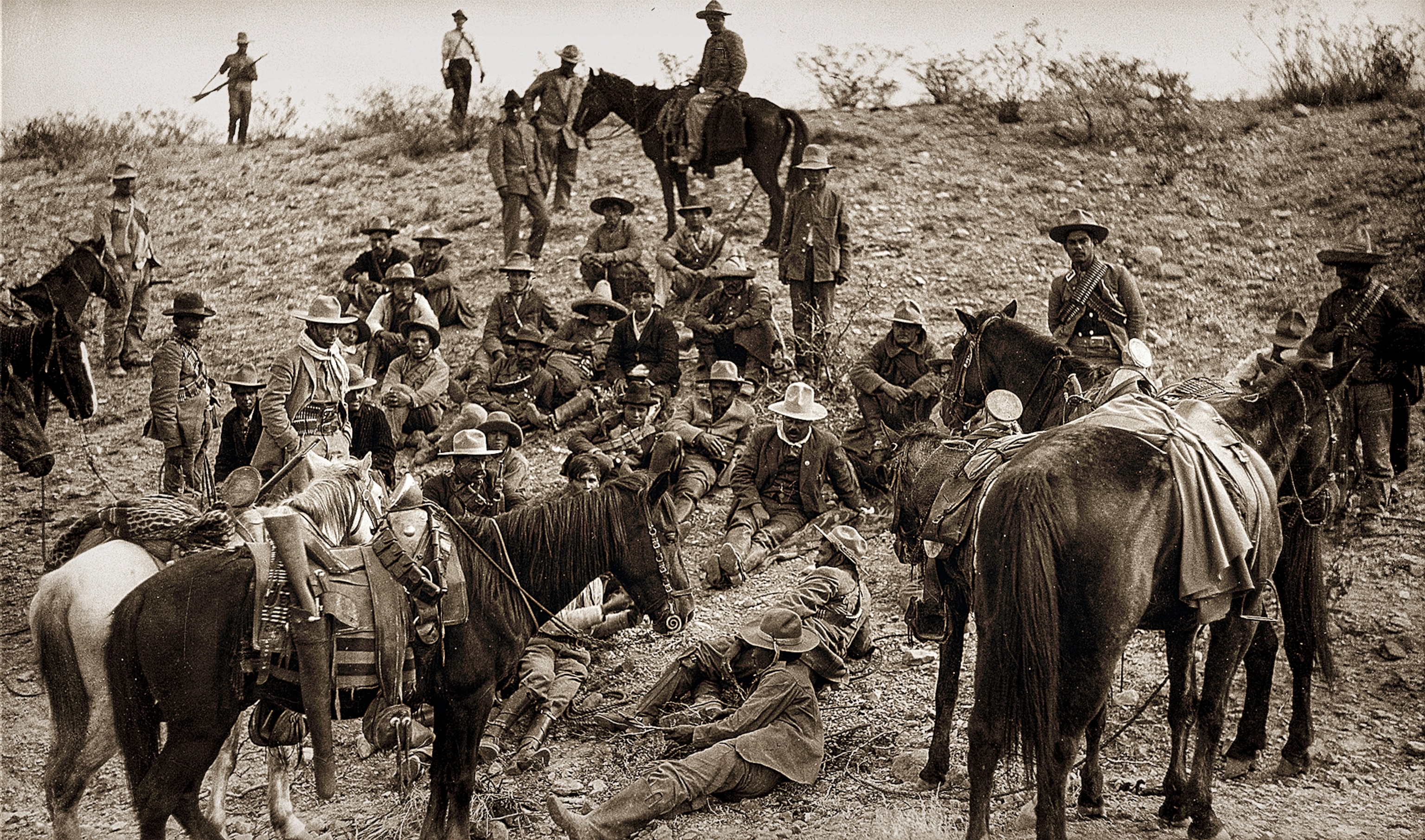
By the early years of the 20th century, northern Mexico had become a hotbed of dissent against the corrupt government of President Porfirio Díaz. Through electoral fraud, Díaz retained power for more than 40 years and favored the landed oligarchy, the church, and foreign investors. In 1910 reformist Francisco Madero, supported by a swath of Mexicans, ran for president against Díaz but was jailed. When Díaz was reelected, yet again by fraudulent means, Madero called for an armed uprising.
Charismatic commander
As political tensions rose, Abraham González, who was a confidant of Madero’s, contacted Villa. The two had gotten to know each other, allegedly, when Villa had sold him stolen cattle. González urged Villa to join the revolution and entrusted him with the task of forming a party to challenge the Díaz government in Chihuahua.
Villa agreed and became a guerrilla chief at Madero’s service, although not one of the most prominent. By this time Pascual Orozco had emerged as a resistance leader in the north; in the south, Emiliano Zapata and the Figueroa brothers were the key figures. But Villa quickly distinguished himself for his courage in decisive battles (such as the taking of Ciudad Juárez in 1911, where he fought alongside Orozco), for his charisma, and for his ability to mobilize others to support his cause.

Following the fall of the city, Díaz resigned, with the Treaty of Ciudad Juárez, and went into exile. After elections, Madero came to power. But the new government soon disappointed some of the revolutionary caudillos when the agrarian reforms Madero had promised did not materialize. In March 1912 Orozco, supported by Zapata, launched a revolt. Villa, meanwhile, remained loyal to Madero and fought under the orders of Victoriano Huerta, a former military officer of Díaz whom Madero had commissioned to crush the rebellion. Villa’s forces were decisive in defeating Orozco at the Second Battle of Rellano.
Despite Villa’s success, Huerta was suspicious of him, and following an incident had him arrested for contempt of court and ordered him to be shot. Madero’s brother, a member of Huerta’s general staff, intervened on Villa’s behalf and secured him an eleventh-hour stay of execution. Villa was sent to Mexico City, where he was tried for insubordination and robbery, found guilty, and imprisoned.
Since Villa had received minimal formal education, handwritten letters he sent from prison were full of basic spelling mistakes. But he took advantage of his time in jail to improve his reading skills by devouring history books lent to him by a Zapatista prisoner. Villa later claimed he had read chapters of the 17th-century Spanish novel by Miguel de Cervantes, Don Quixote. In December 1912 Villa managed to escape from prison and fled to El Paso, Texas. In February 1913 Huerta led a violent coup in Mexico City that ended with Madero’s assassination. Huerta, not backed by the United States and denied international legitimacy, was proclaimed president and set up a military dictatorship.
Villa meets Zapata
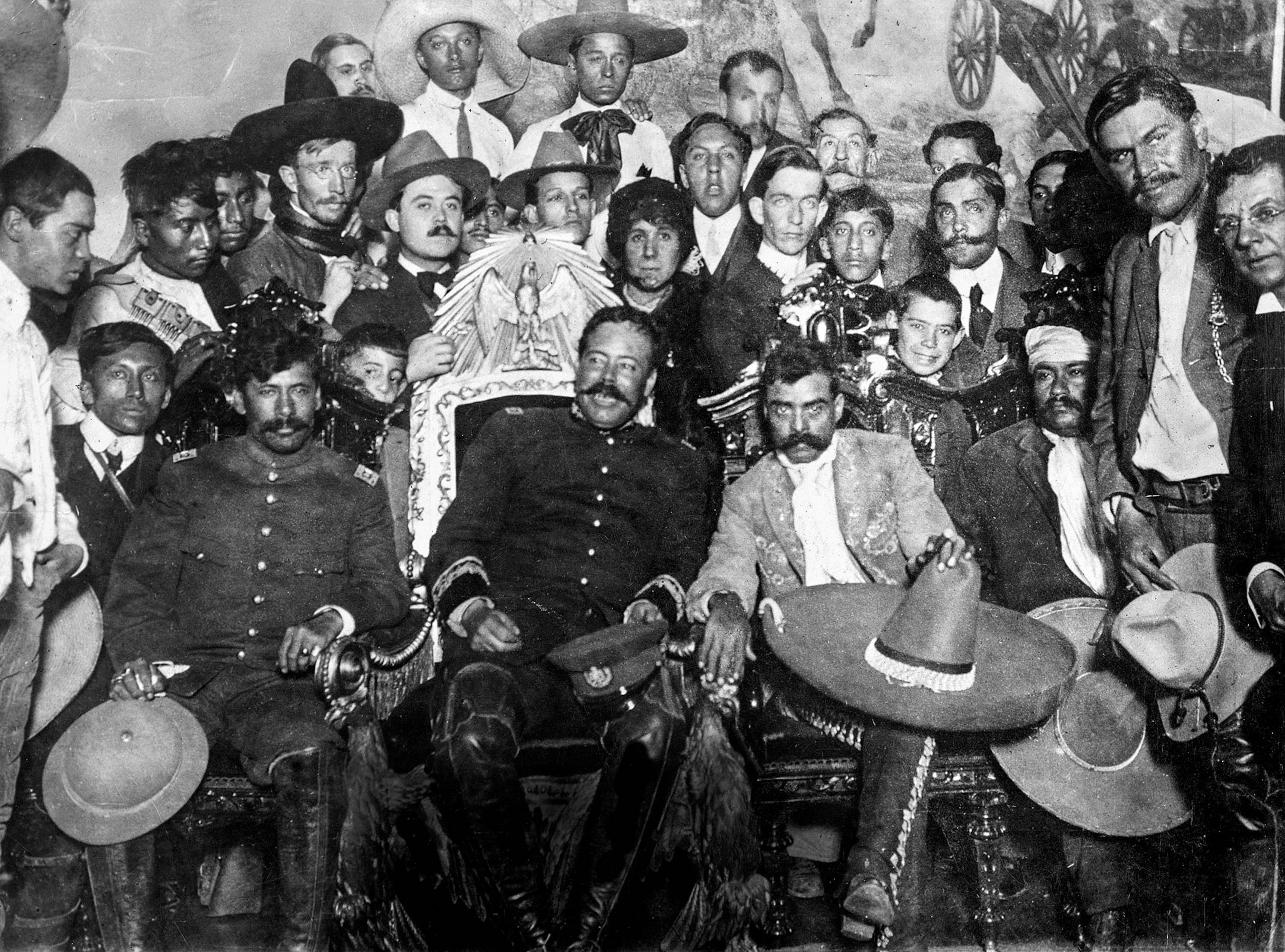
In response, Constitutionalist opponents immediately formed a resistance led by Venustiano Carranza, governor of the northern state of Coahuila, with the support of the other revolutionary leaders. Among the key players in this resistance was Villa, who, after returning from the U.S., took on leadership of a military unit that would become legendary: the División del Norte (Northern Division). Initially formed of 3,000 men, it grew to 30,000 combatants. In 1913 and 1914 they played a central role in the most memorable battles of the Mexican Revolution.
(Meet Emiliano Zapata: hero and martyr of the Mexican Revolution)
Viva Villa
Villa, who until then had been just one military commander among many, emerged as the clear leader. He was characterized as the Centaur of the North and the cry of “Viva Villa” resounded as his forces captured one city after another, including Ojinaga, and for the second time both Torreón and Ciudad Juárez.
At the end of 1913, Villa’s military successes earned him the position of provisional governor of Chihuahua. He was in office for just one month, but it was enough time for him to implement a broad program of reforms. He ordered the creation of schools and a lowering of food prices, especially meat, bread, and milk. He expropriated land from haciendas and issued his own currency. Anyone refusing to accept the currency was threatened with two months in jail. Villa was at the height of his fame. In the fall of 1913, Reed wrote his famous profile of the revolutionary, and the following year Villa cut a deal with the Mutual Film Corporation to shoot a series of films profiling him as a brilliant military figure. Then, in June 1914, Villa took Zacatecas. Huerta resigned and fled to Spain.
The U.S. against Villa

However, despite being Villa’s enemy, once Venustiano Carranza became president, he placed heavy restrictions on Pershing’s expedition, limiting the number of soldiers Pershing could deploy. Under such conditions, the search for Villa, in unfamiliar terrain filled with his sympathizers, proved impossible. In February 1917, as war in Europe became an ever more pressing priority for the U.S., Pershing withdrew.
He later wrote: “When the true history is written, it will not be a very inspiring chapter for school children, or even grownups to contemplate. Having dashed into Mexico with the intention of eating the Mexicans raw, we turned back at the first repulse and are now sneaking home under cover, like a whipped curr [sic].”

Carranza’s triumphal entry into Mexico City on August 20, 1914, and declaration as president seemed to signal victory for the revolution, but the movement was divided by clashing personalities and interests. Carranza’s relationship with Villa was strained: He used Villa for high-risk missions while simultaneously trying to remove him from the limelight, despite Villa’s clear desire to never become president. In October 1914 Carranza was called to relinquish power as Villa and Zapata joined forces and entered the capital together. But in early 1915 a counter-offensive by Carranza, managed by the skillful Gen. Álvaro Obregón, defeated Villa’s men, forcing Villa to take refuge in the north.
After failing in an offensive against the city of Sonora, Villa mounted one of his most notorious acts: an attack on American citizens in Mexico. President Woodrow Wilson had recognized Carranza as the president of Mexico and sent him arms. Villa suspected that secret treaties were being discussed to turn Mexico into a U.S. protectorate. In January 1916, as an attempt to sabotage the relationship between Wilson and Carranza, Villa ordered his men to hold up a train with Americans on board, and 18 Americans were killed. Two months later, Villa’s forces raided Columbus, New Mexico. Villistas set fires in the town and killed around 17 Americans. Wilson responded by sending John J. Pershing (then a brigadier general) to Mexico to capture Villa dead or alive.
A fugitive once again, Villa used his landscape knowledge and the sympathy of locals to stay one step ahead of his pursuers. During an ambush, he was wounded and had to hide out in a cave. By February 1917, when Pershing received the order to withdraw, he had succeeded in making Villa an even greater hero to most Mexicans.
Fighting to the end
After the withdrawal of American forces, Villa continued fighting against Carranza, who was assassinated by his own loyalists in 1920 while trying to flee to Veracruz. The new provisional president, Adolfo de la Huerta, granted Villa amnesty and provided him with a hacienda in Canutillo, Durango, in exchange for disarming and retiring from public life. Surrounded by his extensive family—he had at least 20 children—Villa dedicated himself to improving Canutillo, building houses and a rural school in northern Mexico.
A caudillo with many wives
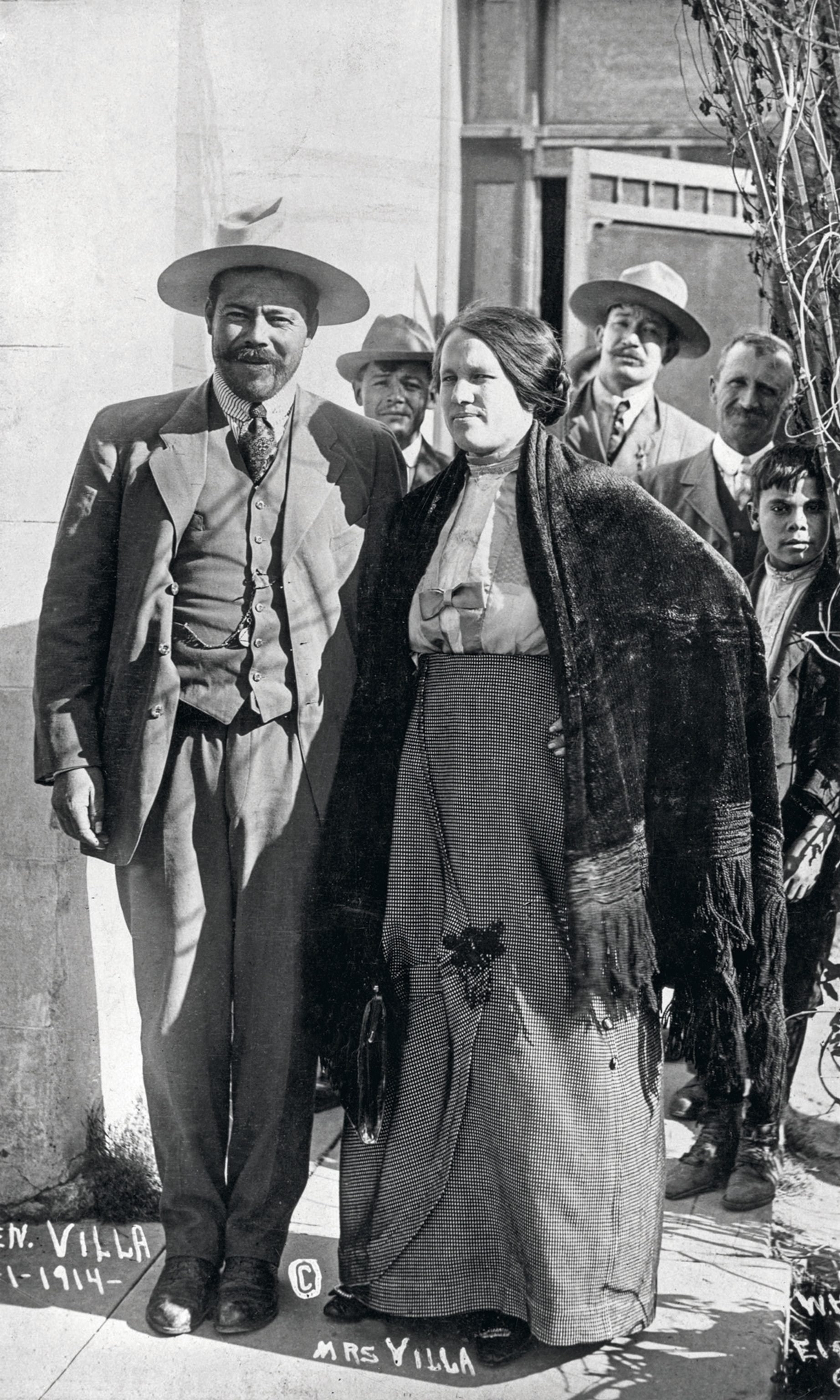
(See stunning images of female equestrians inspired by the Mexican Revolution)
Villa had, however, made many enemies. On July 20, 1923, he and his bodyguards met their deaths as Villa’s car came under heavy gunfire. Only one of the assassins was arrested. He was imprisoned but released three months later and pardoned. Some believe Obregón, by then the president, was likely behind the assassination, aided by Plutarco Elías Calles, who would become Mexico’s president in 1924 and had seen Villa as a threat.
Villa’s violent legacy remains controversial despite his impact on the revolution. After Villa’s death, popular Mexican ballads about him were often heard in the streets:
Poor Mexico is mourning.
It is afflicted by a grave loss. They’ve killed brave Pancho Villa in Parral.
