How Dollywood is preserving Appalachian culture
As traditional arts like blacksmithing and glassblowing decline, artisans at this theme park in the heart of the Smoky Mountains connect millions of visitors to age-old skills shaped by hand, fire, and time.
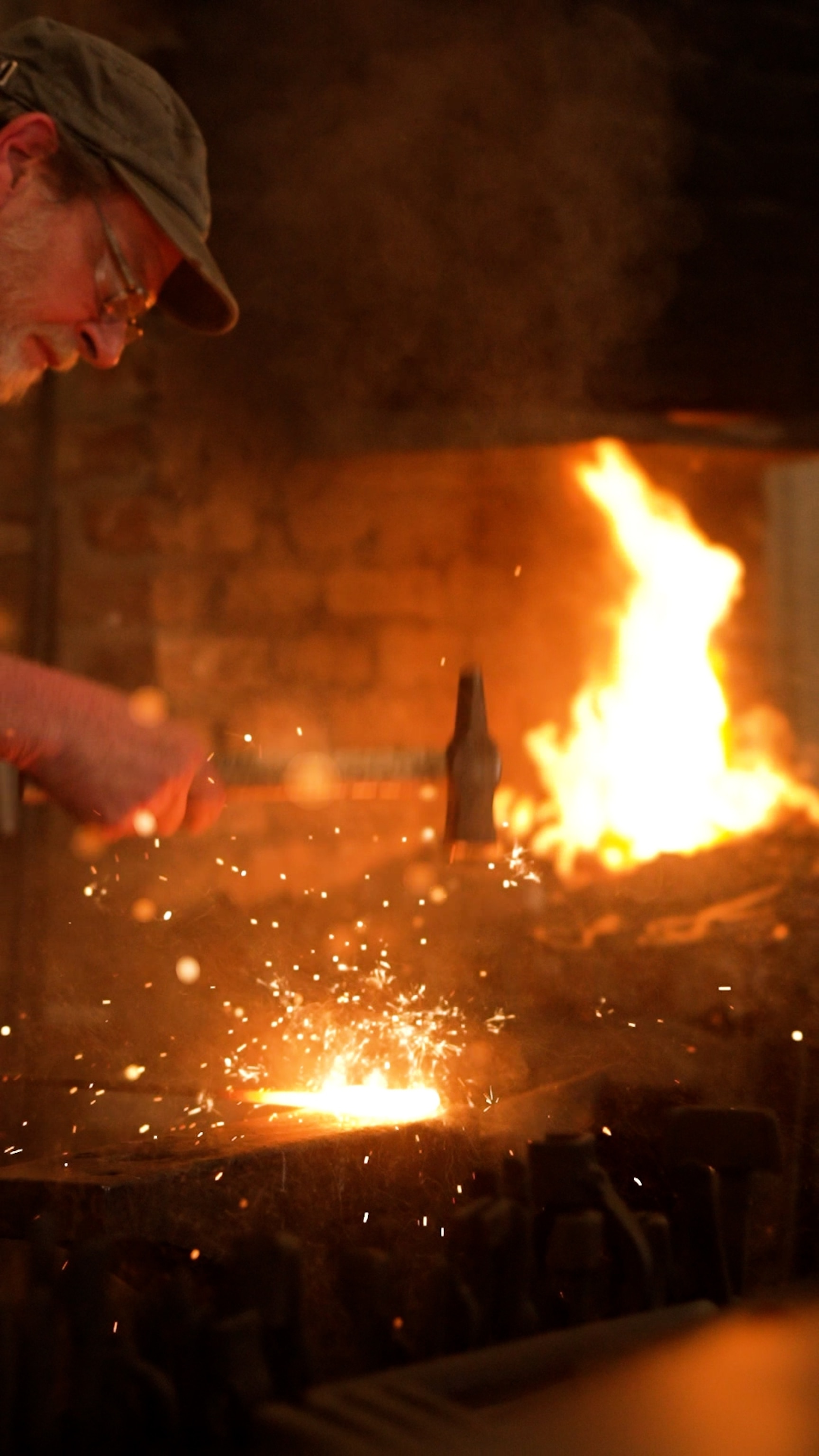
Tucked into the heart of the Smoky Mountains, in Pigeon Forge, Tennessee, Dollywood is working to preserve a bit of Appalachian culture and history. Each year, approximately 3.5 million people visit the Appalachian-themed park, drawn by thrill rides, live entertainment, and a devotion to Dolly Parton, the park’s eponymous owner and country music titan.
(What Dolly Parton wants us to know about the Smoky Mountains)
But in the park’s Craftsmen’s Valley, the din of shrieks from roller coaster riders fades into the ring of metal clanging against metal. A group of artisans work to keep centuries-old Appalachian skills and traditions alive: A glassblower twirls molten glass on a blowpipe, a blacksmith forges flowing steel into art, and a leather maker scores finely crafted designs onto a belt.

Some Appalachian crafts are in decline for several reasons, including the aging of the artisan community and a lack of interest in apprenticeships. These craftspeople aren’t simply employees; they’re historical stewards who preserve and honor the Appalachian legacy.
“Unfortunately, a lot of these long-standing traditional crafts are simply dying away because they don't have anyone that's apprenticing,” says Pete Owens, Dollywood’s vice president of marketing and public relations.
Owens provides a recent example. “For a long time, we had a wood carving shop. We simply cannot find wood carvers to populate that shop. We still sell hand-carved wooden objects in our Christmas shop, but it is no longer a workshop for woodcarvers.”
According to Erin Miller, director of the Weaving Department at Berea College in Kentucky, the decline is rooted in shifts in social standards.
At Dollywood, that issue is being addressed through visibility, with Appalachian crafts placed in active, public view.
Miller notes that the park’s approach distinguishes it from traditional preservation models. “Dollywood is one of the places that does it exceptionally well because they are placing craft in the present and not in the past, like if you go to a living history museum," says Miller. "I think that the craftspeople at Dollywood and the way that they’re centered, bring people in and help them to realize that, like, oh, this is something that I can actually do, like it's not something that my ancestors did.”
“Dollywood is about the Smoky Mountains, and you know Dolly [Parton] certainly is the most colorful thing to come out of the Smokies. We tell Smoky Mountain stories and the region's craft heritage. The entire Appalachian region is really core to who the people are," adds Owens.
(Moonshine tastings and tour bus sleepovers: the best new Dolly Parton experiences)
Mountain Blown Glass
“Part of it is cultural. We have devalued hand labor for so long that people in general don't see that as a viable career option,” says Miller.
Housed in an open-air structure, Mountain Blown Glass allows visitors an unobstructed view into the glass-making process. Using a hands-free microphone, experts explain each step in the process: how they use tools, what they plan to create, and why specific heirloom techniques are applied.
For master craftsman Chris Szaton, the mission goes beyond exhibition. “Art is a language, and to be able to teach more people to speak that language is a wonderful thing,” he says. “When you come right down to it, it's a form of expression. Glass that has a lot of light in it, and that light kind of reflects back into your soul.”

A small adjoining shop showcases other hand-blown items for purchase. Guests can pause to watch a live glassblowing demonstration or sign up for a hands-on experience to make their own ornaments or seasonal pieces.
Valley Forge Blacksmith
Inside the Valley Forge Blacksmith shop, a team moves comfortably between anvils to shape steel into knives, horseshoe art, and ornamental ironwork, all rooted in Appalachian utility and tradition.
The shop offers a Forge-Your-Own Knife experience, which allows visitors to participate in the process themselves.
Blacksmith, John “JT” Tolliver, describes the hands-on experience, “We'll hold the steel, heat the steel, and guide them through the hammering process. We'll harden the steel with them, and then from there we will take the blade over to the sanders to finish the work.”

Old Flames Candles
Named after one of Dolly Parton’s popular songs, Old Flames Candles preserves the age-old craft of candle making. Inside the shop, guests can choose from a variety of candle design options for purchase. They can also select a pre-made mold and dip their candles into colored, scented wax to create a custom design.
The process mirrors methods handed down for generations. “The kids really like that, because they can make their own candles,” says Kearan Dykes, who has worked at Dollywood since its first season in 1986.
Smoky Creek Leather
Visitors can watch artisans score designs and dye hand-tooled leather at Smoky Creek Leather as they create belts and keychains. While there is no hands-on leather-making workshop, guests can customize items, including belts, ornaments, bracelets, and more, by selecting designs, colors, and finishes.
The artists demonstrate hand-tooling techniques in full view. Visitors can stop by to watch the process or purchase a bespoke piece that the artisan will complete on-site.
Nearby Appalachian artisans
The Glades in Gatlinburg
Just over 10 miles from Dollywood lies the Great Smoky Arts & Crafts Community, also known as The Glades, an eight-mile loop of studios, galleries, and shops in and around downtown Gatlinburg. This enclave of more than 80 crafters and artisans is reportedly the largest collection of independent artisans in North America.
Together, these studios offer a broad spectrum of handmade products for purchase, including brooms, soap, and quilts rooted in Appalachian heritage.
Arrowmont School of Arts and Crafts
Also in Gatlinburg, the Arrowmont School of Arts and Crafts offers an extensive selection of workshops, including one-week, weekend, and family workshops. Prices range from $18 for bead-weaving classes to $852 for a master wood turning workshop.
