7 lesser-known European national parks to explore this summer
With untouched landscapes, pristine lakes and impressive wildlife, Europe’s national parks are a treasure trove for visitors. Make the most of summer by seeking out the ones that still fly under the radar.

At the last count, Europe had well over 400 national parks, representing a vast diversity of landscapes and habitats — from the forest-clad mountains of the north to the coastal wetlands of the south. Within that range, there are huge number of surprises — parks that offer wholly unique experiences within their boundaries and whose trails see less footfall than the big-hitters. Whether you want to canoe between islands on Finland’s largest lake, wander enormous sand dunes in the middle of Poland or explore ancient forests in the Canary Islands, there’s a national park for you.
1. Exmoor National Park
Location: England
Best for: British wildlife
Size: 267sq miles
A billow of hills and heath swathed across Somerset and Devon, Exmoor is a former royal hunting forest. It’s also one of Britain’s least-visited national parks. Its valleys plunge deep and squeeze tight, its moors roll wide and wild, its woods harbour ancient trees and rare Atlantic rainforest, and its rugged coastline lays claim to England’s highest sea cliff.
Walking the roller coaster coast path between Porlock and Combe Martin (26 miles) makes for a wonderful long weekend, taking in the feral-goat-grazed Valley of Rocks and one-time smugglers’ favourite Heddon’s Mouth cove. For a longer stay, base yourself in medieval Dunster, central Exford or moor-top Wheddon Cross and spend time seeking out Exmoor’s wildlife. The park has around 3,000 red deer, as well as endangered Exmoor ponies and abundant birds. Red Stag Safaris runs Land Rover trips to its remoter reaches, which might reveal foals (spring/summer), rutting deer (autumn) or short-eared owls (winter).
(Related: Everything you should know about the U.K.'s Lake District.)


2. Linnansaari National Park
Location: Finland
Best for: water activities
Size: 38sq miles
There are several reasons why Finland is repeatedly crowned ‘world’s happiest country’. One is its population’s deep connection to sublime natural spaces such as Linnansaari. The national park is a sprawling archipelago of 130-plus islands in vast Lake Saimaa. They’re home to birch and pine forests, whose floors sprout with herbs and berries, and whose canopies host various bird species including osprey. Saimaa ringed seals, one of the world’s rarest mammals, bask on offshore rocks.
Water-based activities are a big part of the experience, whether that’s paddleboarding narrow channels, canoeing between islands, sailing across open waters or taking bracing dips. The lakeside village of Oravi is the main hub, where boat transfers can be arranged, equipment hired and excursions booked.
It’s best to allow three or four days to explore. Regent Holidays offers a four-night summer trip including hikes, a seal-watching cruise and wild swimming.


3. Mercantour National Park
Location: France
Best for: mountain adventures
Size: 262sq miles
Close to the Mediterranean and the Italian border, Mercantour is influenced by both, and is chock-full of Alpine charm: hamlets perched on hilltops, meadows rife with wildflowers, dazzling blue lakes and towering peaks, topping out at 3,143-metre Cime du Gélas. Yet, somehow the park flies below the radar, despite being easily reachable from Nice.
In winter there’s snowshoeing and ski-touring and; in summer, canyoning, rock-climbing and via ferrata — the difficult-grade Baus de la Frema route is thrilling if you have a head for heights. There’s also over 370 miles of marked hiking trails. Highlights include the sections encompassing the Merveilles and Fontanalba valleys, home to a large number of Bronze Age petroglyphs. You can visit independently or join guided tours from mid-June to the end of September to access off-trail areas. For a longer trek, try The Natural Adventure’s six-day self-guided Mercantour hike.
4. Matsalu National Park
Location: Estonia
Best for: birdwatching
Size: 188sq miles
Superbly soggy — that’s Matsalu. The park is a wonderland of coastal meadows, marshes, reedbeds, sandbars and islands spilling into the Väinameri Sea. It’s also one of Europe’s richest birdwatching destinations, occupying a front-row seat for the East Atlantic Flyway, a route used by millions of birds to pass between their northern breeding grounds and southern overwintering sites. From April to mid-May and September to late October, these migrants mix with resident species, creating a roisterous avian rabble. Sightings might include courting grebes, hunting white-tailed eagles and cranes.
Start at the visitor centre near Lihula and walk the Penijõe River hiking trail, listening for booming bitterns and the rasp of corncrakes. Don’t miss Haeska observation tower, which holds a European birding record: 128 species were seen from here in one day. Canoe and boat tours are also possible; Matsalu Paadireisid runs boat trips from Suitsu tower that glide by thatched fishing huts and may reveal birds, elks and beavers. Naturetrek runs birdwatching tours in spring and autumn.


5. Slowinski National Park
Location: Poland
Best for: desert landscapes
Size: 72sq miles
Europe doesn’t really do genuine deserts, but this ‘Polish Sahara’ is an atmospheric substitute. Słowiński is famed for its shifting, voracious, crescent-shaped dunes, which are constantly being blown, sculpted and reformed by the winds and waves of the Baltic coast. Reaching heights of 40 metres, they can move up to 10 metres a year, swallowing old forests as well as creating habitats for new ones to emerge. Słowiński isn’t all about sand, however: the park encompasses a mix of coastal lakes, peat bogs, meadows and pine forests. Together, these nurture a wealth of wildlife, including otters, deer and beavers, white-tailed eagles and black storks.
The seaside town of Łeba is the main gateway and a good base for one or two days of exploration. Hire bikes from Rowerowa Łeba and pedal into the park, which has 80 miles of dual-purpose biking and hiking trails. The route to Czolpino Lighthouse leads right through the dunes, while the path up 115-metre Rowokol hill, Słowiński’s highest point, gives an overview of Mother Nature in action.
The comeback of European Bisons
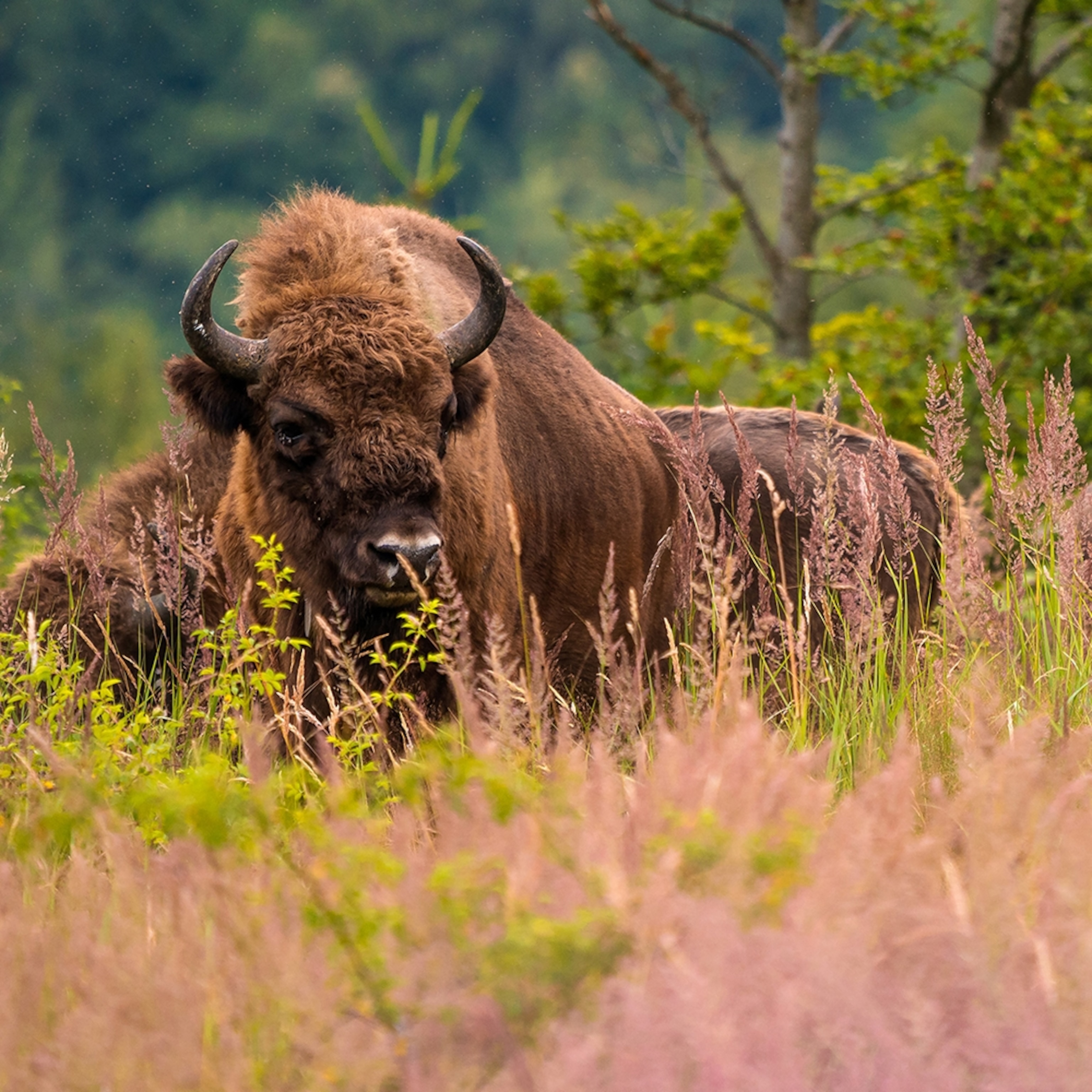
Take the resurgence of the European bison. Once widespread, the last wild animal was shot in 1927, with fewer than 60 alive in captivity. They were reintroduced into the wild from the 1950s — notably, in the forests of Poland’s Białowieża National Park — and the population is now estimated to be around 11,000.
Find more conservation projects worth travelling for here.
6. Peneda-Gerês National Park
Location: Portugal
Best for: cultural exploration
Size: 269sq miles
Sequestered in the country’s far north, Portugal’s only national park protects four great granite massifs, plus the gaping valleys, mixed forests and wild animals that interweave them. It protects the region’s human history, too. This is a landscape sprinkled with megalithic tombs, traversed by a well-preserved Roman road and crossed by pilgrim paths. It’s also a place that clings to its rural traditions. There are villages here — small, isolated, built of stone — where life hasn’t changed much since the 12th century. They include Soajo, which has espigueiros (stilted granaries) and traditional houses, some of which are now characterful places to stay.
Inntravel offers a week-long self-guided trip through the park, while Portugal Green Walks runs day hikes, including a trail via the historic wolf trap near Lombadinha. Wolves are protected here now, though you’re more likely to spot ibex, flamboyantly horned Barrosã cattle and wild garrano horses.
(Related: Why northern Portugal should be your next road trip destination.)
7. Garajonay National Park
Location: Spain
Best for: prehistoric atmosphere
Size: 15sq miles
All of rugged little La Gomera is a Unesco Biosphere Reserve, but Garajonay is the jewel in the crown of this less-visited Canary island. It’s both a national park and a World Heritage Site, a place of deep ravines, volcanic plugs and precipitous cliffs. It’s particularly prized for its laurel forests, living remnants of the warm temperate forests that cloaked much of Europe and North Africa during the Tertiary period. To enter this mossy, mist-swirled park is to step back two million years. It’s incredibly biodiverse, too, rich in endemic species including the La Gomera giant lizard.
For an introduction, head to the Juego de Bolas visitor centre, which has information on self-guided trails. Try the Gran Circular Pajarito, a challenging but magnificent 10-mile loop, or make the hike up 1,487-metre Alto de Garajonay. Go by day for views over to Mount Teide on Tenerife; go by night to appreciate the stars in the island’s dark skies.
(Related: Go beyond Spain’s cities to explore 7 of its best national parks.)
To subscribe to National Geographic Traveller (UK) magazine click here (available in select countries only).
