Professor Brian Cox on space, stargazing and travel for his TV shows
Set to take his new live show around the world, the physicist and presenter reflects on his defining travel experiences.

Was there a destination that captured your imagination as a child?
My family didn’t travel much — I didn’t leave the country until I was 17 — but we got to go to Jodrell Bank, the University of Manchester’s observatory, just south of the city. It’s the home of the Lovell Telescope, which was the biggest radio telescope in the world for a long time, famous because it was used to track Sputnik and during the Apollo moon landings. It’s open for visits, and it’s daunting to this day — this enormous thing, exploring the deepest universe.
Where was your first independent trip abroad?
Hong Kong to play music. I joined a band when I was 18, and we got some live shows in Kowloon. After growing up in Northern Europe, what I remember most is the climate — stepping out into a wall of heat and humidity for the first time. I’ve always carried that with me, and I still look forward to that feeling of walking out of airports.
You’ve since travelled extensively for your television programmes. Where stood out?
Ethiopia, especially the Great Rift Valley. It’s probably partly psychological — it’s the cradle of humanity, to use the cliche term, and because you know it, you feel it — but the experience felt primordial. We reached a lava lake called Erta Ale in the Danakil desert, a hugely volcanic area that’s often one of the hottest places on the planet. We filmed there in 2009 for Wonders of the Solar System, the first big series I did, then in 2014 for Human Universe, my favourite one.
What’s your most unique travel experience?
For Human Universe, we filmed a Russian Soyuz spacecraft returning from the space station. It landed in Kazakhstan, in the middle of a snowstorm. It was one of the most remarkable experiences of my life.

Where would you recommend to inspire a sense of wonder?
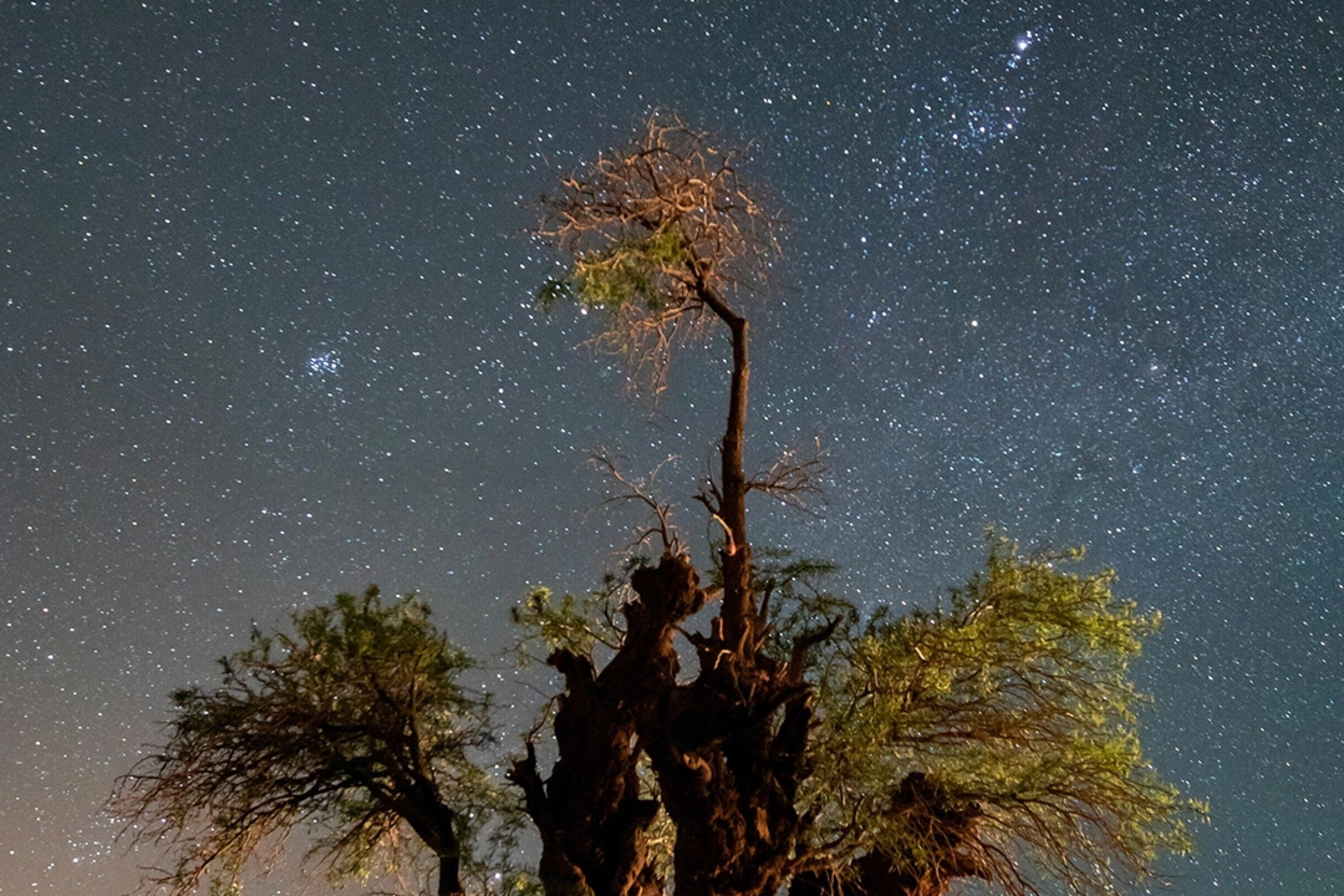
The Southern Hemisphere points towards the centre of the Milky Way, so the southern sky is more beautiful than the northern sky. Stargazing in Chile’s Atacama Desert, somewhere like San Pedro, is astonishing. You could then travel on to Easter Island. It’s a five-hour flight from Santiago, right in the middle of the ocean. There’s nothing for miles in every direction, and you really feel it. That’s what I’d do — the Atacama to admire the universe, Easter Island to feel alone in it.
Would you travel to space?
I’d love to go on a trip to see the Earth rise over the horizon of the Moon. I’ve been lucky to meet Apollo astronauts and they said it’s the most incredible sight anyone can ever witness. But I wouldn’t want to go much further. The fact that there’s life on our planet makes it the most interesting, by a mile, by any measure.
Who would be your ideal travel companion?
I’d have loved to know Johannes Kepler, the astronomer who inspired my new show Emergence. He was so funny; he lived in the 1600s, but his humour and turns of phrase are entirely modern. It’d be nice to bring him around, show him all that’s happened.
Related: Salt, stars and survival in Chile's otherworldly Atacama Desert
Read now.
To subscribe to National Geographic Traveller (UK) magazine click here. (Available in select countries only).
