
The Ultimate Guide to Egypt in 15 Experiences
Touring the pyramids and sailing down the Nile are undoubted highlights of any trip to Egypt — but what else should be on your list?
The long-awaited opening of the Grand Egyptian Museum in Cairo has spurred a renewed passion for the land of the pharaohs — a country so historically rich and storied, it’s the trip of a lifetime for many travellers. From stepping into the eternal dusk of Khufu’s Great Pyramid to fishing with locals on the Nile, here are all the places and experiences to put on your ultimate Egypt itinerary.
1. Pull up a chair at a supper club
One of Cairo’s most exciting culinary trends can be found around shared tables in unexpected venues across the city — and it’s being led by independent female chefs. Across the capital, they’re transforming rooftops, farms and private homes into one-night-only supper clubs celebrating Egyptian ingredients and community dining. Big Belly Supper Club, co-founded by Reem El-Gohary, is among the pioneers. “People are craving experiences that feel more personal,” she says. Also worth seeking out are Dina Hosny’s Dine with Deenuh, serving elevated Egyptian street food, and Youssra Hanif’s Caché, a monthly hush-hush supper club announced via social media.

2. Sail the Nile on a Traditional Dahabiya
Long before mega cruise ships arrived, travellers explored the Nile aboard two-sailed dahabiyas. Today, tour operator Dahabiya Nile Sailing is helping revive the tradition of travelling on these elegant vessels, immortalised in Amelia Edwards’ 1877 travelogue A Thousand Miles up the Nile. Their smaller size allows the boats to moor beside less-visited villages, where guests can fish with locals, learn to bake paper-thin sun bread with village families and experience a side of the Nile that larger ships simply pass by.
How To Do It
(The Best Way to See the Nile? Take a Slow Cruise Aboard a Dahabiya.)
3. Explore the Grand Egyptian Museum
More than 20 years in the making, the Grand Egyptian Museum (GEM) finally opened in late 2025, bringing together the world’s largest collection of ancient Egyptian artefacts under one roof. Standing within sight of the Great Pyramid of Giza, the museum houses around 50,000 objects, making it impossible to see everything in a single visit. Instead, slow down and focus on a handful of standout exhibits. Picks from local Egyptologists include the colossal tribute to Ramesses II, Tutankhamun’s golden funerary mask, ostraca pottery fragments revealing the minutiae of everyday life and a granite statue of Queen Hatshepsut, who adopted the dress of a male pharaoh to rule Egypt.
How To Do It
(5 Highlights of Egypt's New Grand Egyptian Museum.)

4. Discover a Mud City of Artists
Within the maze of sun-dappled courtyards and mud-brick domes of Wissa Wassef Art Centre, artisans are creating vast tapestry masterpieces. Peer through the open doorways of the workshops, and they can be seen studiously weaving hand-dyed wool into towering works that resemble paintings. These works may come to hang in museums and galleries around the world, but only a visit to this centre on the outskirts of Cairo allows you to see the artistry that goes into creating them. The centre was founded in 1951 by Egyptian architect Ramses Wissa Wassef, to preserve traditional crafts such as weaving, pottery and batik. He taught local children using a radical method: they worked without photographs, sketches or other references, creating entirely from memory and imagination. Today, more than 30 artisans work on site to continue this tradition. The centre operates as a co-op where you can buy textiles directly from them.
How To Do It
5. Wander Through Islamic Cairo
Lose yourself in the medieval streets of Islamic Cairo, where markets and mosques have shaped the city for more than a thousand years. Begin at Khan el-Khalili, the labyrinthine bazaar where traders sell spices, lanterns and silky football shirts, before wandering along nearby Al-Muizz Street, one of the world’s finest open-air collections of Islamic architecture. Pause to admire the dazzling marble courtyard of Al-Azhar Mosque, peek inside the beautifully preserved Bayt al-Suhaymi house museum and end at the monumental Sultan Hassan Mosque, famed for its soaring vaulted halls. Most sites are within easy walking distance of one another.
How To Do It

6. Take to the Skies Above Luxor
Each morning, with the burners roaring into life, balloons rise slowly above Luxor — a colourful flotilla drifting over the temples, tombs and desert hills that most visitors encounter from the ground. The city is Egypt’s ballooning capital, with daily launches at dawn. From above, the pharaohs’ monuments become part of a much bigger picture: a patchwork of green farmland following the winding ribbon of the Nile before giving way to the ochre desert beyond. Beneath the balloon, you might glimpse the Temple of Hatshepsut, with its striking terraces stepping into the cliffs, and the desert tombs of the Valley of the Queens spread out across the West Bank, where queens and royal children were buried during the New Kingdom period. If conditions are right, you’ll also catch a glimpse of the Valley of the Kings in the first light of day, before floating back to the surrounding farmland, where local dogs are waiting to welcome you back down to earth.
How To Do It
(A Practical Guide to Travel in Egypt, From Tipping Culture to Independent Touring.)
7. Find Religion in the Caves of Mokattam
A ‘Garbage City’ in Cairo’s eastern Mokattam Hills might not sound like an obvious stop on your tour, but don’t let the name deter you. The largely Coptic Christian residents of Manshiyat Naser — who have collected and sorted the capital’s waste for generations — have also spent years chiselling into the limestone cliffs to create some of Egypt’s most unique religious monuments. The cavernous chapel chambers and intricate carvings of angels, saints and Bible verses were sculpted as places of worship by Cairo’s garbage-collecting Zabbaleen community. Visitors are welcomed in on tours with guide Adham El Sharkawy, who grew up here. Discover both the architecture — including a vast semi-open-air sanctuary capable of hosting up to 20,000 worshippers — and how the Zabbaleen have created one of the world’s most efficient informal recycling systems, reusing around 80% of what they collect.
How To Do It

8. Camp with the Bedouin of Sinai
In the folds of ochre rock that make up northeast Egypt’s arid Sinai region, the Jebeliya people have lived side by side with the monks of St Catherine’s Monastery for hundreds of years. The sixth-century Christian complex still attracts pilgrims from all over the world, who come to see the burning bush and tour the surrounding rock-hewn chapels. But what makes an even greater impression are the hiking tours the local Jebeliya Bedouin lead into the mountain range towering above the monastery. Days are spent quietly, beginning with the smell of coffee beans roasted by your guide on an open fire, and ending with nights under the stars, camping in remote Bedouin community gardens. The walking is biblically epic and beautiful, wending through giant canyons and silent valleys, passing tiny hermit chapels, before climbing Mount Sinai — where Moses is said to have received the Ten Commandments.
How To Do It
(What I Learned on an Off-Grid Camping Trip with Egypt's Bedouin.)
9. Paddle the Nile in Aswan
‘Egypt is the gift of the Nile,’ said the Greek historian Herodotus, of the river that sustained one of the world’s greatest civilisations in the unforgiving desert. Spend a little time around Aswan and it’s easy to see why the Nile remains so revered. In this southern Egyptian stretch, the waterway is scattered with an archipelago of lush green islands, ideal for slow exploration. A kayak is the best way to get up close to it all. While larger boats stick to the mainstream, paddlers can slip into back channels to see monuments lining the banks from a different perspective. On a guided outing travellers can paddle to Philae Temple, the island sanctuary where some of Egypt’s last hieroglyphic inscriptions were carved around 394 CE. For those wanting more time on the water, the company also runs multi-day kayak expeditions between Aswan and Luxor.
How To Do It
(Sailing to Aswan, Egypt's Historic Gateway to the South.)


10. Cycle Between Luxor’s Temples
Swap the coach for a bicycle and see how everyday life and ancient history coexist with ease on Luxor’s West Bank. Guided rides pedal between banana plantations, village streets and some of Egypt’s most celebrated archaeological sites. One moment you’re standing beneath the Colossi of Memnon; the next you’re passing donkey carts, roadside cafes and archaeologists working just metres from the roadside. “Cycling is the best way to really see Luxor,” says local guide Sayed Setouhy. “You have the freedom to stop, take pictures and discover things.”
How To Do It
11. Explore the Valley of Kings
Painted more than 3,000 years ago, some of the frescoes and hieroglyphs inside the Valley of the Kings’ tombs look as though they were daubed within this lifetime, so astonishing is their preservation. It’s the reason why these scorched hills 30 minutes from Luxor have become one of Egypt’s greatest attractions. New Kingdom pharaohs carved more than 60 tombs into the cliffs here as their final resting place. Duck through an unassuming doorway and descend down narrow passageways leading deep into the rock, and you might find murals and carved reliefs of brilliant blues, reds and ochres covering chamber walls. The sprawling necropolis has survived both tomb robbers and flash floods, and tourism here is carefully managed. It’s worth paying extra for access to several further tombs, including those of Seti I, Ramesses IV and Tutankhamun.
How To Do It
12. Tap into ancient Egyptian wellness rituals
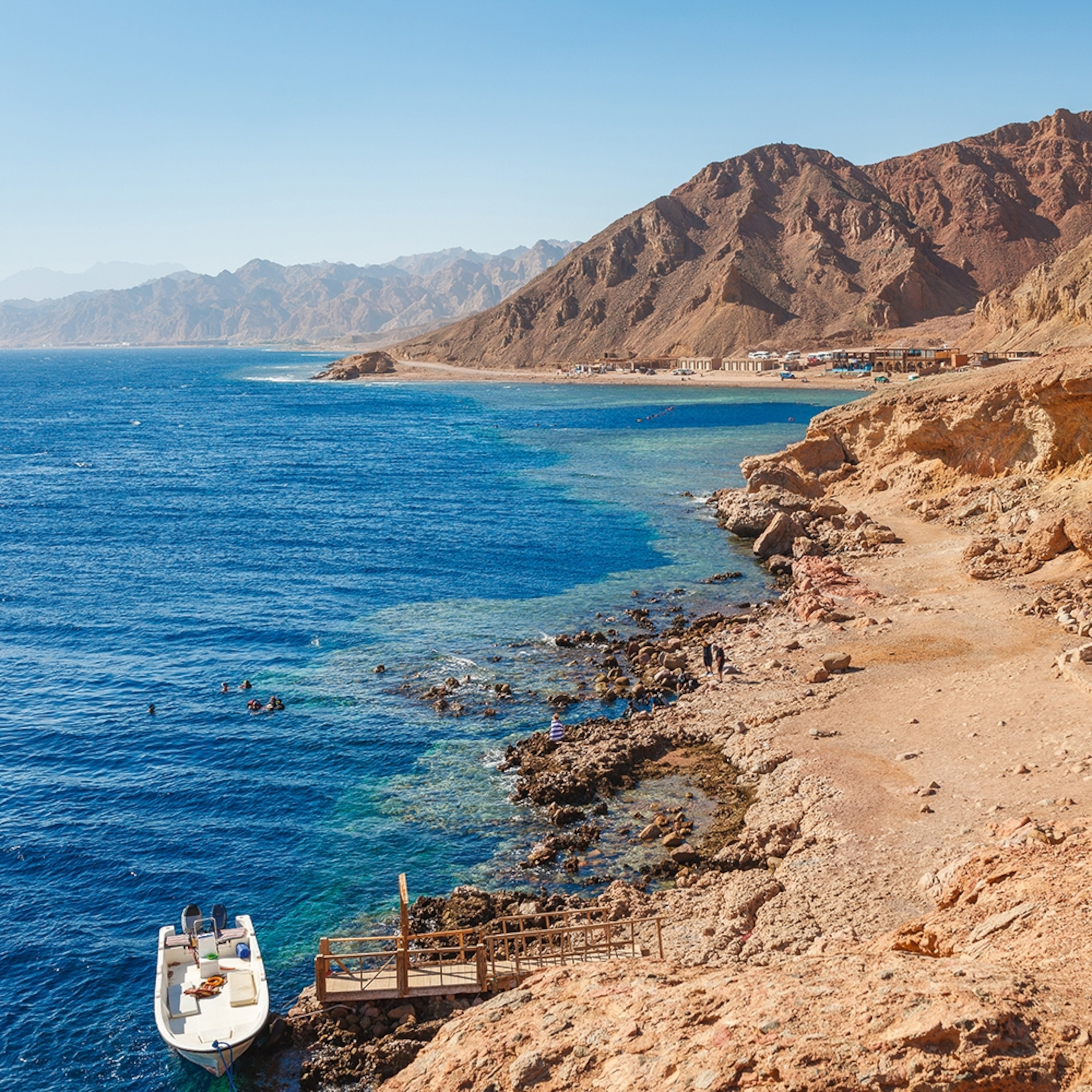
Foot therapy in Egypt can be traced back to the 6th Dynasty tomb of Ankhmahor at Saqqara, where scenes sculpted into the walls show practitioners treating the hands and feet of seated clients. It’s a technique still alive and kicking at Al Moudira, a palm-fringed hideaway hotel in Luxor that offers pharaonic foot massages — the perfect antidote to a day of touring hot, dusty temples. The treatment involves using acupressure and knuckle rolling to stimulate circulation and ease away life’s tensions. Or, for a Cleopatra-inspired indulgence, the Four Seasons Hotel Cairo at Nile Plaza offers a milk bath experience, nodding to the longstanding legend that ancient Egypt’s last ruler bathed in milk to soften her skin. Here, the soak is enriched with honey, rose oil and petals.
13. Take a VIP Pyramid Tour
Standing in front of the Pyramids of Giza is one thing — gliding between them as a VIP in an open-sided golf buggy is quite another. As the breeze cuts through the heat, you’ll cruise across the plateau, absorbing the extraordinary scale of the scattered structures that have stood for some 4,500 years — an enduring symbol of Egypt’s Pharaonic dynasties. As well as pausing at highlights such as the Great Sphinx and Valley Temple, travellers still have the opportunity to venture inside the Great Pyramid. The oldest and tallest of the distinctive structures, it was built as a royal tomb for King Khufu between 2551 and 2528 BCE. After you’ve burrowed deep to find the womb-like King’s Chamber, the buggy driver will be waiting outside to whisk you to an air-conditioned lounge for cold drinks and snacks.
How To Do It


14. Learn Pottery in Tunis Village
Perched above Lake Qarun in the Faiyum Oasis, Tunis Village has become an unlikely setting for one of Egypt’s leading craft communities thanks to a pottery movement that began in the 1980s. A three-hour drive south west of Cairo, the village’s streets are lined with more than 50 studios, and some — like Youssef’s Pottery — welcome visitors to sit at the wheel and try throwing pots themselves. Explore the small community and you might come across plates painted with swirling designs inspired by traditional Arabic calligraphy at Rawiya Pottery, the village’s first female-owned workshop; or minimalist pots etched with geometric patterns at Abd El Sattar Pottery. There’s no need to book ahead to attend many of the workshops; simply drop in, learn the basics from local artisans and take home your finished piece once it’s fired.
How To Do It
15. Raise a toast to literary ghosts in Cairo
Since opening in 1908, Café Riche has been the beating heart of Cairo’s intellectual scene. Behind its faded belle époque facade, creatives and activists have gathered downtown to debate ideas and exchange news. In the 1960s, Egypt’s Nobel Prize-winning novelist Naguib Mahfouz was among them, holding Friday gatherings around patterned tables, attracting some of Egypt’s greatest minds. The Arabic poet Ahmed Fouad Negm is also known to have been associated with this cafe in the 1970s, perhaps penning verses over a plate of falafel and pickles. And in the basement, members of the 1919 revolution are believed to have printed their resistance flyers. Few humble cafes can claim such a Venn diagram of artistic and political life. Its walls are still lined with their black-and-white portraits, while locals and travellers sip frothy cappuccinos in the handsome bistro, served by waiting staff in floor-length royal-blue galabeya tunics and white turbans.
How To Do It
Getting There & Around
British Airways and EgyptAir fly direct from Heathrow to Cairo, while Wizz Air operates direct flights from Luton. EasyJet flies to Luxor from Gatwick.
Average flight time: 5h.
In Cairo, the metro is useful for some downtown journeys, while Uber, taxis and pre-booked drivers are often more practical for sightseeing. Domestic flights and overnight sleeper trains connect Cairo with Luxor and Aswan, while Nile cruises provide a more leisurely way to travel between Upper Egypt’s riverside sights.
When to Go
October to April offers the most comfortable conditions. At this time of year, Cairo experiences mild days of around 20C to 28C, while southern Egypt, including Luxor and Aswan, is generally warmer, with daytime highs of around 23C to 35C. Summer — June to August — can be fiercely hot, especially in southern Egypt, where temperatures often top 40C.
More Info:
Tutankhamun’s Trumpet: The Story of Ancient Egypt in 100 Objects, by Toby Wilkinson, £12.99
The Cairo Trilogy, by Egyptian Nobel Prize-winner Naguib Mahfouz
Uncovering Ancient Egypt with Bettany Hughes UK tour runs 30 October-18 November
This story was created with the support of Corinthian Travel.
To subscribe to National Geographic Traveller (UK) magazine click here (available in select countries only).
