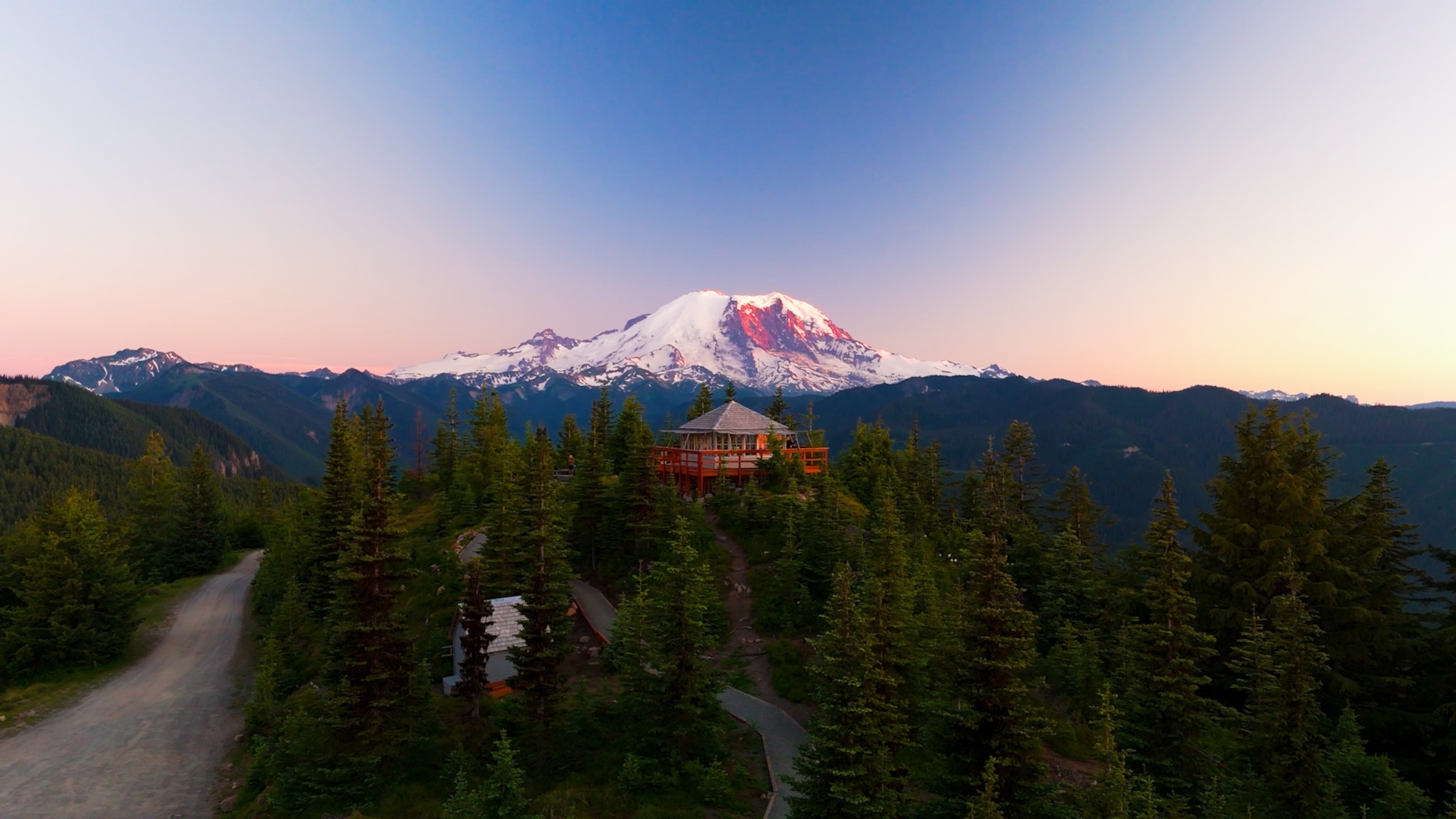
Everything you should know about Mount Rainier National Park
A snowcapped backdrop to Seattle and Puget Sound, Mount Rainier is a slumbering giant that last erupted in the 1890s.
Mount Rainier National Park, one of the world’s oldest parks, is a primordial incubator of some of the Pacific Northwest’s most spectacular scenery. The park protects nearly 370 square miles of glaciers, old-growth forests, and subalpine meadows. Its towering namesake massif—a 14,410-foot active stratovolcano—is the most glaciated peak in the Lower 48. (Recent surveys intimate the Southwest Rim as the true summit, as the icy Columbia Crest is shrinking from glacial melt.)
The mountain is the ancestral homeland of Indigenous peoples including the Cowlitz, Nisqually, Yakama, and Coast Salish peoples who know it as Tahoma or Tacoma, among other names. Championed by John Muir, Mount Rainier was designated a national park in 1899 by President William McKinley as the fifth national park in the United States.
Best times to visit Mount Rainier National Park
Summer (July-September) brings ideal weather and full trail access but also teeming crowds, especially on sunny summer weekends. Visit on weekdays and arrive early. Mid-July through early August is peak wildflower and hiking time, while fall sees dwindling visitor numbers and vibrant colors for leaf-peeping. Winter offers the best opportunity for solitude.


Where to find the best views in the park
From the park’s Nisqually entrance, near Ashford, Washington, a two-lane road climbs steadily up Mount Rainier’s southwest flank to Paradise, a deservedly named alpine perch. From the Paradise Visitor Center at 5,400 feet, visitors will get front row seats to glaciers spilling from Rainier’s upper reaches and a Monet-sweep of subalpine meadows exploding with color come midsummer.
Sunrise Road opens from early July to mid-September, taking in views of the Emmons and Winthrop Glaciers from roadside pullouts and the visitor center, and on clear days, distant Mount Adams and Mount Baker.
Lake along Stevens Canyon Road offers one of the park’s most iconic views, with Mount Rainier perfectly mirrored on calm mornings.
For an elevated perspective, the 5.6-mile round trip to 5,920-foot Tolmie Peak leads to a fire lookout with a view of cobalt Eunice Lake. Mount Rainier dominates the horizon beyond. Serious climbers can attempt the summit via the Disappointment Cleaver route, a technical alpine climb requiring proper equipment and careful planning, typically done as a guide-led, three-day expedition.
Where to find the best hiking trails
In Mount Rainier National Park, world class hiking lies beyond any trailhead. Near historic Longmire, a year-round gateway to the park, short strolls like Trail of the Shadows (0.7 miles) offer an ideal introduction to the park’s old-growth forests and early history.
Paradise is the heart of Rainier’s hiking network. The Nisqually Vista Trail (1.2 miles) has vivid glacier views with minimal elevation gain, while the Skyline Trail (5.5 miles) climbs through wildflower meadows rife with lupine and paintbrush in late July and early August, past lingering snowfields and alongside active glaciers.
At Sunrise, the Burroughs Mountain Trail (up to 9 miles round trip) gains elevation along Rainier’s northeast slope to center-stage views of its north face—the hulking Emmons Glacier and what the park calls the “finest, most accessible tundra in the Cascades.”
Lower-elevation trails in the Ohanapecosh and Carbon River areas showcase dense temperate rainforests among soaring Douglas-fir, western red cedar, and sword fern. The family-friendly Quinault Rain Forest Nature Trail (0.3 miles) offers a taste of this quieter corner of the park. For seasoned backpackers, the Wonderland Trail (93 miles), gains (and loses) 22,000 feet of elevation encircling Mount Rainier.
The best places to see wildlife
Mount Rainier National Park’s 13,000-foot elevation range inspires a rich diversity of critter-filled life zones and habitats, treating visitors to sightings of black bears, butterflies, and even mobile slime molds.
Resident mountain goats navigate barely-there footholds in the Sunrise high country. Look for their white coats from the Fremont Lookout and Burroughs Mountain trails, and in summer months you can spot their rambunctious kids learning the surefooted ropes.
Hike the Skyline Trail to sprawling subalpine meadows in the Paradise area to see hoary marmots. Known as “whistle pigs” for their shrill alarm call, marmots, emerge from their burrows to relax on sun-warmed rocks and devour loads of vegetation. From a respectful distance, watch for the younger of the colony playfighting among talus fields, where you can also see American pika and hear their spirited chirping.
Late summer berries attract black bears to Spray Park, an Eden of old-growth woods and waterfalls. Look to forest-meadow transition zones for movement in patches of huckleberry and blueberry. Black-tailed deer frequent lower elevations, and elk favor the Carbon River and Ohanapecosh areas, where its valleys echo with bugling bulls during September’s rut.
Avian enthusiasts could spend a lifetime here filling up their birding life lists. The park is home to 182 bird species from streams to sky. Clark’s nutcrackers, Cooper’s hawks, and golden eagles are common at Sunrise and Burroughs Mountain, while water ouzels patrol alpine streams. And mid-August wildflower blooms come alive with over 70 species of butterflies.
Expert recommendations and tips
The paradox of wilderness management becomes clear in the daily work: Building trails to protect fragile terrain, installing signs to guide visitors, designating campsites to concentrate impact—all while trying to preserve the very essence of untouched wilderness.
“The Wilderness Act guides us with characteristics and goals for managing this land,” says Tabby Cavendish, wilderness supervisor at Mount Rainier National Park. Nearly three decades of field experience now informs her approach to balancing access with preservation. “The true spirit of wilderness would be walking into the middle of nowhere to camp. But every management decision involves weighing competing wilderness values, acknowledging how improvements to some characters of wilderness may compromise others.”
Cavendish worked on and off as a seasonal ranger for years, honing her specialty in Search and Rescue and Incident Management, along with teaching technical rescue for the park service and visitor engagement. “We try to educate people on being good stewards of wilderness and the park. One thing we do differently than other parks is require backpackers to pick up their permits in person, during high season, so we can review wilderness regulations, Leave No Trace principles, and get their commitment face to face. There is something more you get from that than just having them click a box that says they read something.”
Park staff also work constantly to re-naturalize areas from human impact—a forever battle, Cavendish acknowledges, but necessary. “We do it because it’s the right thing to do. It is so important for folks to experience these spaces so they can advocate for them. Your job is to try to preserve wilderness character the best you can.”
And that character reaps rewards. The park is currently participating in a regional effort with U.S. Fish and Wildlife and other area parks to reintroduce fishers, members of the weasel family, to the backcountry. “They were extirpated from Washington by the mid-1900s from over-hunting,” Cavendish notes. “It’s kind of neat to put them back, and their populations are doing well.”
Ranger recommendation: Exploring the snowiest place (where extreme weather is regularly recorded) on Earth is a true thrill. Snowshoe in the park to experience the quiet wonder of the wilderness during this season. Unlike summer, when you’re restricted by trails and fragile terrain, snowshoers can move through sensitive spaces like the meadows of Paradise and Sunrise. This provides more freedom to explore. Bring a GPS and winter navigation skills or join a free ranger-guided snowshoe tour (even the snowshoes are provided) on the Nisqually Vista Trail at Paradise.
Things to do in Mount Rainier
Visitors can immerse themselves in the park’s resplendent best with a hike. Rub shoulders with giants at Grove of the Patriarchs. A boardwalk trail leads through an assembly of ancient Douglas firs, red cedars, and western hemlocks, some over 1,000 years old. Score mountain views from the 5.6-mile (round trip) Mount Fremont Lookout Trail. Hardy hikers can climb to Camp Muir, the 10,000-foot staging point for Rainier summit attempts.
Camping at one of the three drive-in campgrounds or deep in the wilderness is a visitor favorite, along with bicycling the scenic park roads and stargazing from Paradise and the Stevens Canyon Road areas. Long alpine winters with nearly 700 inches of snow turn Paradise and Longmire into winter playgrounds for snowshoeing and cross-country skiing in the park’s wintry white, with ranger-led snowshoe walks on weekends from December to March.
Don’t miss the historic Paradise Inn, a National Historic Landmark and beloved park mainstay since its opening day in 1917, featuring hand-hewn Alaska cedar furniture, massive stone fireplaces, and veranda views of Mount Rainier. Join a ranger program for evening talks, guided wildflower walks, and Night Skies programs on clear summer nights.
Best things to do for families
Introduce young children to hiking on the 0.5-mile Alta Vista Trail at Paradise. Myrtle Falls—accessible via a paved, wheelchair-friendly path—boasts incredible views of Mount Rainier. Mowich Lake is perfect for picnics, fishing, and exploring the Carbon Glacier.
Head to Northwest Trek Wildlife Park in late June for the annual Slug Fest, celebrating the chronically underappreciated banana slug. The slimy and slow slug is vital to the diversity of the Northwest’s resonant forest ecosystems. Suit up for the Human Slug Race!
Just 20 miles west of Longmire, the Mount Rainier Scenic Railroad offers steam locomotive excursions with kid-friendly specials like the Easter Bunny Express. At Longmire, stroll the 1.25-mile Longmire Historic District, featuring the original park administration building, a former gas station, and museum.
Where to stay
Hotels: Seasonally open Paradise Inn is a must-do, with its log and stone construction and mountain view dining room. Plan accordingly; summer weekends fill up months ahead. Seven miles down valley, National Park Inn offers year-round accommodation and easier winter access.
Visitors can find additional lodging outside the park in Ashford, five miles west of the Nisqually entrance, Packwood to the southeast and Enumclaw to the northwest. Crystal Mountain resort communities offer easy access to Sunrise.
Camping: Mount Rainier National Park maintains five developed campgrounds and over 100 backcountry sites. Cougar Rock, Ohanapecosh, Mowich Lake, and wilderness permits for backcountry sites are reservable through Recreation.gov. White River is first-come, first-served.
What else you need to know
Access: Mount Rainier National Park is accessible via four main entrance stations. The Nisqually entrance on SR 706 provides year-round vehicle access to Longmire and Paradise. SR 410 accesses the White River entrance and Sunrise, while the Stevens Canyon entrance connects via SR 123. Note: Check the park website for updates on the SR 165 Carbon River/Fairfax Bridge closure.
Are pets allowed: Leashed pets are permitted in developed areas but prohibited on all trails and in wilderness areas. Service animals are welcome throughout the park.
How accessible is the park?
The Henry M. Jackson Visitor Center at Paradise, Sunrise Visitor Center, and Longmire facilities are mobility accessible. Paved trails including Nisqually Vista, Sourdough Ridge at Sunrise, and the first section of Skyline Trail accommodate wheelchairs. All three main campgrounds offer accessible campsites and restrooms. With advance notice, the park arranges sign language interpretation for ranger programs.
