Why Ewan McGregor is pushing for a new era of exploration
From the seat of his motorcycle, the actor offers refreshingly raw views of the world around us.
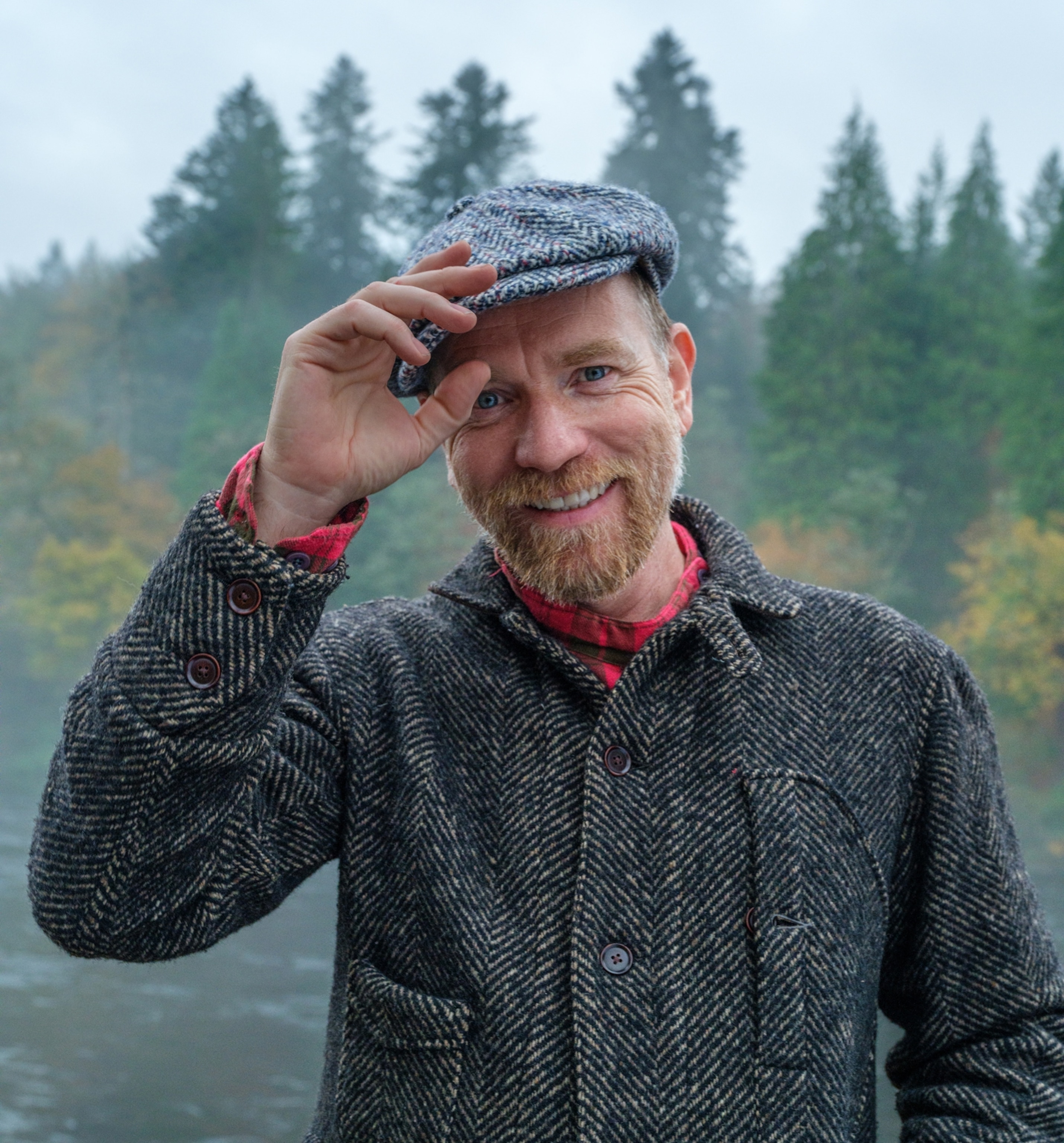
In Long Way Home, the latest installment of Ewan McGregor’s epic motorcycle travel series, the actor found himself in Svalbard, the Norwegian archipelago almost at the North Pole. It was far from a tourist idyll: Coal mining has left a scar on the terrain; nearby glaciers are retreating; and, just as a capper, leaving camp to use the bathroom required an armed guard to ward off polar bears. Despite all that, McGregor gazed out at the surrounding tundra with genuine wonder.

The journey to Svalbard was more than two decades in the making. In 2004, fresh off filming the Star Wars trilogy that rocketed his stardom to new heights, McGregor climbed onto his BMW motorcycle and set out to circumnavigate the globe, embracing the beautiful, the ugly, and everything in between. That trip, taken alongside fellow actor Charley Boorman, became Long Way Round, the first of four TV documentary series. It also marked the birth of his second career as an adventurer offering unfiltered views of the world around him. “We’re encouraging people to go out into the world and look at it,” McGregor says. “Especially these days, when everybody’s becoming more and more attached to looking down into our phones.”
Between tidily packaged itineraries for social media consumption and worries about issues like sustainability, travel today can be tough. To all of this, McGregor offers a rousing counterargument: “There’s an amazing sense of excitement when you’re out of your own comfort zone or your own cultural experience.”

Long Way Round—in which McGregor and Boorman traveled from London, across Asia, and all the way to New York City—was followed by their journey along the length of Africa in 2007’s Long Way Down. Then, 13 years later, they rode from Patagonia to Los Angeles in Long Way Up. For Long Way Home, the pair covered some 7,000 miles through 17 European countries, stopping at a reconstructed Viking village and visiting a paragliding center in the Alps. Rarely has anyone so joyously celebrated the act of exploration in all its exhilarating and messy glory.
This is especially true of the visits connected to McGregor’s ongoing partnership with UNICEF. “I just thought they raised money for kids who were in famine situations or natural disasters,” McGregor says. UNICEF does do those things, but viewers of the Long Way series get a much wider view of UNICEF’s work, from a rock-climbing program for at-risk kids in Kazakhstan to a rehabilitation center for child soldiers in Uganda. (One such stop from Long Way Round, at a center for orphaned and homeless children in Mongolia, led McGregor to adopt his daughter Jamyan, now 24.) “The show’s reach and popularity has given UNICEF the chance to put children, their stories and voices, front and center,” says Philip Goodwin, CEO of UNICEF UK.
One of McGregor’s inspirations for Long Way Round was writer Ted Simon’s classic motorcycle odyssey, Jupiter Travels. Simon once wrote: “The challenge was to lay myself open to everybody and everything that came my way. The prize was to change and grow big enough to feel one with the whole world.”
It’s a gospel McGregor has now spread to a generation. Outside a fishing hut in Norway, he and Boorman encountered a young man on a motorcycle journey of his own. “He said, ‘I used to lay in my dad’s lap watching you two, and that’s why I got a bike,’ ” McGregor remembers. “That makes you feel terribly old! But it was also a cool moment.”

A version of this story appears in the April 2026 issue of National Geographic magazine.
