The Shaker chair is iconic. But what do we know about the people who made it?
Crafted by a sect that sought perfection, the classic American Shaker chair reflects the group’s devout spiritual convictions.

Thomas Merton once said, “The peculiar grace of a Shaker chair is due to the fact that it was made by someone capable of believing that an angel might come and sit on it.” The elegant object was created by a religious sect founded in Manchester, England, in the 1700s. Formally known as the United Society of Believers in Christ’s Second Appearing, the group earned the name “Shakers”(not to be confused with the Quakers) for the ecstatic dances that were part of their worship. The sect first arrived in the United States with Mother Ann Lee, who fled persecution in England and sailed to America with eight followers.
Christ had said, “Be ye therefore perfect,” and the Shakers accepted the challenge, forming utopian societies where members could work and pray. Throughout their history, Shakers built approximately 20 settlements located in various parts of the country. Shakers demanded celibacy, obedience to elders and eldresses, and the public confession of one’s sins.
Guiding tenets
Equality between men and women was a core principle. All were welcome, including Black, Indigenous, and Jewish people. Because of the Shakers’ chastity, children arrived by way of adoption, indenture, or conversion. The community provided a safe haven for orphans, widows, and families in need. Although members did not vote, they spoke out on issues such as abolition, labor rights, and women’s suffrage.

The cross to bear was not for everyone. “It cost something to submit your will to others,” a Shaker sister said. Communal life demanded extreme humility. Those unable to conform left or were pushed out.
Work was a consecration. “Put your hands to work, and your hearts to God,” Mother Ann instructed. To support the community, they sold baskets, blankets, brooms, seeds, herbs, and chairs. The Shaker chair, with its perfect balance of grace and utility, was emblematic of Shaker design. “They are sprightly—happy, almost; you don’t feel encumbered or engulfed sitting on them,” observes Jerry Grant, director of Library and Collections at the Shaker Museum in Chatham, New York.
(This radical religious sect had an outsize impact on American culture)
A symbol of the past
The chair was never meant to be an icon; it was designed for functionality, to be sat on. “The material world was a way of supporting spiritual life. It was outsiders who began to seize upon the objects as something they could adore without participating in the rigor of Shaker life,” says Robert Emlen, former university curator and senior lecturer in American Studies at Brown University.

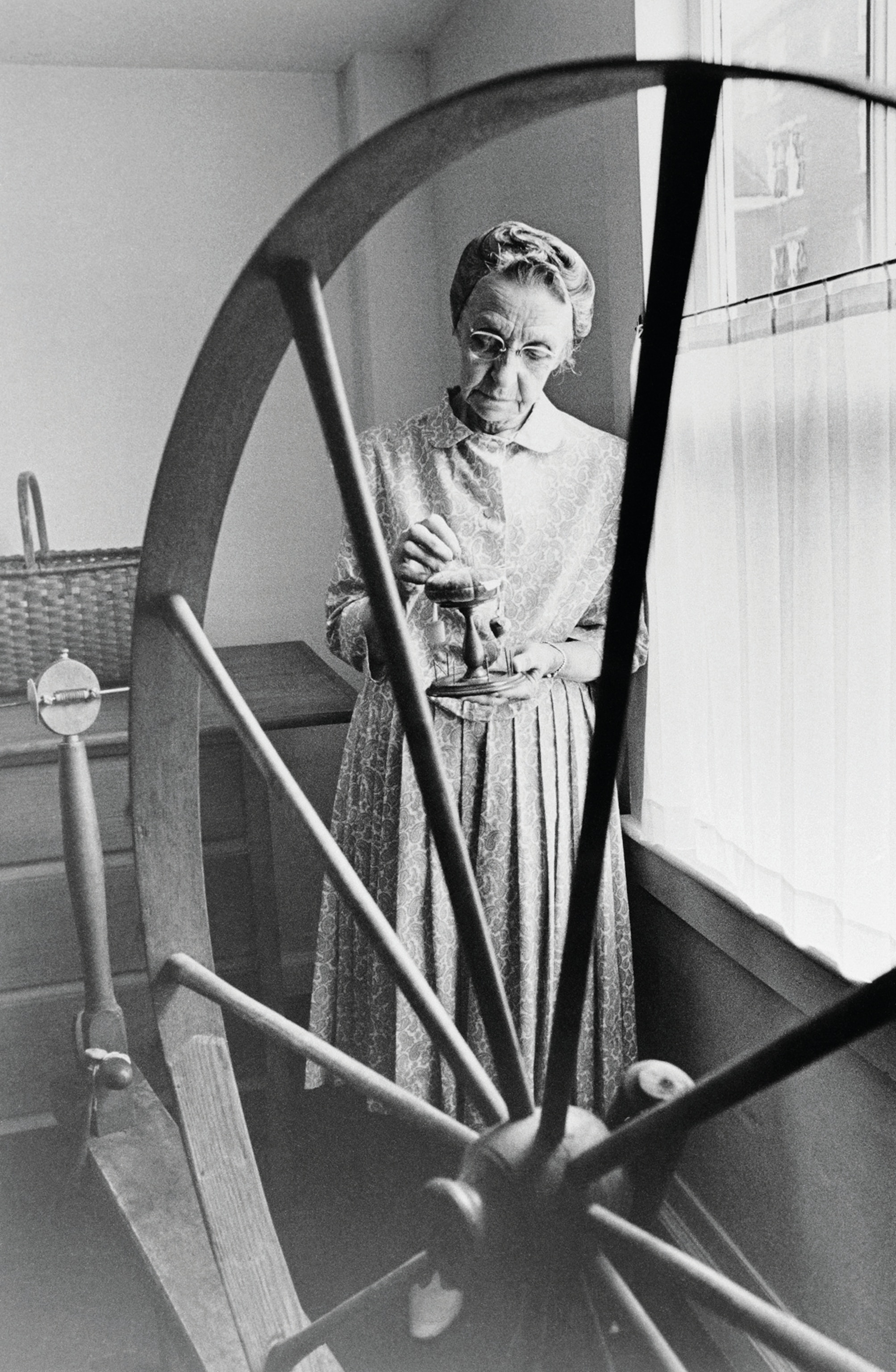
In 1987 a tall Shaker revolving chair sold for $88,000, a record price for Shaker chairs. It could be said that this was to the resentment of some of the Shakers themselves. “I don’t want to be remembered as a chair,” Sister Mildred Barker of Sabbathday Lake, Maine, asserted. Though the remark seems tinged with bitterness, there is more to it than that, Grant says. “It was her way of saying, Just remember what my life is really about.”
Sister Mildred died in 1990. Her village, Sabbathday Lake, is the only remaining Shaker community from a sect that reached its peak in the 19th century with an estimated 4,000 to 6,000 members. It is a working community with a small farm, museum, and store that sells handmade goods, but with only three Shakers to carry on the spiritual legacy. Perfection may have been out of reach (we are human, after all), but perhaps a glimpse can be found in the sublime grace of a Shaker chair.
A musical heritage