Et tu, Brute? The real story of Brutus’ betrayal of Caesar
Marcus Junius Brutus was a Roman politician, leader, orator—and one of history’s most infamous assassins. Why did he launch a conspiracy to kill Julius Caesar?

Despite Julius Caesar having spared his life, Marcus Junius Brutus murdered him. In Caesar’s final moments, surrounded by conspirators, there was no more painful stab wound than that inflicted by Brutus. Historians Plutarch and Appian claim that at first the dictator resisted his attackers, but upon seeing Brutus, he gave up. It was for his opposition to the supreme power of Caesar, the dictator, that Brutus would later become a symbol of Republican values.

Brutus was born the son of a patrician and a wealthy plebeian. His mother, Servilia, the patrician, maintained a long, romantic, and adulterous relationship with Caesar, which was common knowledge in Rome. Some historians play with the possibility that Caesar himself might have fathered Brutus. However, this seems unlikely: Caesar was only about 15 years old when Brutus was born (around 85 B.C.) and his relationship with Servilia must have begun at least several years later. In any case, Brutus the Elder, Servilia’s first husband, recognized Brutus as his legitimate son at birth. Brutus’s father would eventually be executed following a failed rebellion, by order of his rival Pompey the Great.
Hero or antihero?
In his first act of disloyalty, or even betrayal, Brutus the Younger later became a political supporter of Pompey against Caesar. Plutarch insists that Brutus acted out of political conviction, believing that Pompey represented a more just option against the threat of tyranny, despite having previously spoken out against his father’s murderer. Brutus thus joined the faction of the optimates, the conservative senators led by Pompey, and took up arms against Caesar, his mother’s lover. Perhaps this indecorous relationship was also a factor in setting Brutus against Caesar in the civil war.
"You too, my child?"
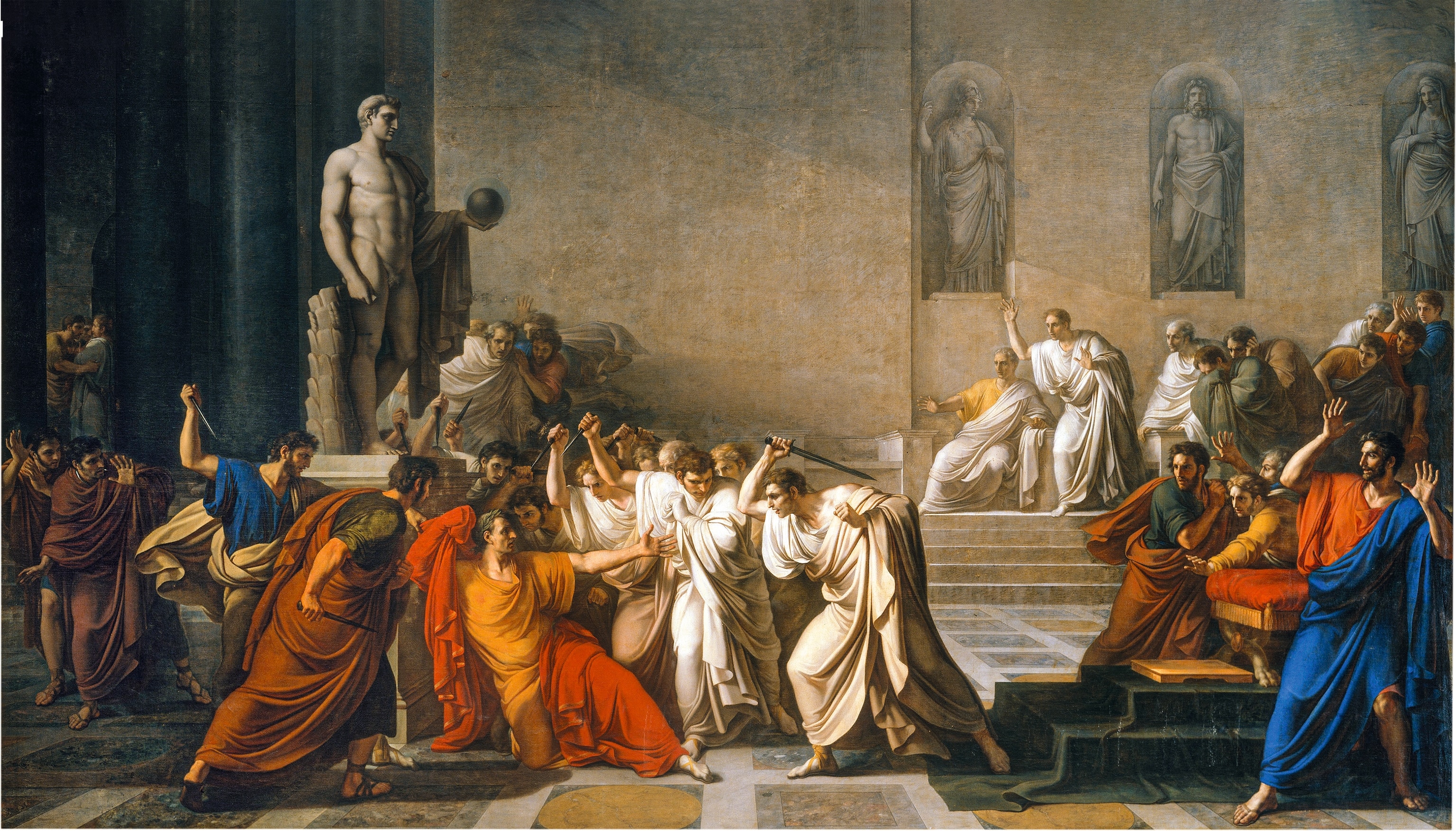
Shakespeare put three memorable words in the dictator’s mouth: “Et tu, Brute?—You too, Brutus?” However, the phrase is a Renaissance invention. Suetonius and Cassius Dio (neither of whom were contemporaries) are the only writers who, without giving it credibility, reported the claim that Caesar said in Greek, “Kai su, teknon?—You too, my child?” This would have been an expression of bitter disappointment. But the attack was so swift that it is quite possible, as Suetonius also notes, that Caesar died without saying a word.
When Caesar defeated Pompey at the Battle of Pharsalus in 48 B.C., it looked as though Brutus’s life was over. However, Caesar was said to have ordered his officers “not to kill Brutus in the battle, but to spare him, and take him prisoner if he gave himself up voluntarily, and if he persisted in fighting against capture, to let him alone and do him no violence,” according to Plutarch’s account in his biography of Brutus. Brutus managed to escape during the battle and wrote a letter to Caesar, who pardoned him without hesitation. For the next four years, Brutus enjoyed Caesar’s favor. He was even made governor of Cisalpine Gaul (the north of modern-day Italy).
(He was the golden boy of ancient Rome. Did someone want him dead?)

His governorship was deemed satisfactory by both the inhabitants of the province and the new dictator. By 44 B.C., the year of the assassination, Brutus was already a praetor, the penultimate step before becoming a consul, the highest position in the Republic. It was thanks to Caesar’s decisive support that Brutus had achieved this position without having to go through the previous magistracies, a normal prerequisite for the prestigious title of consul.
The conspirator
As for his part in the plot to do away with Caesar, his own protector, Brutus appears to have been drawn into the intrigue by his brother-in-law, Gaius Cassius Longinus, who was also a praetor that year. “Brutus, it is said, objected to the [dictatorship], but Cassius hated the ruler,” wrote Plutarch, summarizing the origins of the conspiracy.

The tradition of classical authors is split on the verdict of Brutus, Cassius, and sometimes a third leader: Decimus Junius Brutus Albinus, Caesar’s former friend and general. While some paint them as tyrannicides, taking action against the unconstitutional concentration of power in order to usher in a return to the Republic, others portray them as parricides and bandits. The ancient texts also vary on whether Brutus or Cassius was the primary instigator.
The first Brutus
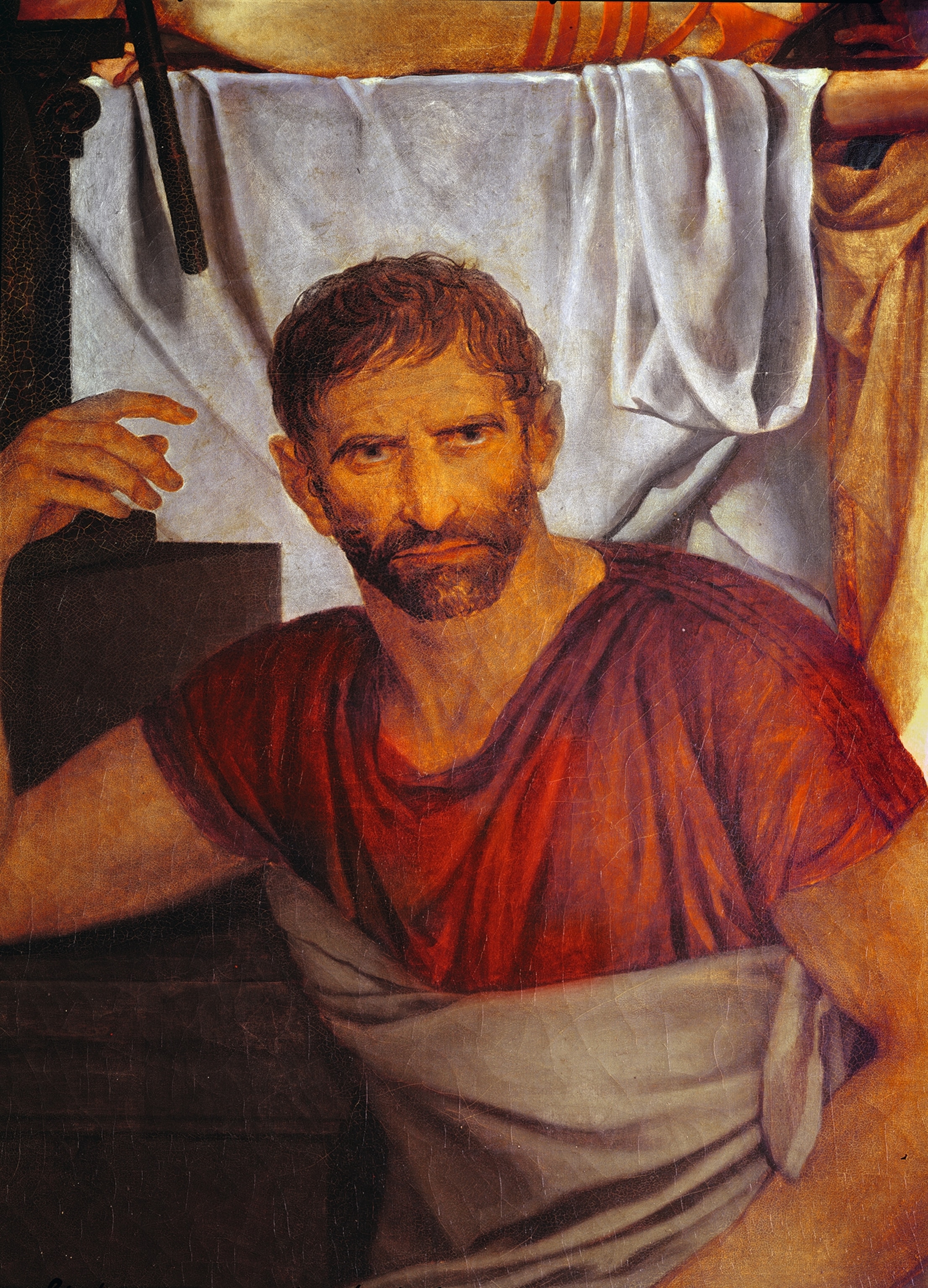
Brutus may also have been influenced by a climate of opinion among the Roman elite in favor of insurrection. In fact, some say Brutus may have heeded the messages written on the praetor’s tribune from which he dispensed justice, one of which read, “Brutus, art thou asleep?” It called on him to act like his ancestor Lucius Junius Brutus, who ended the Roman monarchy four and a half centuries earlier.

A sense of predestined responsibility and fulfillment of a family duty to the state could thus have incited him to assassination. Given his conservative senatorial convictions, he would have been torn between political opportunism and loyalty to his protector on one hand and the defense of liberty and loyalty to the Republic on the other.
The attack sends Rome into panic
Brutus was wounded on his hand, caught by a co-conspirator’s dagger, in the frenzy of blows that fell upon Caesar on the ides of March— March 15, 44 B.C. This may have been seen as a bad omen. The conspiracy had succeeded in taking the dictator’s life, but it stopped short of its ultimate goal: restoring the Roman Republican system. After the assassination, everything started to go wrong. The senators did not stay to applaud the tyrannicide, and Brutus was unable to give them his prepared speech. Everyone rushed out of the Senate in panic and confusion.
(The Ides of March—a day of murder that forever changed history)

The other consul that year alongside Caesar, his lieutenant Mark Antony, fled. According to Plutarch, “he put on a plebeian dress and took to flight.” Although the conspirators had been in favor of killing Antony too, Brutus thought that after Caesar’s death Antony would help restore the old political order, making his death unnecessary. He could not have been more wrong.
A grave mistake
The blood-stained conspirators took to the streets of a Rome shaken and panicked by the death of Caesar, the guarantor of order and benefactor of the plebeians. The instability made many think of the recent civil war. No one cheered the assassins.
Among the confusion, the conspirators gathered on Capitoline Hill, a sacred mount that rose above the Forum, and strengthened their numbers with a group of gladiators that Brutus and Cassius had hired. This was a time of uncertainty and anxiety for both Caesar’s followers and the conspirators.
The famous orator and politician Cicero, a friend and ally of Brutus who was excluded from the plot, was immediately called upon by the conspirators to defend the Republic. Cicero had done so 20 years earlier, when he crushed the conspirators of Catiline’s coup with an iron fist. Cicero advised Brutus to convene the Senate, which he was authorized to do as praetor. He said Brutus should get the chamber to condemn Caesar as a tyrant and, based on Antony’s reaction, immediately decide whether to spare or take Antony’s life. Brutus did not follow Cicero’s advice, and Cicero refused Brutus’s request to mediate with Antony.
Porcia, wife and ally
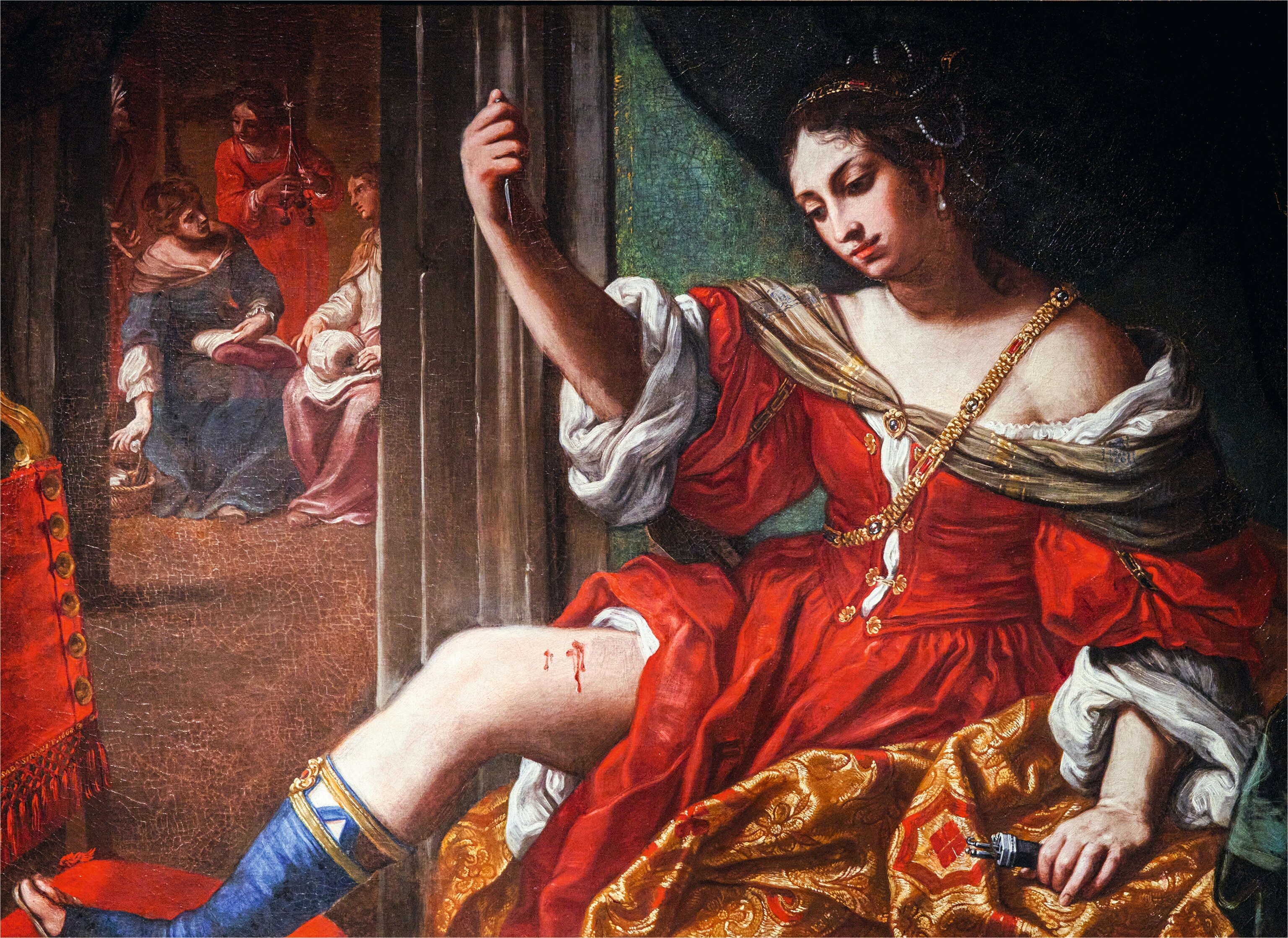
(Meet the only woman privy to the plot to kill Julius Caesar)
Troops commanded by Gen. Marcus Aemilius Lepidus, who was loyal to Caesar, restored order in the city. The next day, Lepidus occupied the Forum, keeping a watchful eye on the conspirators, who were still taking refuge on the Capitoline Hill with the people who had gone up to hear them speak.
Harmony through amnesty
Later, Brutus was able to address the citizens assembled in the Forum and explain why the conspirators had eliminated the dictator, promising to pay the rewards Caesar had granted his soldiers. By doing so, he intended to calm the legionaries and Caesar’s veterans, who were expressing their indignation in the streets. The assembly proceeded expectantly and calmly until anger broke out when Cinna began to denounce the dictator. This sparked riots, and the conspirators took refuge on the Capitoline Hillagain.
Meanwhile, consul Antony took action on his own account. He had received Caesar’s testamentary dispositions and some money from his widow, Calpurnia. On the afternoon of March 16, Antony met with Lepidus and Caesar’s men at his home. They must have clamored for the elimination of the conspirators, but it was a desire for mediation and reconciliation that prevailed. They needed to buy time. Antony convened the Senate for the following day.

The Senate meeting was held in the Temple of Tellus. The site was surrounded by Lepidus’s men and Caesar’s veterans, so Brutus and Cassius decided to stay away. As the senators edged toward a motion to condemn Caesar as a tyrant, Antony intervened, pointing out that condemning Caesar would entail reversing all of his political decisions while in power. And Brutus had already accepted one of them (paying the army the rewards Caesar had promised). The senators were forced to consider the extent to which each and every one of them was indebted to favors graciously granted by the dictator.
In the end, Antony’s proposal was approved with Cicero’s support: amnesty and concord. In other words, the conspirators would be exonerated, but the dictator’s decisions would be ratified. This calmed the senators, soldiers, and veterans, as well as the assassins. As part of the conciliation, two other decisions of incalculable effect were made: the public reading of Caesar’s will and a public funeral for the dictator, to prevent widespread discontent. According to Plutarch, Cassius rejected the proposals but Brutus accepted them.

That was another mistake on Brutus’s part. In his will, Caesar had gifted a substantial reward to every citizen and turned his gardens into a public park. Nostalgia for Caesar and popular outrage over the assassination were revived by news of these dispositions, more so when it was revealed that Caesar had named some of his own assassins as heirs. A few days later the funeral was held, arranged in dramatic fashion by Antony, who delivered a highly emotive and powerful eulogy, later immortalized by Shakespeare in the play Julius Caesar, with the first line: “Friends, Romans, countrymen, lend me your ears.” According to ancient sources, Antony quoted phrases in praise of Caesar that the conspirators themselves had uttered. He presented the unwashed corpse, showed the wounds sealed with dried blood, and waved the tunic torn by stab wounds. He even displayed a slowly rotating wax mannequin on which Caesar’s 23 stab wounds could be seen.
As Antony had calculated, indignation erupted among the people, who called for the death of Caesar’s assassins. A great pyre was spontaneously prepared to cremate the deceased leader, with offerings from the people. A poet named Cinna was even torn to shreds by the crowd, who mistook him for the praetor of the same name who had disowned Caesar in the Forum.

Exile, war, and death
Fearing for their safety, Brutus and the other conspirators left Rome. Although Brutus remained in Italy for five months, he did not even return to the city for the lavish Apollinarian games, which, as praetor, he was required to fund. He spared no expense: He did not sell the beasts he had bought, nor did he cut back on the actors he had hired.
A man of integrity
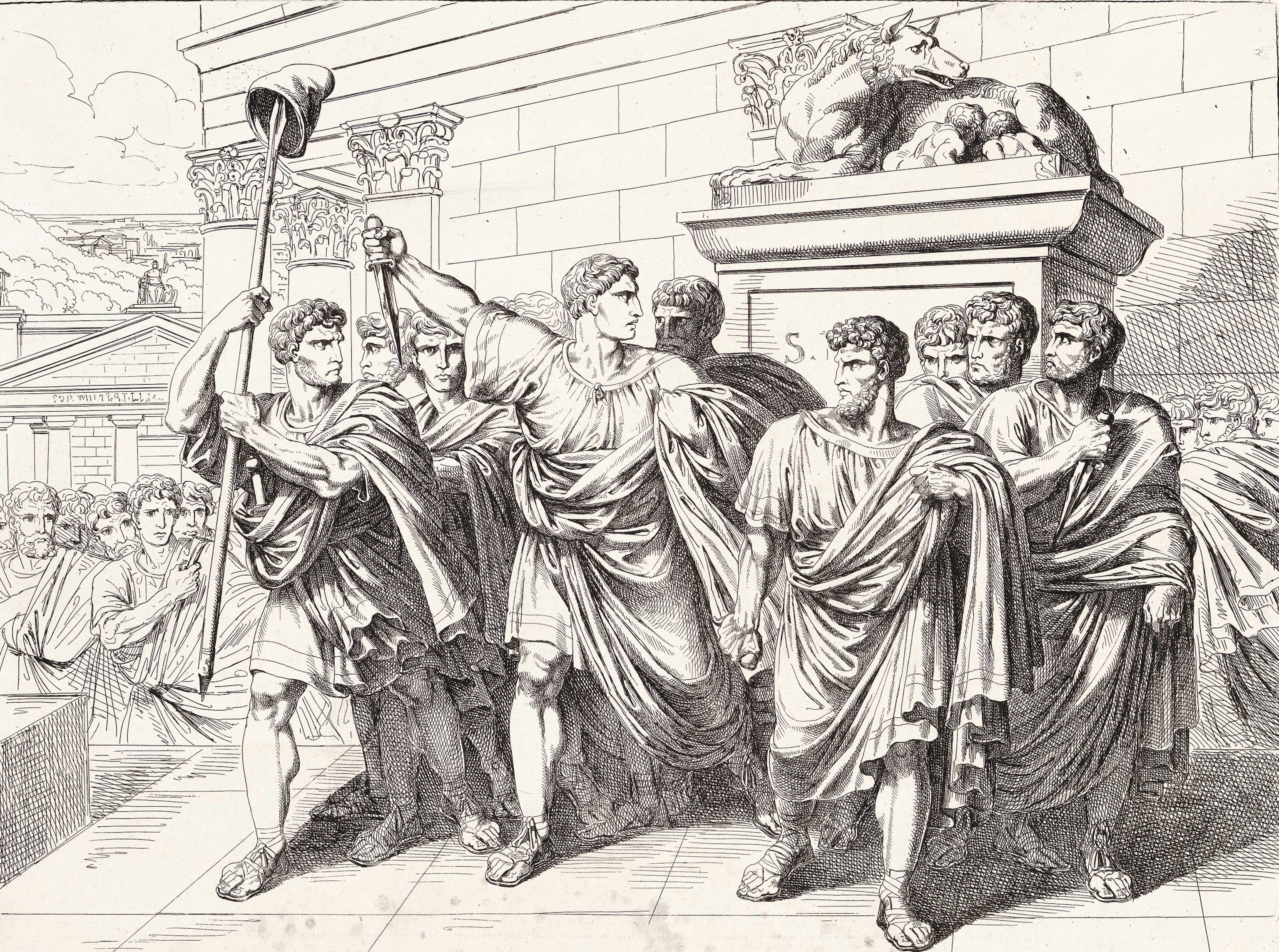
In the following months he maintained a very intense correspondence with Cicero, as demonstrated in the voluminous Epistulae ad Brutum (Letters to Brutus), which survives to this day. Both men were brooding over the unstable situation in Rome. Finally, Brutus and Cicero managed to meet in Velia, south of Naples, on August 17. It was the last time they would see each other. After the meeting Cicero tried to get to Athens, where his son was living, but bad weather forced him to sail back home.
(These notorious Roman emperors became ghostly legends)

By then, Rome had witnessed the arrival of Caesar’s appointed heir, his grandnephew, Gaius Julius Caesar Octavianus (known as Octavian, the future emperor Augustus), whom he had adopted. The fate of Rome depended on the political and military compatibility between Octavian and Antony. The assassins were banished, and Brutus, when his term as praetor came to an end, was made governor of Crete, a meager province with no army to speak of. The governorship was meant to cause offense and signal his fall from favor.
Brutus did not go to his province but instead to Athens, supposedly to study philosophy. As the people of Athens recognized and commemorated his deeds, Brutus raised an army. The outgoing governor of Macedonia ceded his province to Brutus. Quaestors (lower-ranking magistrates) returning to Rome from Syria and Asia provided him with funds, and the legions of Illyricum (in today’s Balkan region) went over to his side.Cassius was also raising an army.
In Rome, Octavian, Lepidus, and Antony agreed to form the Second Triumvirate in November of 43 B.C. and share power, albeit unequally. The assassination had been in vain: Rome had not gone back to the Republican constitutional order, and power had slipped from the hands of the Senate. Cicero was among the 200 who were condemned to execution. His head and hands were cut off as he fled in a Roman litter.
Superstition in war
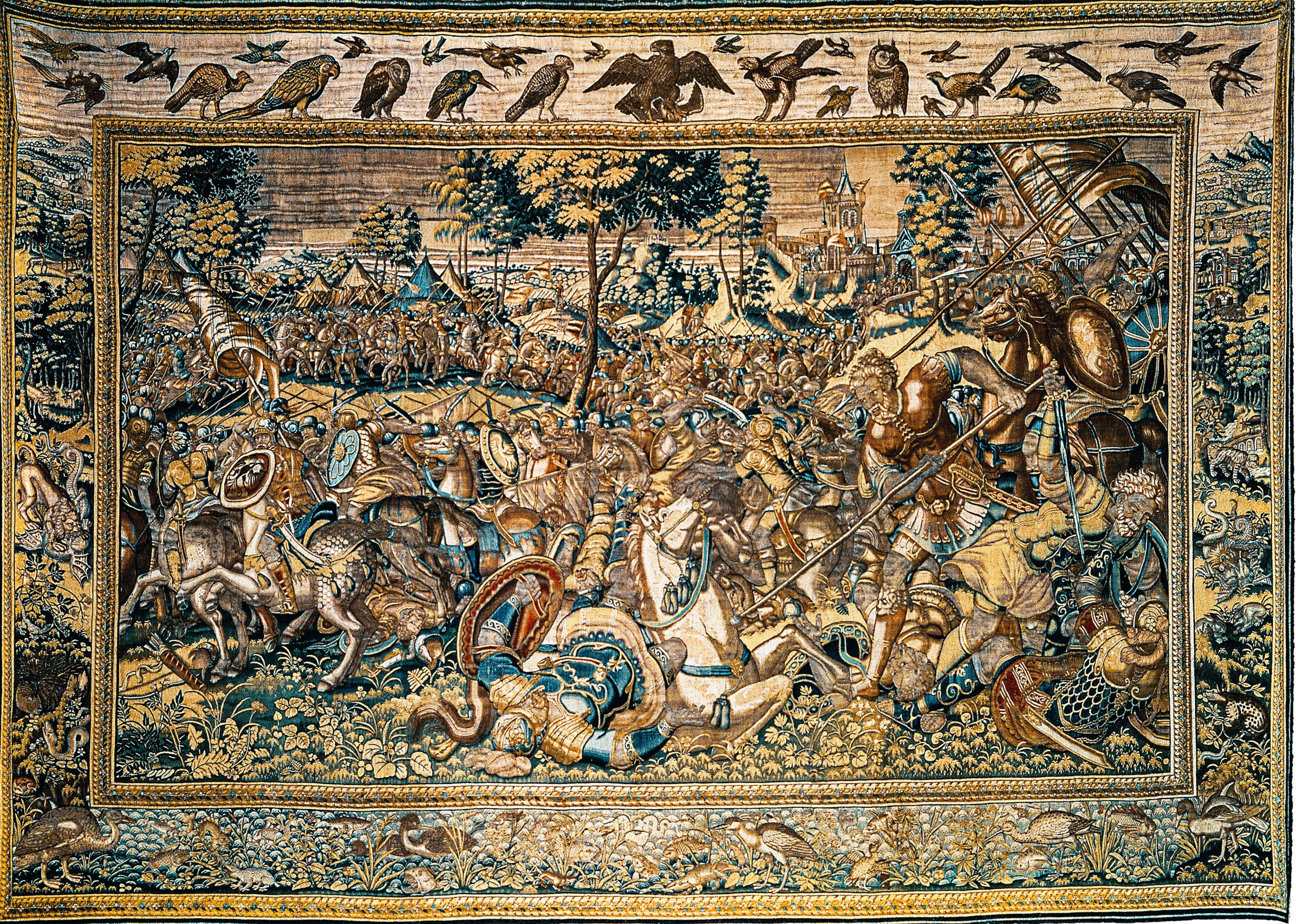
On the day of the battle, “it was thought that Cassius had a baleful sign during the lustration [a purification ritual]; for the lictor brought him his wreath turned upside down.” Not long before, a statue of Victoria had fallen during a procession. Plus, each day carrion birds had approached the camp.
Before the second battle, two eagles fought between the camps of Brutus and his enemies. The eagle on Brutus’s side fled. Following these events, his soldiers were fearful. “And the story of the Ethiopian is well known, who, as the gate of the camp was thrown open, met the standard-bearer, and was cut to pieces by the soldiers, who thought his appearance ominous.”
Meanwhile, in the middle of that year, Brutus began a military campaign in Macedonia (in the north of modern-day Greece) and Thrace (in parts of southern Bulgaria, European Turkey, and northeastern Greece). He then moved on to Asia, where he joined Cassius. At the beginning of 42 B.C., Rome’s eastern dominions, from Macedonia to Syria, were in the hands of Brutus and Cassius. The triumvirs controlled the territory from Italy to the Atlantic.
The dispute came to a head outside Philippi, a city in Macedonia. There Brutus and Cassius clashed with Antony and Octavian, with almost 100,000 men on each side. The first clash probably took place at the beginning of October in 42 B.C. Brutus led the right wing of the Republicans and Cassius the left. Brutus defeated Octavian, but Cassius succumbed to Antony. Unaware of Brutus’s victory and thinking all was lost, Cassius took his own life. Brutus then took command of the remaining forces. The second and final confrontation took place in mid-November, also in Philippi. It was the last battle of an army of the Roman Republic. Brutus was defeated and, as the victim of a tragic fate, died in the same way as his Republican father-in-law, Cato the Younger, who passed four years earlier after Caesar’s great victory over the Pompeians outside the African city of Thapsus: Brutus fell on his own sword. The Republic was doomed.
The death of Marcus Junius Brutus
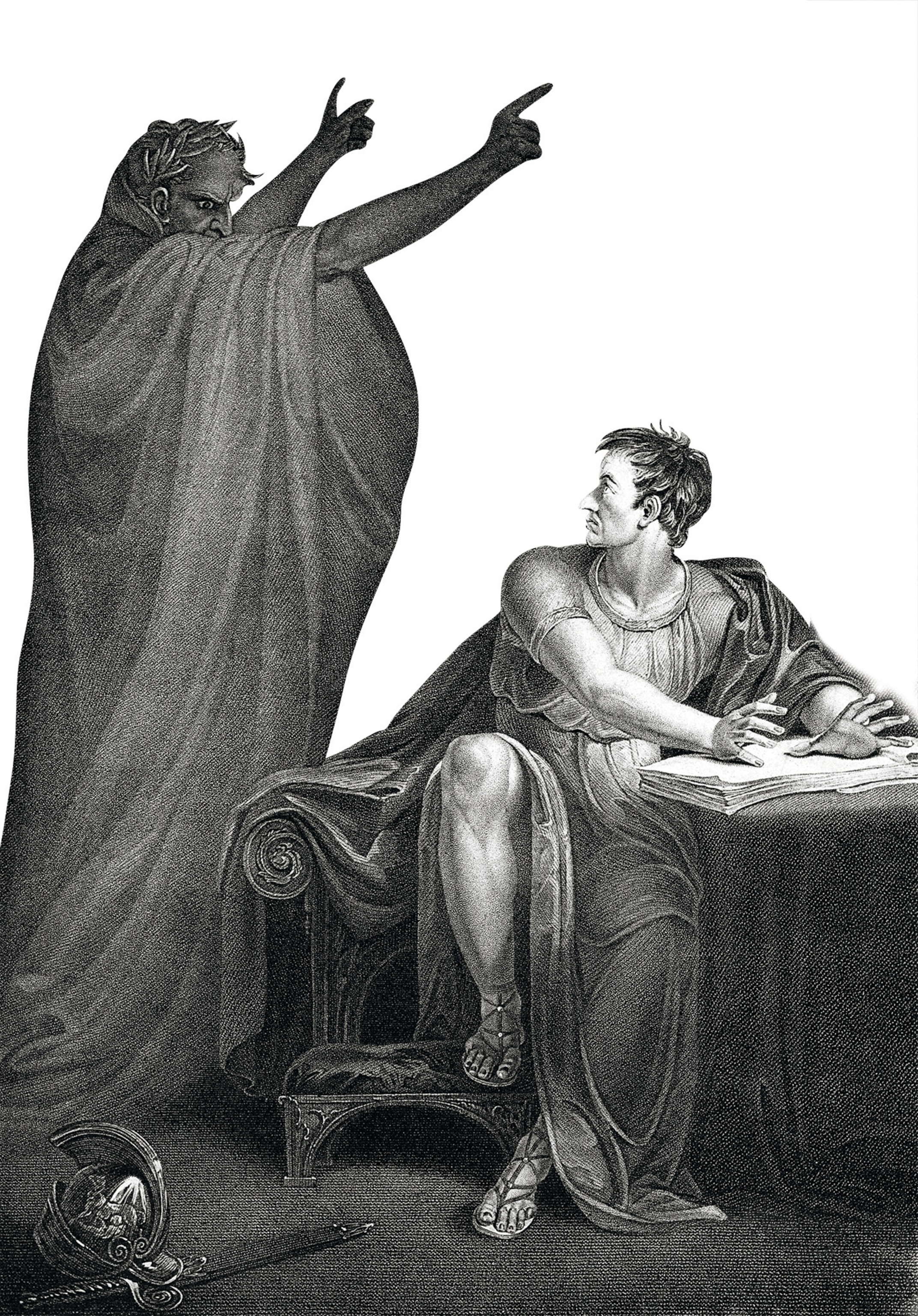
A BITTER END
According to Plutarch, Brutus escaped after the defeat, together with some faithful followers, including the philosopher Publius Volumnius, who had been by his side from the beginning of his campaigns. Plutarch recounts that on that night, Brutus looked up at the stars and shouted out some verses from Euripides’ Medea: “O Zeus, do not forget the author of these ills!” Finally, speaking to Volumnius, Brutus reminded “him of their student life, and begged him to grasp his sword with him and help him drive home the blow” but Volumnius refused. Another of his companions urged them all to flee, to which Brutus replied: “By all means must we fly; not with our feet, however, but with our hands.” Brutus shook hands with all of them and “rejoiced with exceeding joy that not one of his friends had proved false to him.” Then, after begging them to save themselves, “he withdrew a little way in the company of two or three friends, among whom was Strato, who had been his intimate since they studied rhetoric together. This man he placed nearest to himself, and then, grasping with both hands the hilt of his naked sword, he fell upon it and died. Some, however, say that it was not Brutus himself, but Strato, who at his very urgent request, and with averted eyes, held the sword in front of him, upon which he fell with such force that it passed quite through his breast and brought him instant death.”
Antony treated Brutus’s remains with respect: “He ordered the body to be wrapped in the most costly of his own robes and afterward, on hearing that the robe had been stolen, put the thief to death. The ashes of Brutus he sent home to his mother, Servilia.”

