All of these inventions came from the spread of Islam
While much of Europe was stuck in the Dark Ages, the spread of Islam led to innovations in math, science, and medicine. These are the inventions we're still using today.

A thousand years ago in the city of Baghdad, those who could read Arabic had nearly the same access to the works of Aristotle and many others in classical science as readers do today. It was made possible by the Abbasid caliphate, which, during its heyday in the eighth century, launched an ambitious translation initiative that gave Arab scholars entrée to the great philosophical and scientific works of the Persians, Indians, Babylonians, Egyptians, and above all the Greeks. The Islamic conquests had placed the ancient cultural centers of the Hellenistic world, from Syria to Egypt to Iran, in Arab hands—an expansion that fueled the Islamic “Golden Age,” which would endure until the Mongol invasion in the 13th century.
Thanks to the efforts of the caliphs, cities such as Baghdad became centers of learning, where the study of mathematics, astronomy, optics, and medicine flourished. The Arab world not only preserved and disseminated this intellectual legacy but also enriched it with new contributions, in turn laying the foundations for later scientific advances that would shape the future of the West.
New mathematics
Among the directors of Baghdad’s House of Wisdom, or Bayt al-Hikmah, was the mathematician and astronomer al-Khwarizmi, who played a crucial role in spreading the decimal number system. His book Concerning the Hindu Art of Reckoning (which survived only by way of its Latin translation, Algoritmi de numero indorum) introduced the West to the digits one through nine as well as the concept of zero. With this came the accompanying concept of place value, in which each digit in a number has a value according to its position; for example, in the number 123, one represents hundreds, two represents tens, and three represents units. Al-Khwarizmi’s work was fundamental for the transition from the Roman numbering system—which was both far more complex and limited for the task of calculating—to the Hindu-Arabic numeration system we use today.
(What are the ancient origins of your zodiac sign?)
The house of wisdom
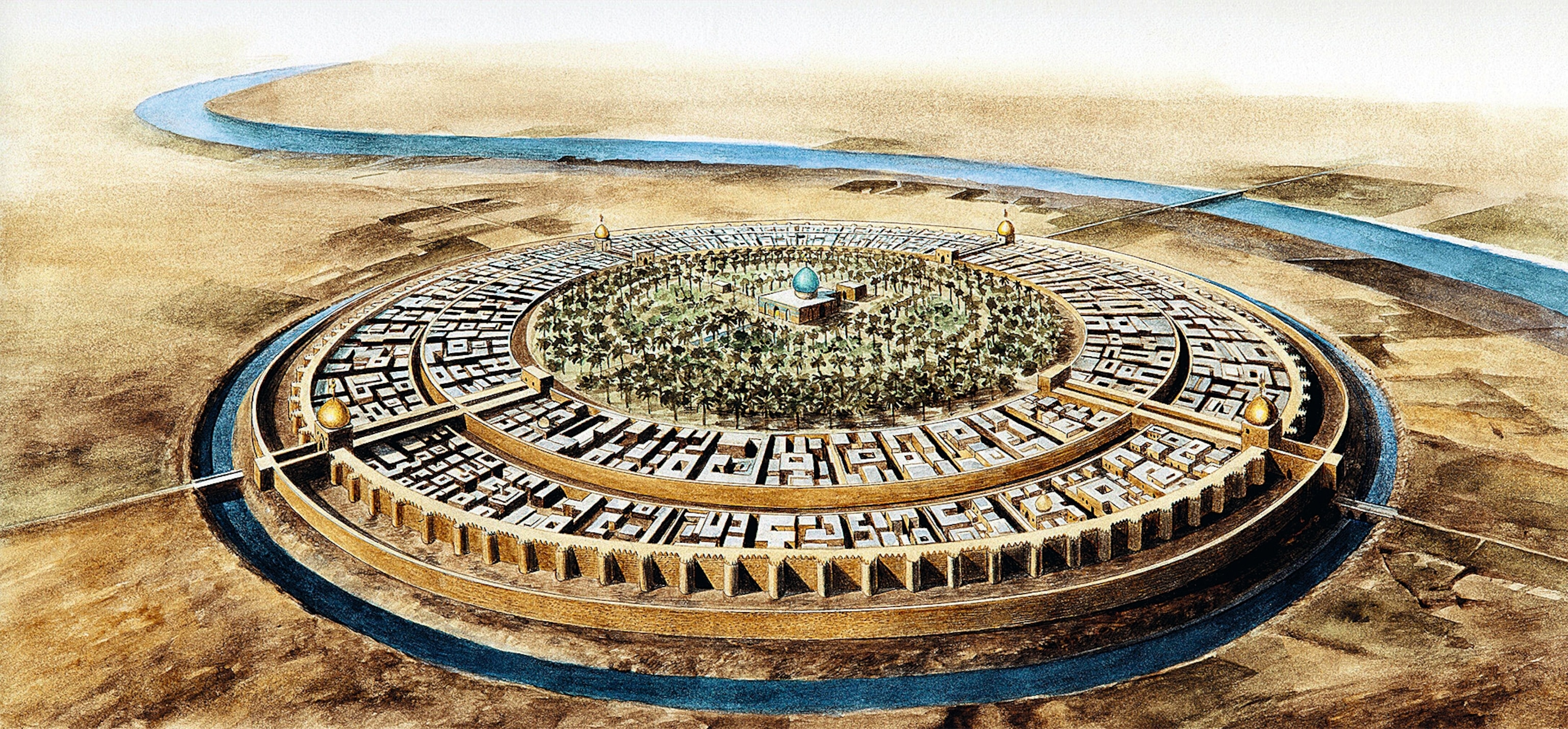
Iranian, Arab, Nestorian, Hindu, and Sabaean scholars addressed scientific, religious, and philological issues, devoted themselves to the observation of nature, and sought material achievements, such as the invention of instruments for observation and experimentation, and the creation of astronomical tables. It was in this context that algebra and a new science of optics emerged. From the eighth century onward, the manufacture of paper made it easier to disseminate knowledge, and libraries were developed. The science and philosophy treasured and renewed by Islam spread from Baghdad to Europe via Spain, Sicily, and southern Italy.
By making it easier to do calculations, al-Khwarizmi’s reforms represented a revolution in the world of mathematics, although they were not widely implemented until several centuries later. His book was responsible for the widespread, albeit false, impression that our current numbering system is of Arabic origin. It is, in fact, based on an Arabic translation of the numerical system of Brahmagupta, a seventh-century Hindu mathematician and astronomer who was the system’s true architect. In the 12th century Latin translations used “the al-Khwarizmi” for the numbering system he expounded, which became distorted in transmission to “algorismi,” which in turn became the basis of the word “algorithm.” The numbering system was not the only concept al-Khwarizmi brought to Western mathematics. In another book, The Compendious Book on Calculation by Completion and Balancing, he laid the foundations of Arabic mathematics and became the founder of algebra, a word that derives from al-jabr, or “completion,” in Arabic. The use of letters to represent unknown numbers (for example, x2+10x=39), provided methods for solving second-degree (quadratic) equations much more easily than had been possible.
The legacy of the Persians
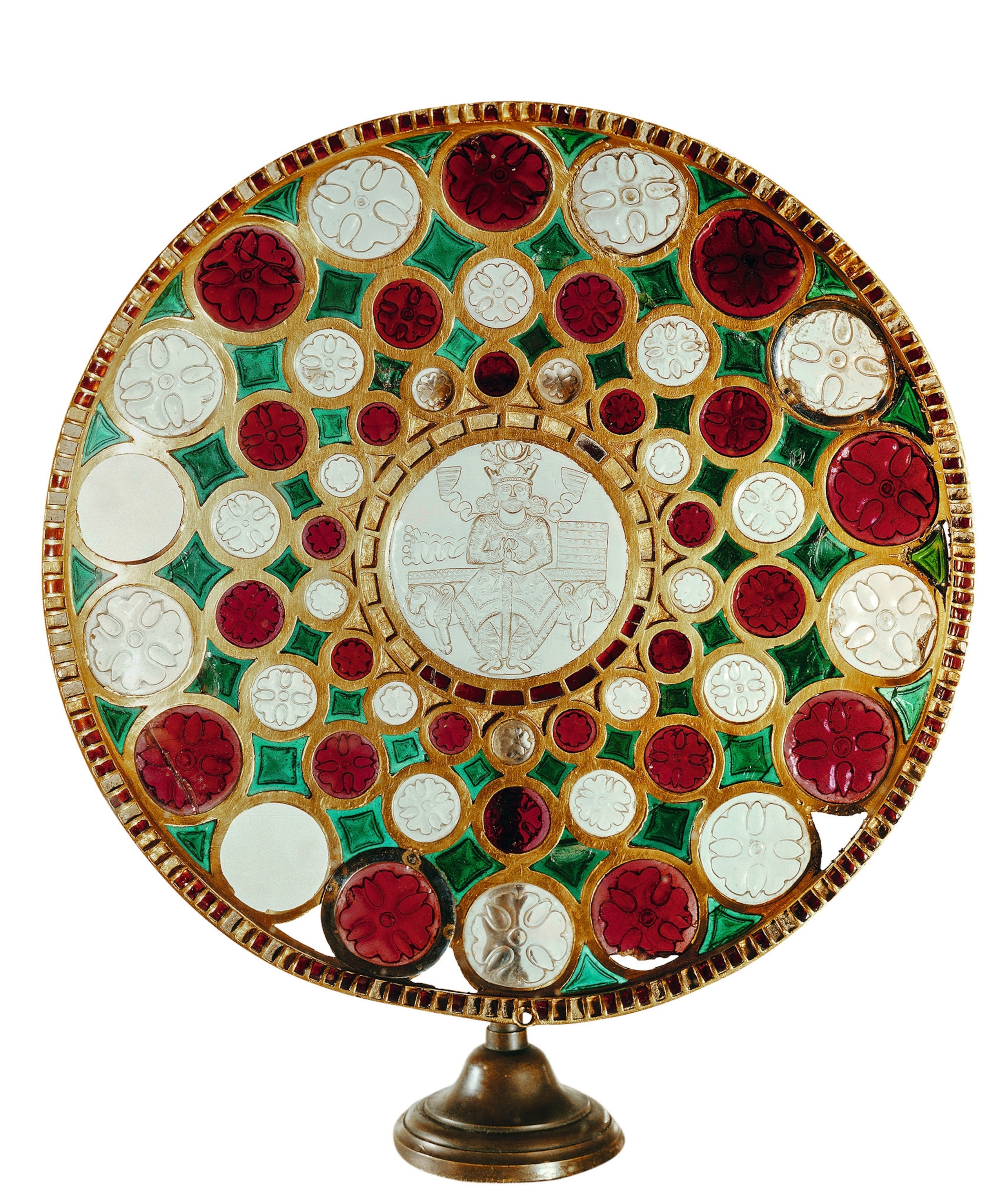
Later, in 529, Justinian banned Greek philosophy and closed the Academy of Athens, founded by Plato. Meanwhile, the exiled Nestorian and Greek scholars were welcomed by the Persian king Khosrow I in his brilliant academy in Gondeshapur, where Syriac was the language of science. When the Arabs conquered Persia in 637, this intellectual capital fell into their hands. The House of Wisdom in Baghdad was modeled on the academy in nearby Gondeshapur (in today’s Iran) and there, with the help of Nestorian scholars, numerous scientific and philosophical works were translated into Arabic.
Medicine and surgery
The medieval Arab world also saw scientific developments in medicine. Works such as The Canon of Medicine by the Persian scientist and philosopher Ibn Sina (also known as Avicenna) were fundamental to the training of doctors in Europe for centuries. Meanwhile, other Arab physicians, such as the Andalusian Abu al-Qasim al-Zahrawi (known as Albucasis in the Christian West), made significant contributions that were practical in their approach. In his medical and surgical encyclopedia, The Method of Medicine, al-Zahrawi described in great detail various diseases and their treatments, as well as surgical procedures.

Al-Zahrawi offers many innovations: the surgical treatment of varicose veins, vascular ligation in arterial hemorrhages, tonsillectomy, the use of a catheter to drain urine from the bladder, the placing of patients in the lithotomy position for gynecological examination, and the use of bandages hardened with flour and egg white to stabilize broken bones. Al-Zahrawi also emphasized the importance of anatomical knowledge. In the introduction to the encyclopedia, he writes: “I saw an ignorant doctor who incised a scrofulous tumor in the neck of a woman. He severed some arteries in the neck, thus causing hemorrhage, which continued until she died in his hands.” The work was conceived as a tool for medical students who were required to undergo a period of training before they could practice.
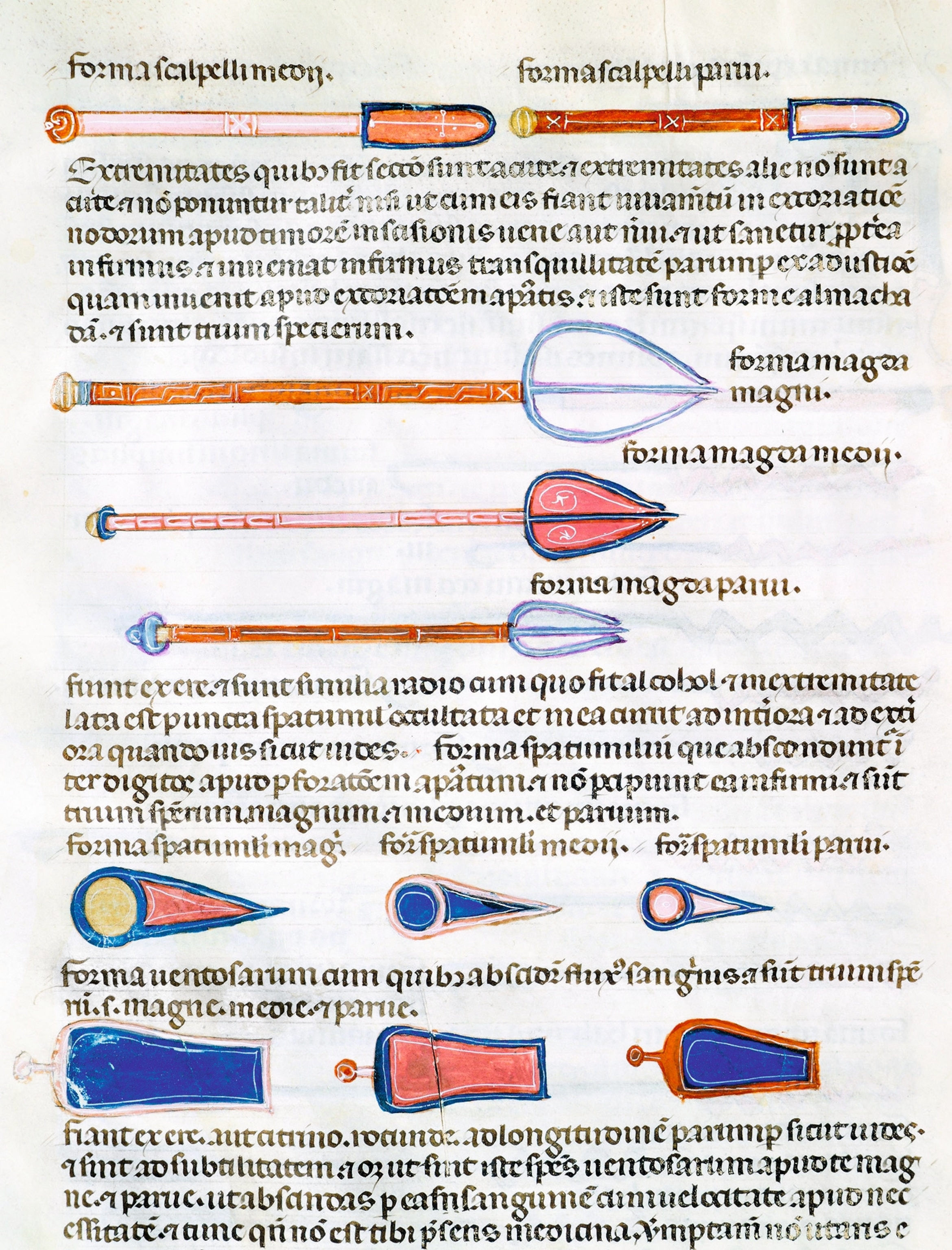
In addition to his writing and teaching, al-Zahrawi was an innovator in the design of surgical instruments. He invented and described tools such as the cautery (a metal rod heated to red-hot and used to cauterize tissue), the saw for cutting bones, forceps for dental extractions, and scissors for circumcision. These tools, designed to perform tasks with precision and efficiency, revolutionized surgical practice.
Arabic numbers: From India to the world
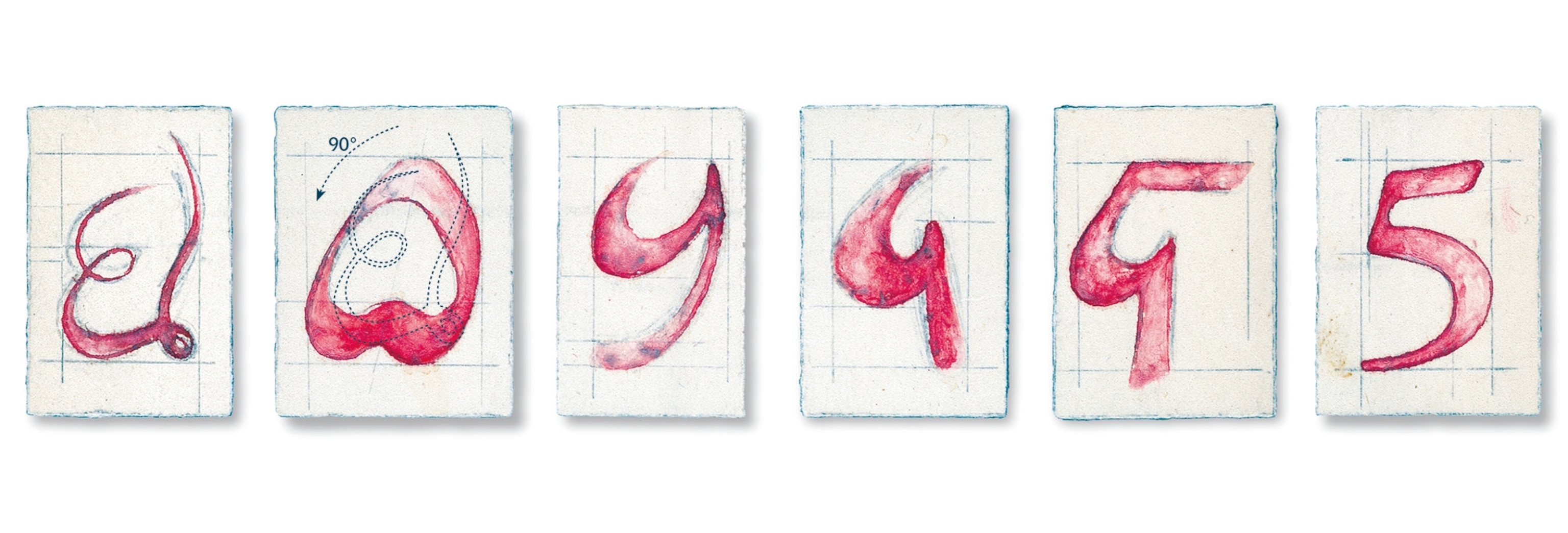
Indian script
The numerical system we use today has its origins in India and spread through the Arab world, starting in the ninth century, in this more delicate form.
Indian numerals
The Arab copyists modified and rotated the figures, making them easier to replicate; unlike the Indians, they wrote from right to left.
Indians and Arabs
The evolution we see here affects only Western Arabic numerals. Those used from Egypt to Iraq are Eastern Arabic numerals, which take different forms.
Ghobar numerals
In Arabic, ghobar means “dust,” and the numbers were named for the dust they left behind when calculations were made on a slate.
In the Maghreb
The shape of the numbers used in this North Africa region spread throughout Europe via Al Andalus, the portion of the Iberian Peninsula under Muslim rule.
Current numbers
Between the 13th and 15th centuries, the shape of numbers in Europe became fixed, helped, albeit unintentionally, by Gutenberg.
The camera obscura
Ibn al-Haytham, also known as Alhazen, was a 10th-century Arab scholar considered one of the fathers of modern optics. His Optics is a comprehensive treatise on the nature of light, vision, and optical instruments, in which he accurately describes phenomena such as reflection, refraction, and the formation of images in the eye. In addition to being a great theorist, al-Haytham was a tireless experimenter. He built optical instruments and designed experiments to test his hypotheses using a rigorous evidence-based approach. By observing how light, when filtered through a small aperture, would project inverted images onto the walls of a dark chamber, al-Haytham discovered a fundamental principle of optics: the formation of images through light.
This simple experiment provided a better understanding of how the human eye works and laid the foundation for the development of optical instruments such as cameras and telescopes. It also demonstrated that light travels in a straight line and that vision occurs when light from objects reaches the eye, refuting ancient theories that vision emanated from the eyes themselves.
(Medieval robots? They were just one of this Muslim inventor's creations)
Medieval Islam, land of innovation
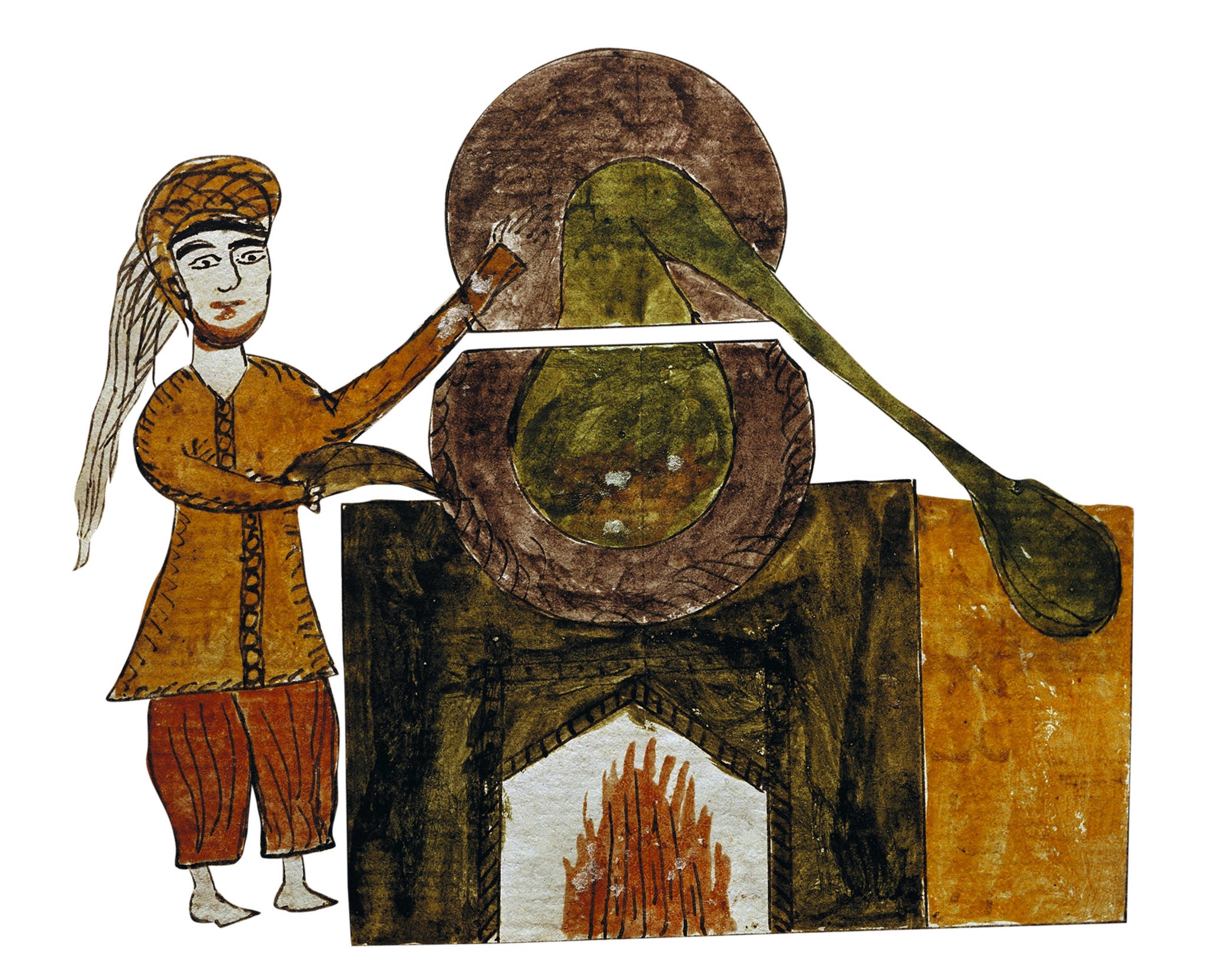
The alembic
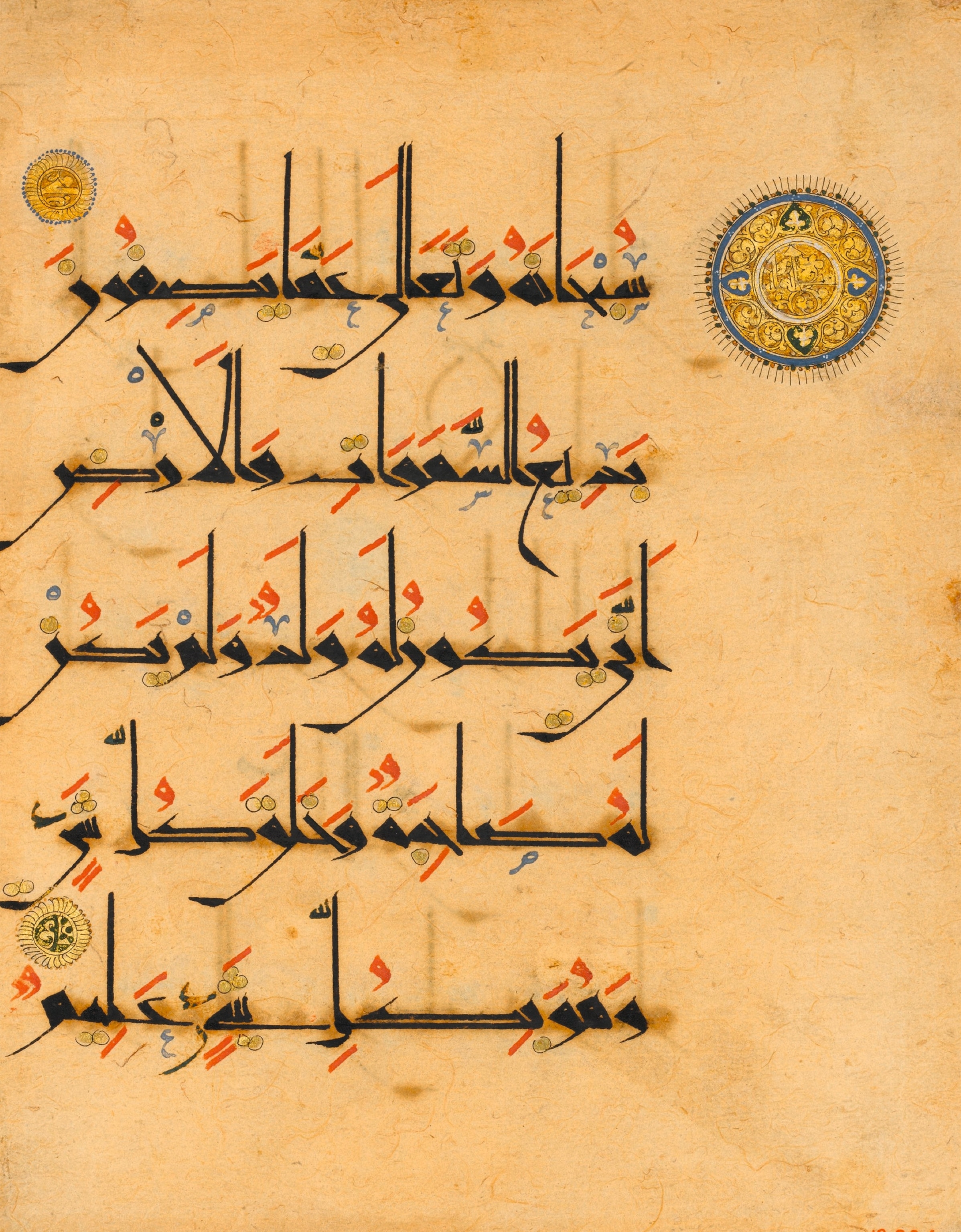
Paper
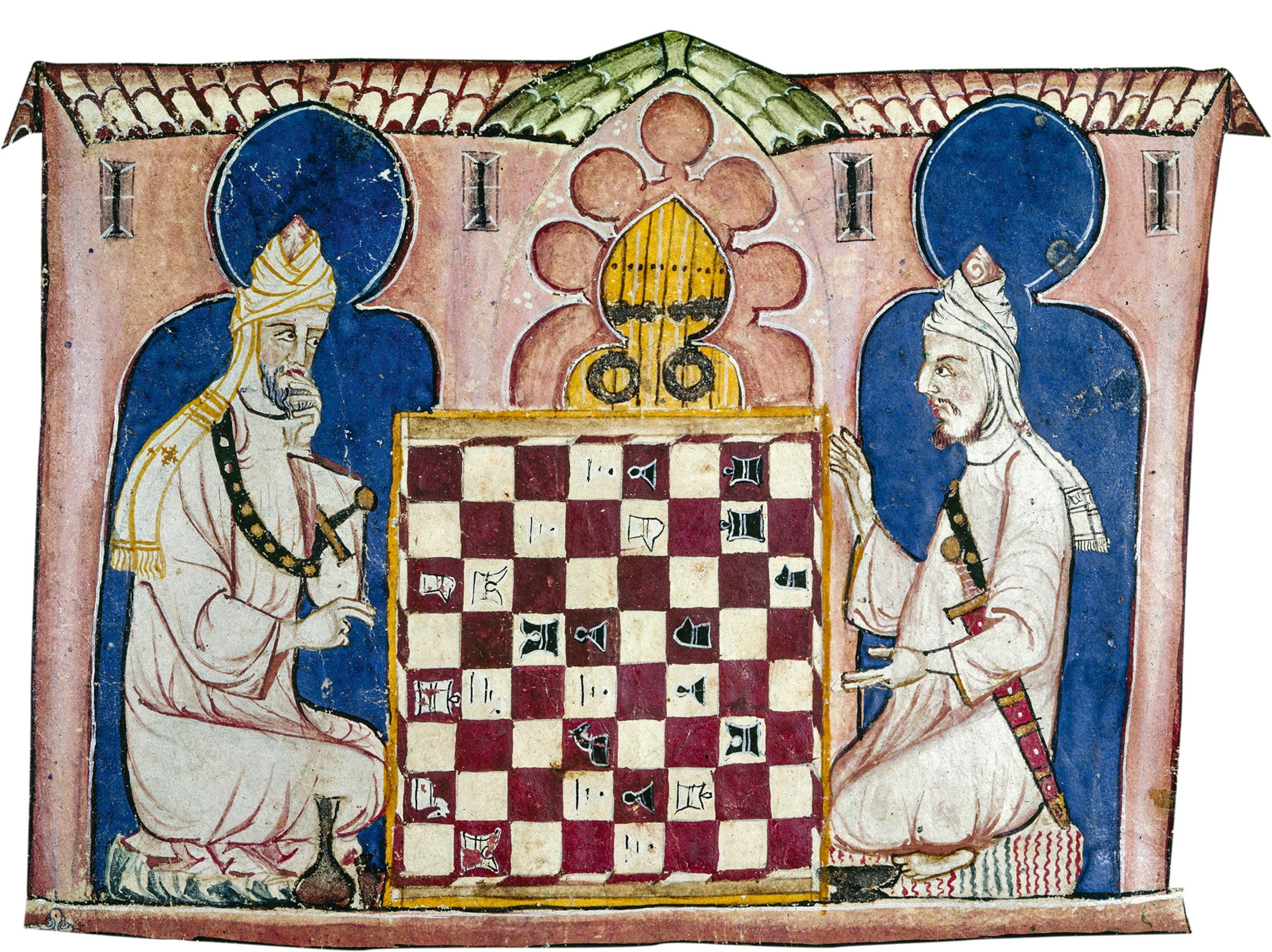
Chess
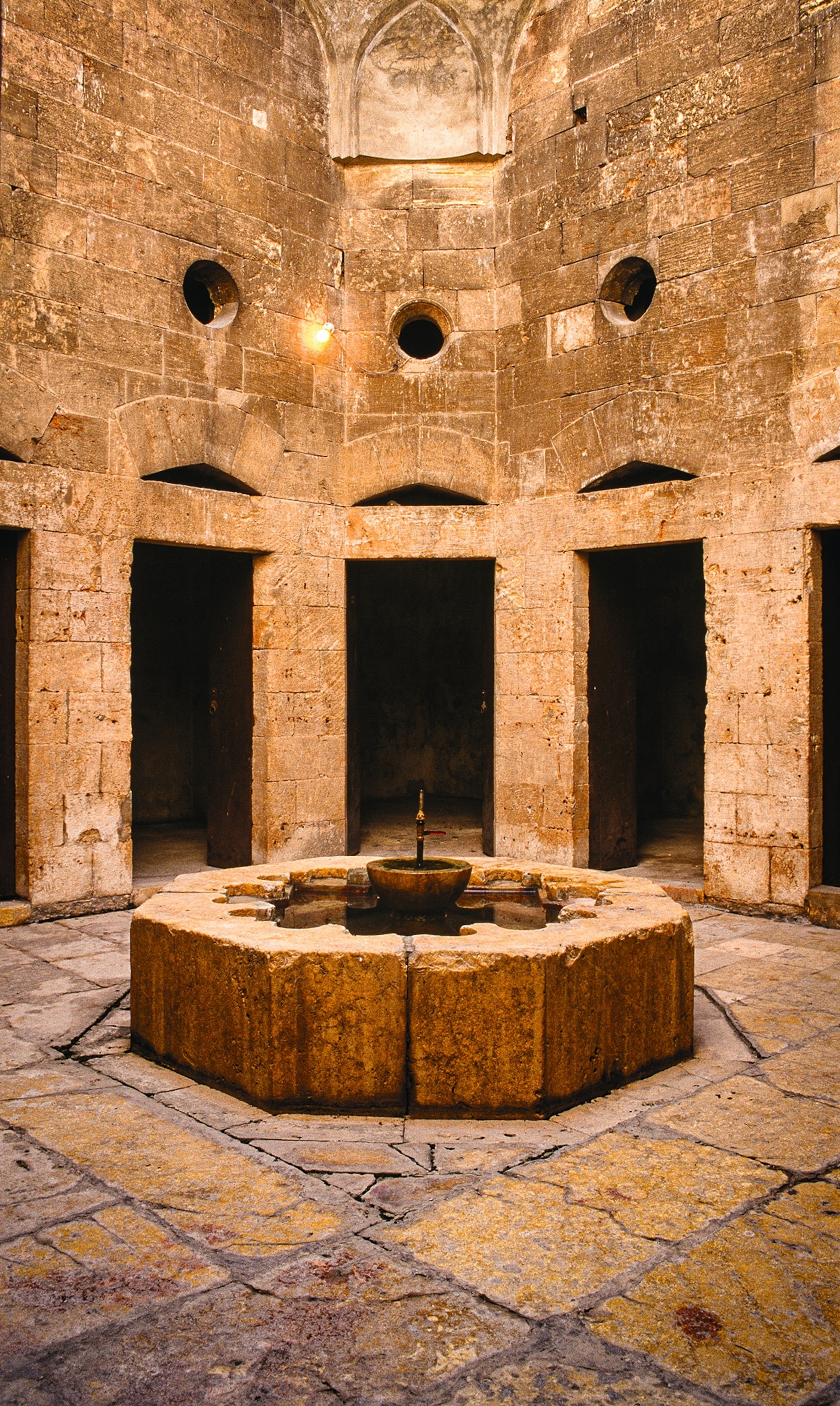
The first psychiatric institutions
Cosmography and cartography
Astrolabes were among the most famous instruments of the medieval Arab world. Although their origin dates to the sixth century, the Arabs made great advances in their design. Celestial maps were created to calculate the positions of the stars and the sun, but their representations of the heavens were based on a geocentric model of the universe, with the Earth at the center and all other celestial bodies revolving around it. Astrolabes were widely used in the Islamic world because they made it possible to determine the qibla (the direction of the Kaaba at Mecca) and calculate the times of daily prayers, which vary according to the position of the sun and moon. Despite advances in astronomy, with the theories of Copernicus and Galileo, which displaced the Earth from the center of the universe, astrolabes continued to be used for centuries due to their practicality and accuracy.
Although the compass was invented in China, it was in Al Andalus, in the 11th century, where the first compass to incorporate a floating lodestone was created. This device, which relied on the Earth’s natural magnetism to align the lodestone, allowed sailors to maintain a fixed course on the high seas, thereby facilitating maritime travel.
Surgical instruments

(Córdoba's stunning mosque-cathedral showcases Spain's Muslim heritage)
The Banu Musa brothers
In the ninth century, at the House of Wisdom in Baghdad, the three Banu Musa brothers became master mechanics. Many of the inventions described in their Book of Ingenious Devices seemed straight out of a fairy tale. The book revolutionized the concept of mechanical engineering and anticipated various technological advances of later centuries. The Banu Musa inventions include automatons capable of performing tasks, such as serving drinks or playing musical instruments. The book also describes a wide variety of hydraulic devices such as pumps and siphons, which could be used to move water and perform other tasks fundamental to the development of agriculture and industry in the Arab world. These inventions were not only a demonstration of the brothers’ technical skill but also showed how the engineering of the time was seeking to imitate and enhance human function.
The flying machine of Ibn Firnas
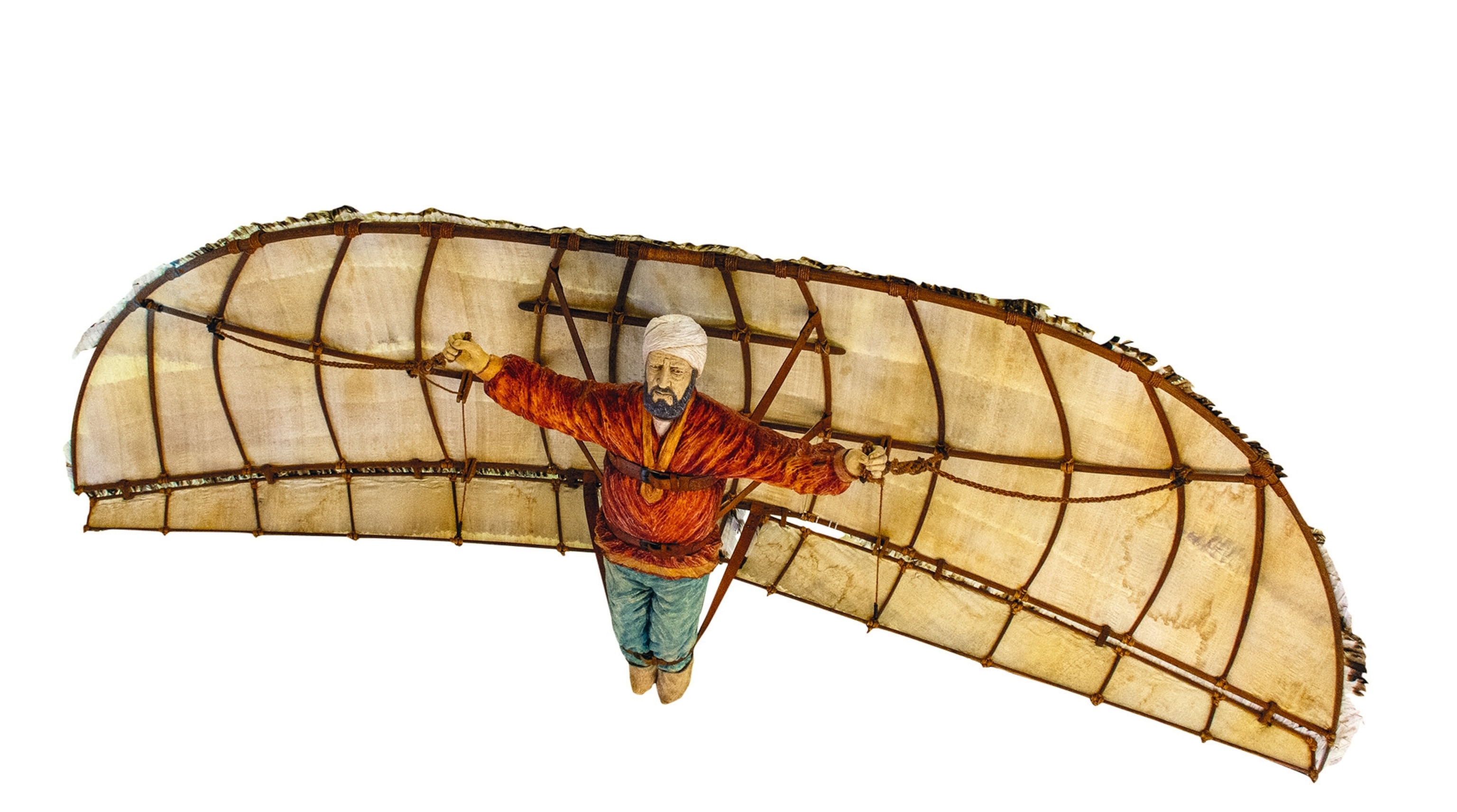
However, Ibn Firnas is famous above all for his attempt to fly. He created a silk suit lined with feathers, built a pair of wings like those of a bird, and, wearing them both, launched himself into the air from a tower in Córdoba. He allegedly remained in the air and traveled some distance, but he failed in the landing, “injuring his rear end, as he had not realized that birds use their tails when landing and he had not made himself a tail,” according to the Algerian historian al-Maqqari. It seems that Ibn Firnas did not flap his artificial wings with his arms, but rather launched himself from the tower and tried to glide using an approach similar to that used later by 19th-century German aviator Otto Lilienthal.
The sun sets on a golden age
Although some scholars argue that the Islamic golden age was already experiencing a decline, it is generally agreed that its definitive demise was by the sword of the Mongol hordes. In early 1258, when Baghdad was besieged and sacked, the House of Wisdom and the city’s invaluable libraries were destroyed. So many books were thrown into the Tigris River, it was said, that the water ran black from ink.
Orientation on land and at sea
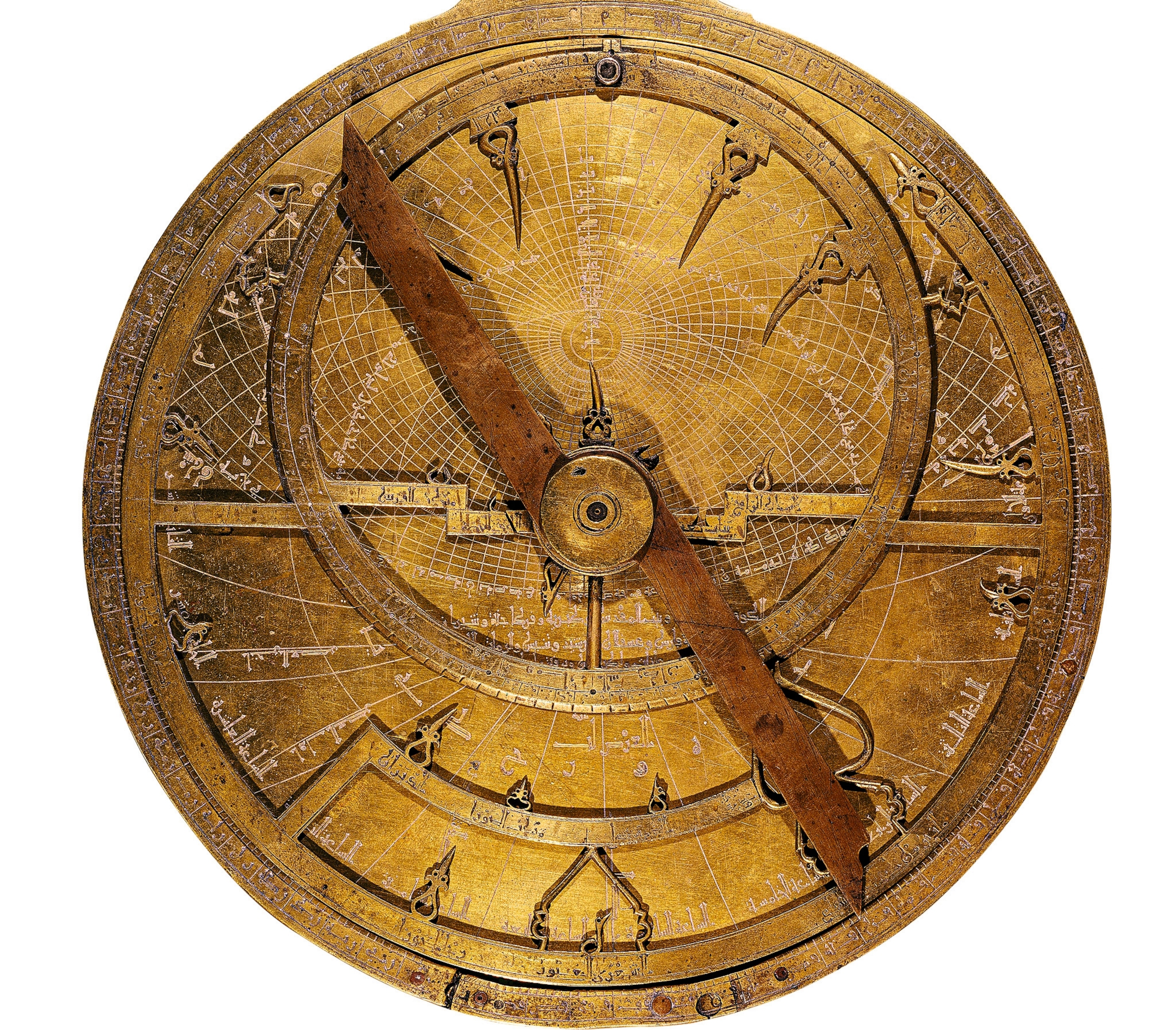
THE ASTROLABE
This instrument takes as its reference points the horizon and the observer’s meridian, the line that divides the sky into east and west. The image shows a mariner’s astrolabe, which can be used to determine the latitude (the distance from a given point to the equator) of a ship at sea by measuring the height of the sun or a star. This is indicated by a movable ruler called an alidade.

In the footsteps of the Banu Musa brothers
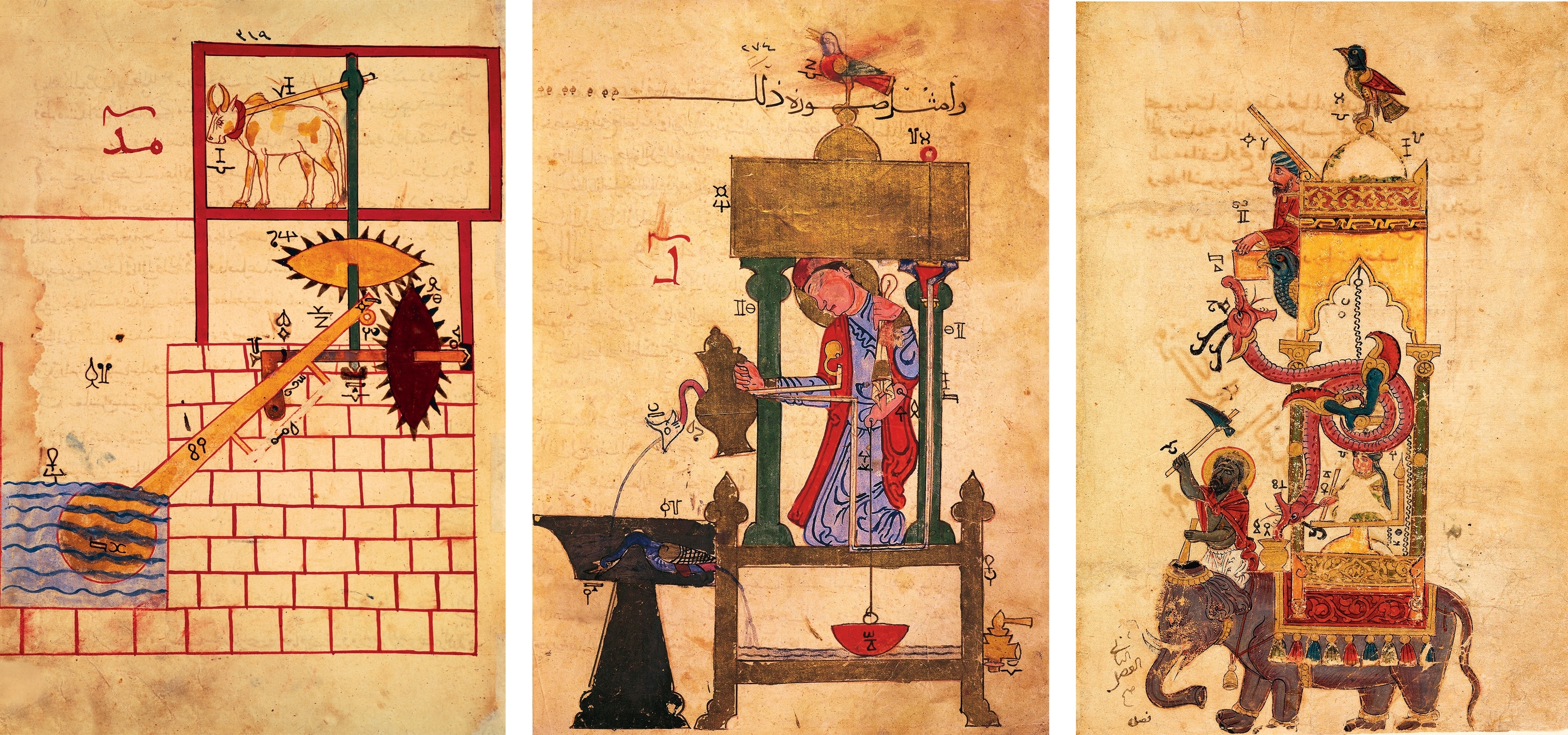
in the service of the Artuqid dynasty, based in Diyarbakır (in today’s southeastern Türkiye). One of the Artuqid rulers, Nasir al-Din Mahmud, commissioned al-Jazari in 1206 to compile The Book of Knowledge of Ingenious Mechanical Devices, to explain and illustrate some of his creations.
MODEL OF A WATER PUMP
An ox harnessed to an axle and circling around it moves a horizontal gear wheel whose teeth engage with those of a vertical gear wheel, which begins to turn. By way of the vertical wheel, a crank slides through a groove on the crank handle of the water pump, which has a chamber at the bottom end. As the crank handle goes up and down with the movement of the gear wheel, it proceeds along a groove in the water pump. When the crank handle goes up, it raises the water pump until the reservoir reaches an angle that causes the water to descend through the hollow handle. When the crank handle goes down, so does the water pump, which is submerged in the channel of water again.
FOR RITUAL ABLUTIONS
This mechanism was used to perform ritual ablution (wudu) before prayer. A servant kneels beneath a water tank. When the water is released, it flows down the inside of a column and, through a conduit inside the automaton, reaches the jug he held in his right hand. When the water rises above a certain level, the jug tilts and the water falls to perform the ablution. Just before the water falls, air displaced by the water in the jug escapes through a narrow opening, emitting a hissing sound that announces the water is about to fall. When all the water has fallen into the basin, a duck tilts and pours it into a tank under the servant. This causes a float to rise. In doing so, it releases the servant’s left arm, which moves forward, offering a towel and a comb.
THE ELEPHANT CLOCK
The elephant carries a water tank. Floating in the tank is a container with a hole that fills with water and takes half an hour to sink to the bottom of the tank. As it sinks, the container pulls on the rope that connects it to a mechanism located in the tower. When the bowl reaches the bottom, the mechanism releases a ball that rolls out of the beak of a falcon and falls into the mouth of a snake. The snake tilts its head forward while its tail rises, lifting the container back to the surface. As that process is underway, the elephant driver hits the elephant’s head with a goad and a mallet, and a bird whistles. As the half hour passes, the bird at the top traces a circle, as does a scribe below, his reed pen marking the passing minutes.
