How a Nat Geo Photographer Captured the Effects of Extreme Heat in Pregnancy
After becoming a new mother, National Geographic Explorer Nichole Sobecki set out to document how rising temperatures are changing what pregnancy looks like across the world.
As global temperatures rise, researchers are racing to understand the hidden toll extreme heat can take on expectant mothers and their babies. Hundreds of studies have linked heat waves and high heat exposure to adverse birth outcomes, "but the biological triggers that lead to these outcomes are the subject of growing research," writes Anna Louie Sussman in our magazine’s October 2026 pregnancy and extreme heat story.
For the story, National Geographic Explorer and photographer Nichole Sobecki was challenged with visualizing and documenting motherhood and extreme environmental change—a task she’s been working on for three years as part of her long-term project, Natura. Sobecki watched the story unfold in three regions of the world: Sydney, Australia; Fort Lauderdale, Florida; and the Pacific Island nation of Palau.
In Sydney, researchers are searching for the threshold at which a pregnant body can no longer cool itself; in Fort Lauderdale, climate doulas are trained in cooling strategies to help expectant mothers manage heat. This research could help pregnant women around the world, especially in countries like Palau, where the risk is felt most intensely.
Each location helped Sobecki understand a different part of the question: How concerning is the impact of extreme heat on expectant mothers and their babies?
This interview has been edited for length and clarity.
You were a new mom when you started this assignment. How did that experience influence the story?
I spent years wrestling with whether I could bring a child into a world that I had watched transform through my camera. I spent a decade photographing drought displacement across East Africa [that saw] families walking away from land that could no longer carry them. Almost everywhere I worked, it was women who absorbed the disruption first.
I also don't think that I am alone in wrestling with this question. There's a great Lancet study that surveyed tens of thousands of young people across ten countries, and found that 4 in 10 young people say that fears about climate change make them hesitant to have children. But I’m also quite aware of the ways in which my privileges insulate me from the worst of what I photograph.

I had previously worked in very hot environments. I lived in the Middle East and Africa for 18 years, so it wasn't my first time working in these environments, but it was my first time looking at the impact of extreme heat on the human body through such a precise lens.
In extreme heat, we're seeing that play out on a global level. When you look at the numbers of increasing pregnancy heat risk days globally and you play that out across the world's population, even if it's only a small percentage of increased risk across the entire human population, that is an enormous number of loss and tragedy.
(Here’s How Extreme Heat is Hurting Pregnant Women.)
How did you approach visualizing an abstract concept like heat?
That was one of the biggest challenges, because the assignment really asked me to photograph something that's largely invisible. It’s heat, and it’s also what heat does inside of pregnancy. Science itself is still racing to answer this question.
I tried to approach the assignment by looking for the people who were actively responding to that. In Palau, a traditional healer preparing herbal baths; in Sydney, researchers wiring sensors to a woman 30 weeks pregnant; a climate doula in Florida checking whether a new mother’s home could stay cool throughout the night.
Everywhere I went, I kept coming across the same through line, which is that the pregnant body is one of the most sensitive instruments we have for measuring a warming world—and also one of the most at risk.
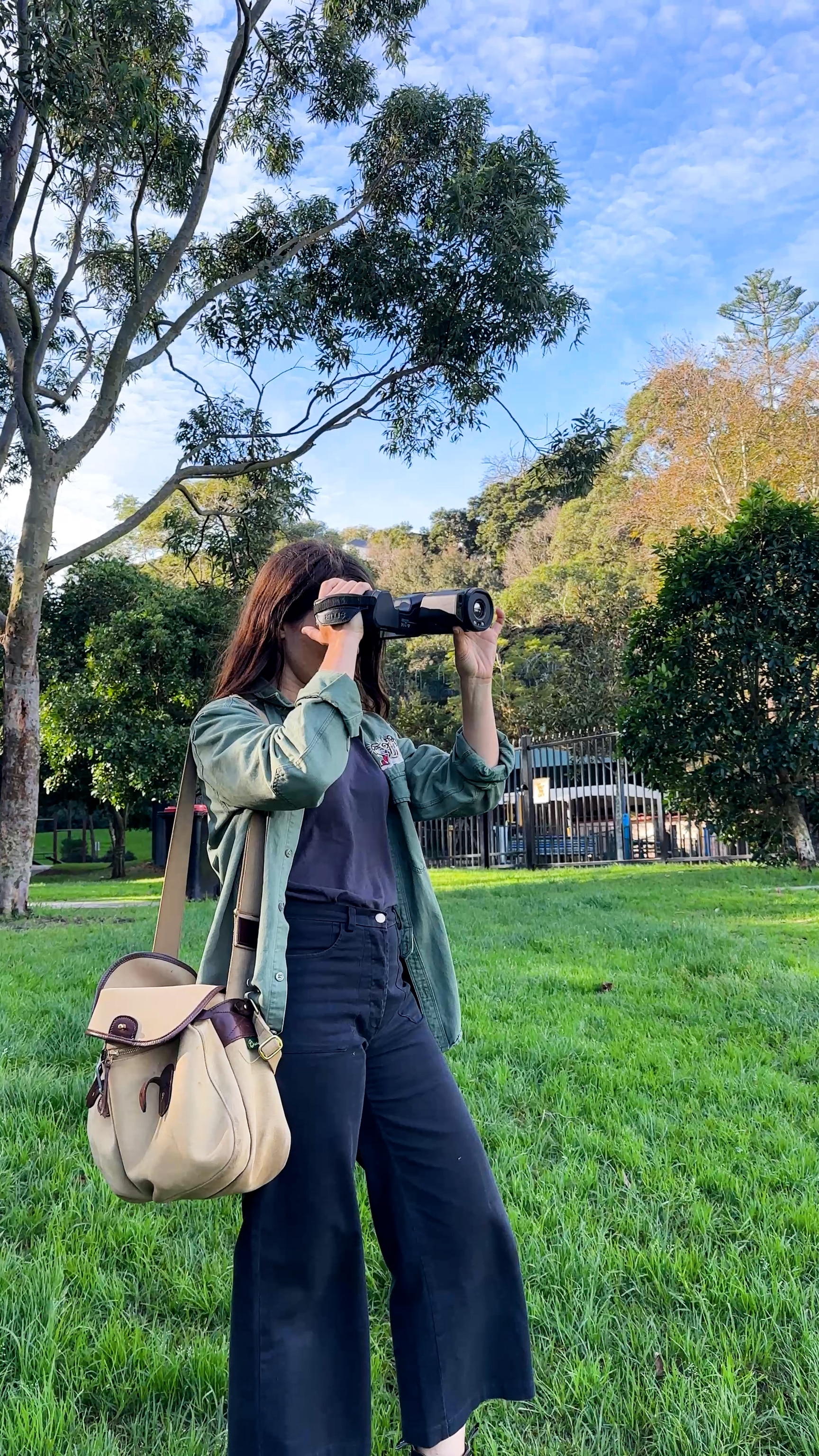
What was it like using a thermal camera to tell that story?
We have these images that we associate with heat, like heat maps of continents and cracked earth, but there are no people in any of those. I wanted to use the thermal camera to put the body back into pictures of heat and show exactly where the built world around us is failing us: a playground that's too hot to touch, a roof radiating heat into a bedroom. And the pregnant woman kind of glows through all these images. Her body is running warmer and working harder. The thermal camera allows us to see that.
A thermal camera doesn't photograph light, and photography literally translates to painting with light. So as a photographer, you're working almost in a different medium. The thermal camera flattens the world into what's hot and what's not. And what struck me in researching this story and thinking about how to visualize it, was how impersonal the language of heat often is.
You spoke with more than 40 women for this assignment. Was there a mother you met who you felt encompassed the reality of experiencing pregnancy in extreme heat?
There was one day in Palau where I had been invited to photograph the Omengat ceremony of a woman, Dee-Raya Antonio. She's a young climate activist and former Miss Palau. I was in this sort of back room as the women in her family were anointing Dee-Raya with coconut oil and turmeric. She was about to be presented to her husband's family after the birth of their child, Ellyn. It was an incredibly hot day, and sweat was pouring into everyone's eyes.
It struck me that this ancient ceremony has been happening in very similar ways for so many generations, and yet it was happening in such a transformed environment. Dee-Raya is in her early 20s, and she told me, “I'm not even that old, and when I was younger, it wasn't this hot.” She doesn't have air conditioning in her home, and her baby was already breaking out in heat rashes. You could kind of feel the sense of overwhelm and how quickly that change was happening.
(Pregnancy Reshapes the Brain. But Each Pregnancy May Do it Differently.)
In addition to being featured in the October edition of Nat Geo, pregnancy and heat are part of your project, Natura. Tell me more about Natura.
Natura is a long-term body of work that looks at how we change when the world is transformed around us. It does that through the stories of women who are deciding whether and how to foster life within it.
This project is both a long-term photography project supported by the National Geographic Society, and a feature-length documentary film, which follows four women, landscapes, and points along the spectrum of reproductive choice. Together, I hope these two sister projects will help widen our understanding of motherhood beyond biological birth, to what it means to care for, tend, heal, and defend the world we share, and how to do that in an age of burning. The heat and pregnancy story is one chapter of the photography series.
Part of what I'm trying to do is think about how we change as humans. And most studies show that intimate conversations across generations are much more likely to change us than politics and external data or research. We are more moved to change from our emotional settings than our cerebral. Natura is trying to find new ways to tell the climate story, and to do that through this most intimate and universal lens.

What do you hope people walk away from after seeing your photos of pregnancy and extreme heat?
I want people to feel connected to the women in the photos, to feel like they’re their neighbors, sisters, daughters. I felt very connected to the women that I worked with. I was a new mother myself while making this work, so none of it was abstract to me.
I think about scenes of photographing a woman named Melanie Sharpe, who's holding her daughter, who was born at 27 weeks in a neonatal intensive unit in Sydney. Or a woman named Ursela Salvador, who told me that she had been afraid to even hold her son at birth because he was so fragile. I want that sort of reality of the stakes that we're facing to come through in a way that people feel and to move out of just the data.
I’m also very interested in expanding our understanding of what creation and care mean in the transformed world, and the responsibility that we can all be taking for the world that the next generation inherits.

Halley Brown is a senior video producer and editor at National Geographic in Washington, D.C. She produces visual stories about history, culture, and science.
The nonprofit National Geographic Society supported Sobecki’s work featured in the accompanying magazine story through its partnership with The Climate Pledge.
