Tour the mighty palaces of the heroes of the Iliad
At the height of Greece’s Bronze Age, Mycenaean citadels were littered across the land, leaving a profound legacy that even inspired Homer.

A unique civilization of kingdoms flourished between the 16th to 12th centuries B.C., leaving its mark on subsequent civilizations of ancient Greece. The societies are named after Mycenae, the site that first gained renown through the work of archaeologist Heinrich Schliemann in the 1870s. Later excavations revealed other Mycenaean centers in the Argolis region, such as Tiryns and Midea. The Mycenaean culture spread throughout the Peloponnesus, around Sparta and Pylos, as well as on the other side of the Isthmus of Corinth, such as Attica (including its capital, Athens), Boeotia (notably Gla, Orchomenus, and Thebes), and Thessaly. The modern village of Dimini lies near the location of the Mycenaean city of Iolcus, which was also the legendary homeland of the mythical hero Jason.
Though these cities were capitals of small, independent kingdoms, their shared features suggest a single culture, distinct from contemporaries in the Near East and Egypt. Unity can be found in the layout of Mycenaean cities, which resembled each other in location, architecture, and the interior design of space.
Nearly all the Mycenaean centers were on high ground that stood out from the landscape, which allowed them to control the surrounding area. Some cities, such as Pylos, did not build defensive walls, perhaps due to the influence of palaces in the Minoan culture, centered in Crete, which existed without such protection. Yet most Mycenaean citadels were massively fortified.

The Mycenaeans used so-called cyclopean masonry. The term was coined in the 19th century from the writings of Pausanias, a geographer and traveler in the second century A.D. who, in his Description of Greece—the first known travel guide—stated that the enormous size of those walls meant that only Cyclopes, mythological monsters, could have built them. Cyclopean walls were made of huge, rough-hewn stones called ashlars—meaning they were not cut square and were stacked without any mortar to bind them.
(This Byzantine shipwreck transformed underwater archaeology)
The Mycenaeans may have borrowed this type of construction from the Hittites, a powerful Anatolian civilization with whom they maintained diplomatic relations. The most representative of these fortification walls can still be seen in Mycenae. At their widest, sections stretch nearly nine yards long and reach nine yards high. Their peak height is unknown, but some estimates suggest they soared up to 19 yards. The site also contains the only Mycenaean example of an ornate monumental entrance: the famous Lion Gate, named for the animals depicted on the lintel. This may have been an emblem of the Mycenaean royal house or a kind of talisman to ward off evil spirits.
Palaces and Homeric heroes
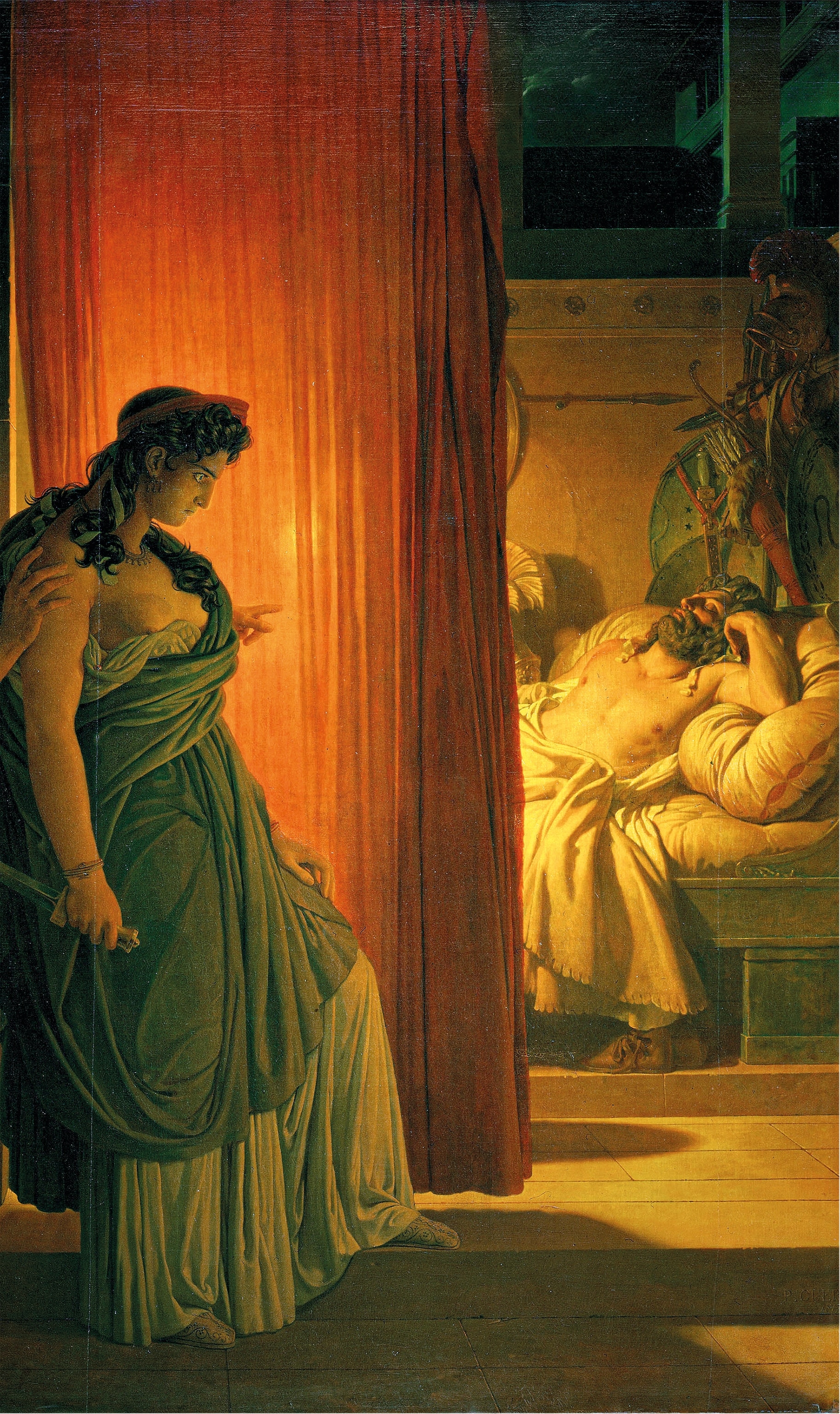
Lacking funding to continue, he convinced archaeologist Heinrich Schliemann that the epic poems weren't mere myths. When Schliemann excavated the layers at Troy in the 1870s, he
was sure he had found the Iliad city of Ilion. He also identified
his discoveries in Mycenae as the Treasury of Atreus, the Tomb of Clytemnestra, and the Tomb of Aegisthus. Meanwhile Carl Blegen excavated the Palace of Nestor in Pylos in 1939.
No less remarkable are the fortifications of Tiryns, a city that Homer, centuries later, described in the Iliad as “well-walled” for their mighty size, or those of the magnificent Gla. The citadel of Gla was the largest and its walls the longest, forming a circuit of about 1.8 miles (Mycenae’s walls were not even half as long). Outside the walls there were suburbs of homes and workshops, generally built beside a road, as well as scattered farmhouses where crops were grown. Necropolises have also been found outside the walls. These include elite burial sites, such as sepulchers called tholoi and the Mycenaean grave circles.
The throne room
Inside, Mycenaean citadels were organized in a similar way. Apart from private homes of varying sizes, there were places dedicated to religious worship, suggested by the presence of wall paintings, statuettes, and other votive offerings. Buildings were erected around the main structure in Mycenaean cities: the palace (anaktoron in Greek). Its set of structures were typically located in the central or highest part of the citadel. There are few remains of palaces in most Mycenaean sites, but those preserved in Mycenae, Tiryns, and, above all, Pylos provide a glimpse of their splendor.
(How Alexander the Great's daddy issues reshaped the world)
The identifying feature of a Mycenaean palace is the megaron, a Greek term derived from megas, or large. The megaron was a rectangular structure divided into three compartments. The first was a portico (aithousa) supported by columns that faced an open courtyard. The second was a large door that led to a hall (prodomos). Behind this was the most important space, the domos, known as the main hall or throne room, as it contained the seat of the sovereign. In the megaron at Tiryns, the stone base where the throne is believed to have been placed has been located. In the center of the room, a fire at the hearth (eschara) was used for cooking over the embers, and to heat and light the room. An opening in the roof allowed smoke to escape. Four columns around the hearth supported the roof. The megaron’s walls would have been covered with figurative polychrome frescoes.

The best preserved megaron is in the palace at Pylos, known as the Palace of Nestor, a reference to the old king who, according to the Iliad, reigned there and marched with other Mycenaean sovereigns to conquer Troy. The floor of beaten and compacted earth is preserved, plus some fragments of the ornamentation on the walls, and even the imprint of the fluted shaft columns, the only example in Mycenaean archaeology. On one side of the megaron sits a room with a kind of chest or bathtub (larnax) on a masonry plinth. It was thought that the room was intended for the monarch’s personal hygiene, but the tub's small size makes this unlikely.
The palace of Mycenae
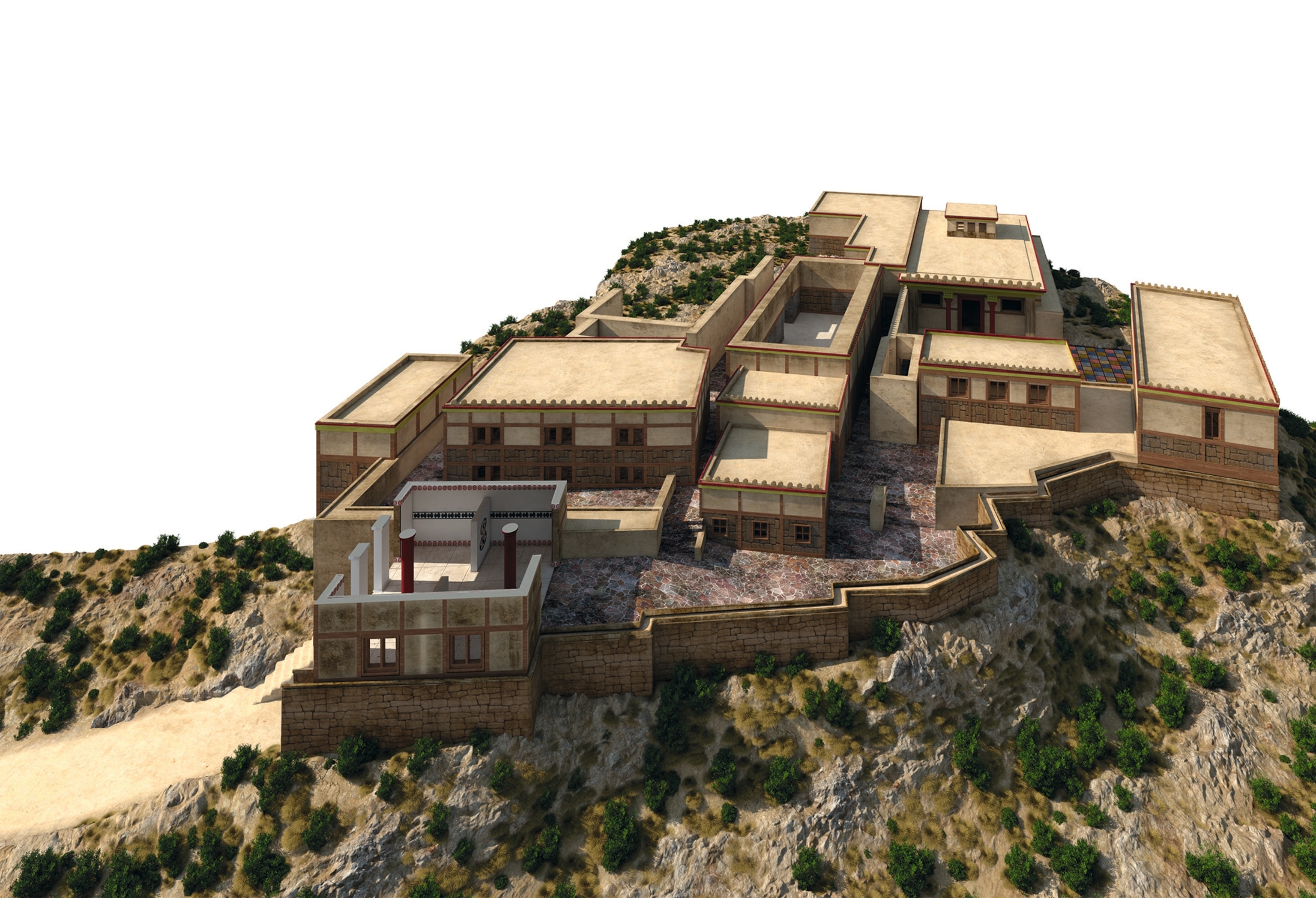

Other rooms in the palace served power-related functions. Storage rooms have been documented; they held large jars (pithoi) of wine and olive oil, given as tribute or as an offering to the lords of the palace by the surrounding population. There were workshops to manufacture consumer goods: textiles, perfumes, furs, weapons, furniture, and fine tableware—rooms have been discovered at Pylos crammed with stacked vessels. There were also workshops to smith gold and silver or carve ivory, precious materials imported from the eastern Mediterranean. Palace ruins at Thebes contained remains of lapis lazuli, a mineral found in what is now Afghanistan, which may have arrived in Boeotia via Mesopotamian trading partners.
Kings and generals
To effectively manage these riches, the palaces had scribes who kept the accounts on clay tablets. Incoming and outgoing products were recorded with the Mycenaean culture’s writing system, Linear B. At Pylos, in two rooms very close to the palace entrance, the largest Mycenaean collection of hundreds of short-term records on tablets was discovered.
Palace receipts and invoices
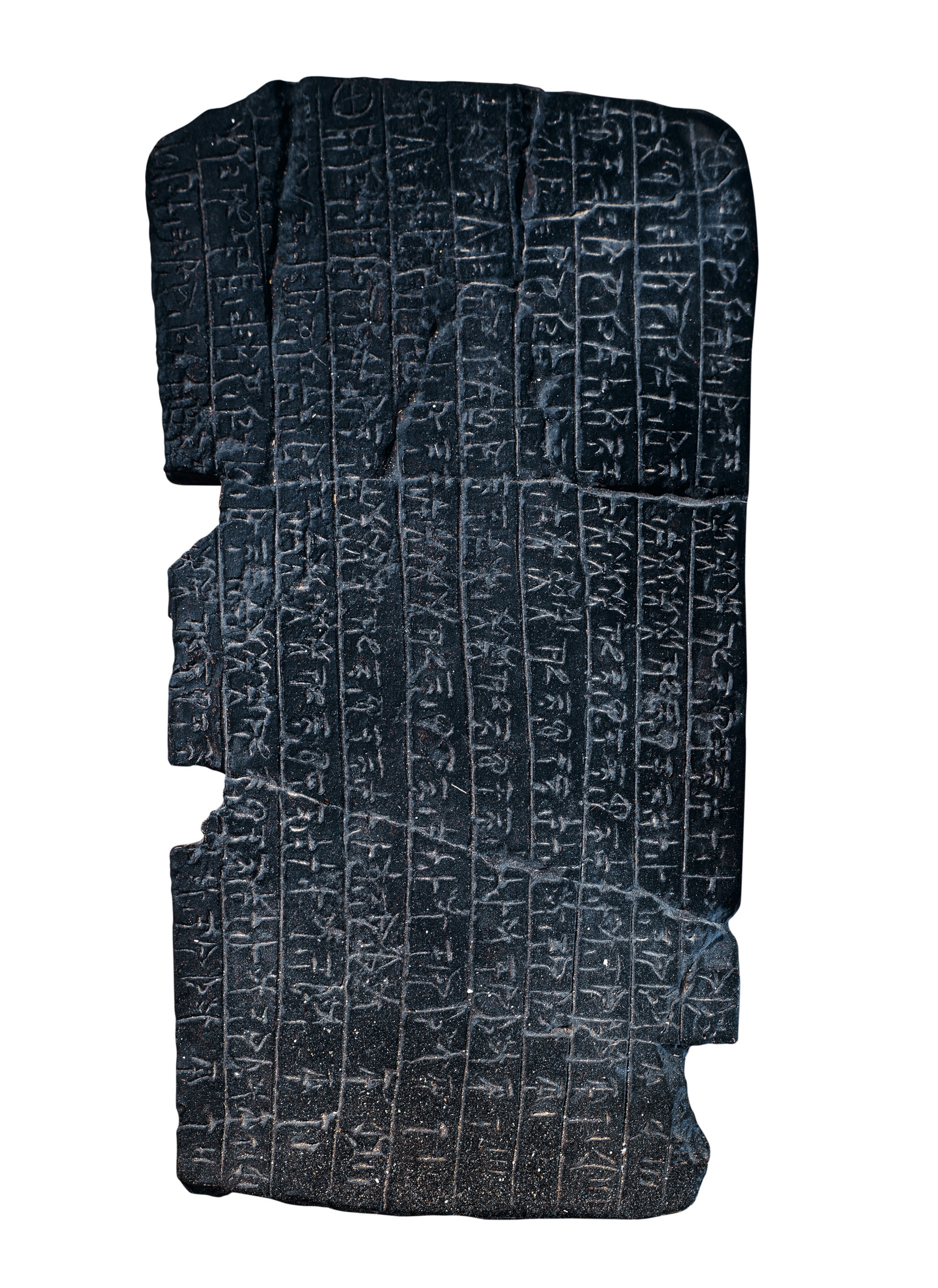
It’s possible that longer term records were transferred onto papyrus, or simply not kept. The tablets that are preserved date back to the collapse of the Mycenaean civilization (around 1200 B.C.). When the Palace of Nestor was engulfed by fire, the intense heat baked the clay tablets, turning them into durable pottery. The inscribed texts were thus preserved under the rubble of the collapsed buildings.
A study of these documents has provided insight into some aspects of the political organization of Mycenaean society. At the head was the king or wanax, a term that appears on the tablets and is practically the same as that used in the Iliad to refer to Agamemnon, the commander of the Greek expedition against Troy. The wanax wielded supreme power, with religious overtones, and owned land and enslaved people.

The second most important figure in the palace was the lawagetas, the head of the armed forces. Experts believe he had a megaron smaller than the main one, as such a structure has been found in Pylos, Tiryns, and Mycenae. The wanax and the lawagetas appear to embody a duality of political-religious and military power, potentially influenced by some Indo-European or Minoan peoples—a topic still debated by scholars. There were also high-ranking men and aristocrats called telestai and heqetai, respectively. Subordinate to these was a series of officials (called koreteres and gwasilewes in the tablets) who administered the kingdom, which was divided into agricultural estates known as damoi (from which the Greek word demos—the people—is derived).
(The Odyssey offers monsters and magic—and also a real look into the ancient world)
A swift end
The world of the imposing Mycenaean palaces came to a sudden end. Around 1200 B.C., the Mycenae and Pylos enclosures were burned and destroyed. Experts have attributed this to an invasion by the Dorians, a Greek people. The Pylos tablets end abruptly in a spring month, with instructions to the troops ordered to defend the coast against the invaders. Although groups of people continued to live in the surroundings of the ancient palaces, the dazzling Mycenaean civilization ceased to exist in the Late Bronze Age. Mycenaean life, religion, and architecture left a profound legacy, forming the foundation of what would become features of Archaic and Classical Greece. After the collapse of this austere, militaristic society, Greece entered a period of relative poverty and isolation known as the Greek dark ages, during which the Linear B writing system was lost.

However, the legends of Mycenaean kings and warriors endured, passed down orally until Homer immortalized them in the Iliad and the Odyssey, honoring Bronze Age heroes such as Agamemnon, Achilles, and Odysseus. The Mycenaean palace megaron, with its columned hall and central hearth, directly influenced the form of later Greek temples such as those at Olympia and Delphi.

