How a Rothschild family heirloom escaped Nazi seizure
During the annexation of Austria in 1938, German troops seized the property of wealthy Jewish families – but this tiara managed to evade their clutches.

While tiaras may be seen jewelry, it is essential to note that a tiara is not a crown. A crown is a symbol of royal status, reserved for monarchs and worn on grand occasions such as coronations and the opening of Parliament in London by the British king or queen. A tiara, however, can be worn by anyone. Although its origins date back to antiquity, when a headband or garland was awarded to victorious athletes or warriors, a tiara these days is more likely to be seen on the head of a member of the European aristocracy.
A notable tiara, belonging to Baroness Clarice de Rothschild of the Austrian branch of the banking family, is on display at the Museum of Fine Arts Boston. In March 1938, the baroness and her husband, Alphonse, traveled to London from Vienna for a stamp exhibition to which he had loaned several items. On March 12, 1938, during the brutal annexation of Austria known as the Anschluss, German troops marched into Vienna. They seized the property of wealthy Jewish families including the Rothschilds, who lost 3,500 pieces of art to the occupiers. In addition to the plundered art and other possessions, the Rothschild’s palace was appropriated as a prison by the Gestapo. It was the start of Nazi Germany’s territorial aggression and anti-Semitic terrorism across Europe.
(These detectives want your help in finding Nazi-looted art)
A joyful ending
Because the baroness had brought the tiara to London, it evaded confiscation. Otherwise, Bettina Burr, the baroness’s granddaughter, muses, “it might have graced the head of Mrs. Göring,” the wife of Hermann Göring, a primary architect of the Nazi police state in Germany. The quest to track down looted pieces took more than 50 years to unfold, but Baroness de Rothschild and her daughter Bettina Looram de Rothschild successfully reclaimed most of the family’s stolen treasures. The saga encompassed the salt mines in the Austrian Alps, where Hitler stashed art stolen from the Rothschilds. These were earmarked for the Führermuseum, Hitler’s grandiose vision of a cultural center. The Monuments Men and Women of the Allied forces, who protected and recovered art, played a key role, as did the Austrian government’s restitution laws that returned looted art to its rightful owners in the late 1990s.
High society
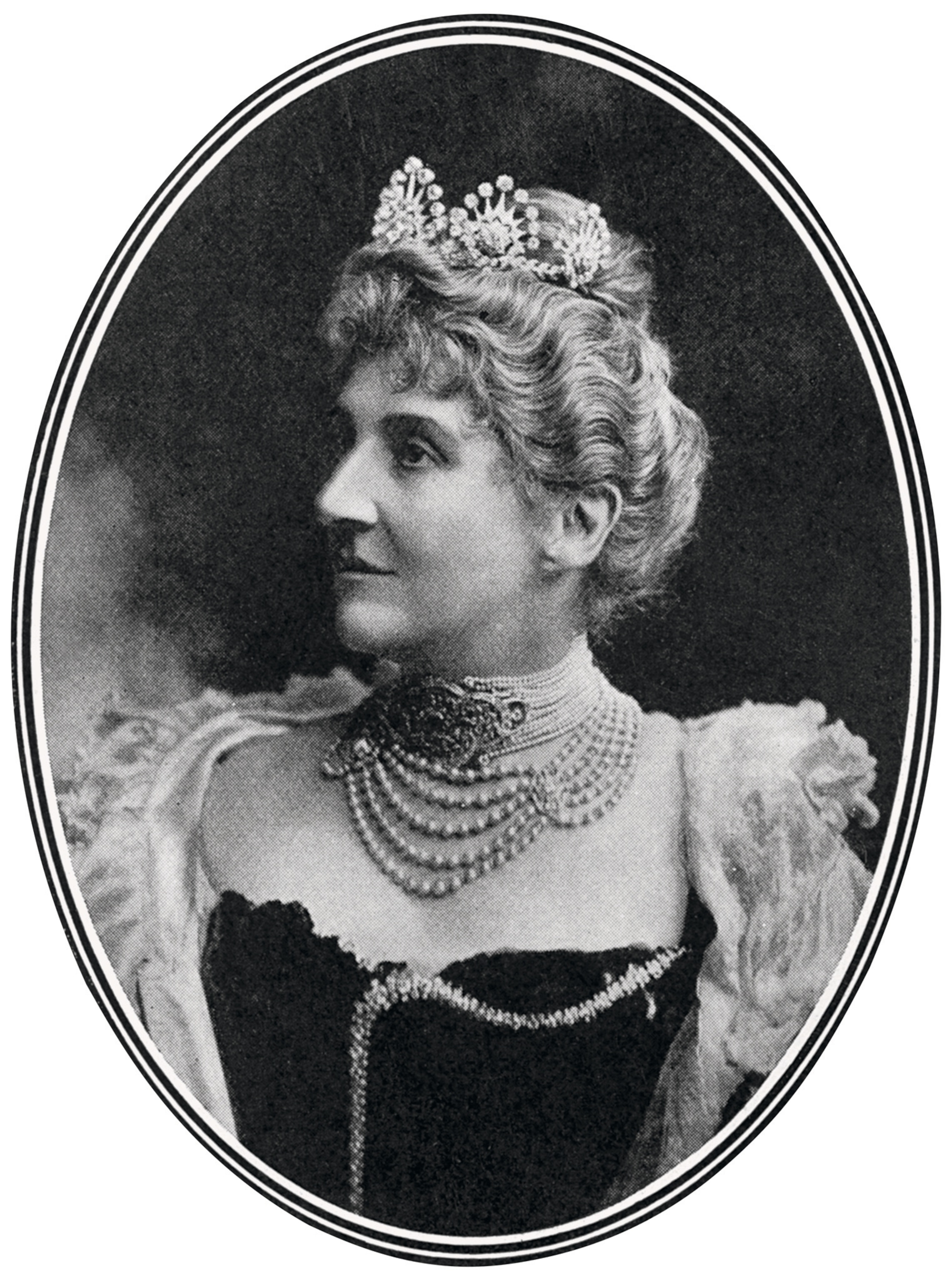
The tiara, attributed to the French jeweler Boucheron, features 570 diamonds in a latticework of platinum and was probably made around 1903. It is convertible to a necklace and earrings. The heirloom was given to the MFA by the heirs of Bettina Looram de Rothschild, along with 185 other pieces of decorative art and paintings restored to the family.
Though ineffably dark, “it’s a story with a happy ending,” says Bettina Burr, who oversaw the gift. “Instead of sitting in a vault or hanging around the neck of some grandee, it’s on exhibit for everyone to enjoy.”
(Here’s the sordid history behind these English country homes)
Puttin’ on the glitz—the rules of jewels
Few know tiara protocols today, but in the past it was a different matter. “In the 19th and early 20th centuries, it was understood that tiaras were worn only on private property and never in hotels,” Geoffrey Munn, a jewelry specialist in London, explains.
“Women attending a full evening dress event would be expected to wear a tiara ... I suspect hardly anyone knows this today and cares less.” However, an uncontested glamour surrounds the artifact. “In America, a country without royalty, where Hollywood dreams fuel the imagination, the tiara holds a special magic,” says Emily Stoehrer, MFA’s senior curator of jewelry. “Little girls transform into princesses through the simple act of placing a tiara on their head,” Stoehrer says. “The transformation may end in childhood—but more than any other jewel, the tiara continues to enchant into adulthood.”
(The Louvre has a wild history of being robbed in broad daylight)
