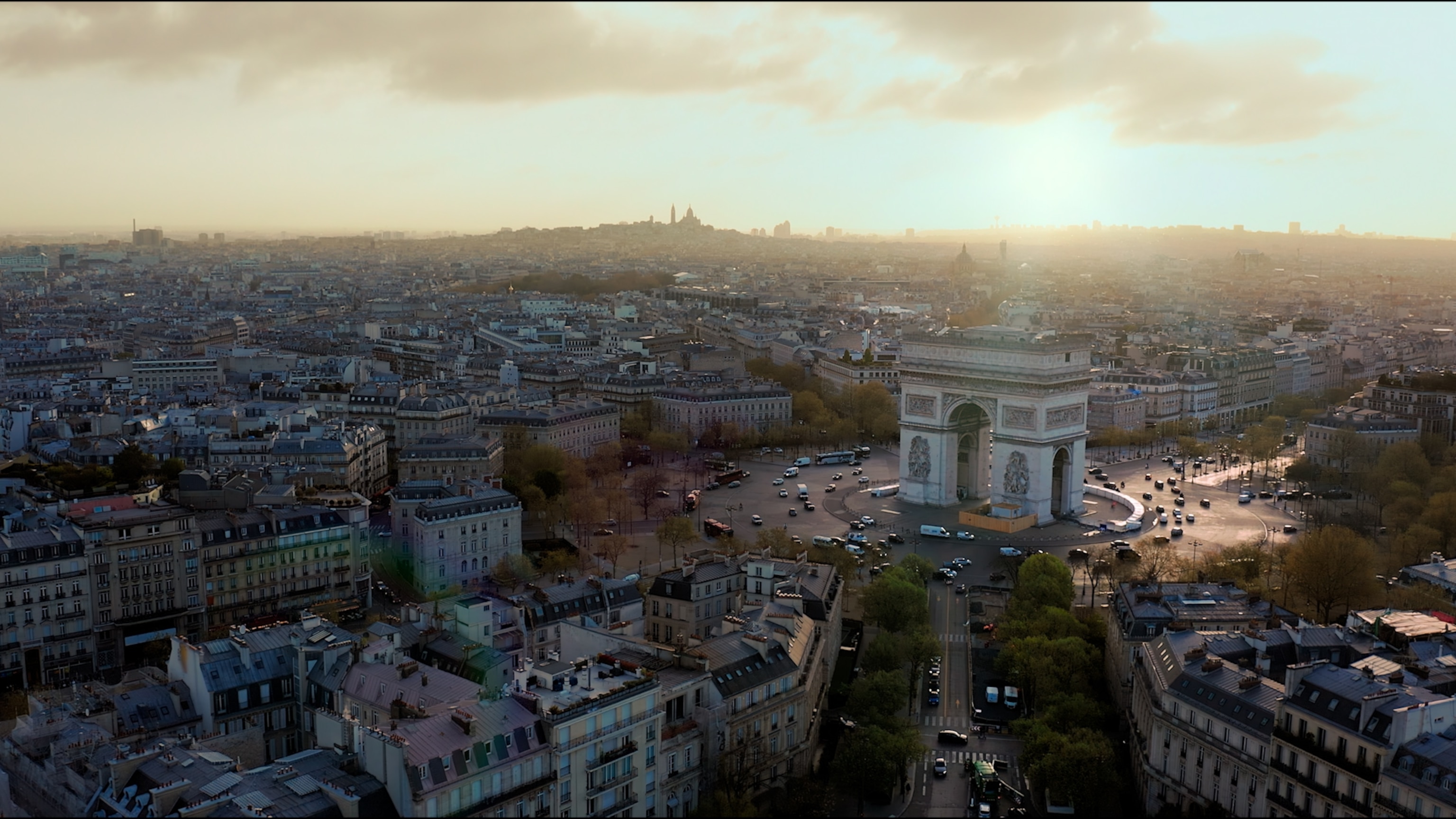
7 of the best things to do in Paris
In National Geographic’s Best of the World with Antoni Porowski, the host dives into the French capital’s living traditions—from Art Deco swimming pools and cycling culture to historic hotels, cabaret glamour, and unforgettable food.
Layered with history, Paris exerts a magnetic pull on millions visitors each year. Yet the culture-crammed French capital is more than its monuments and museums. Home to an electrifying arts, fashion, and food scene, the city takes time for beauty, paying tribute to the past through enduring craftsmanship.
It’s no wonder why Paris gets the star treatment on National Geographic’s series Best of the World with Antoni Porowski, the travel docuseries that brings the bestselling book and annual list to the screen.
As a culinary expert and bon vivant, host Antoni Porowski explores the city with gusto and Parisian-style joie de vivre. Slip into his orbit and uncover Paris’s secrets with these insider experiences and a few accessible alternatives.
(15 of the best places in the world for food right now.)
1. Swim in the legendary pool where the bikini debuted
Un, deux, trois… partez! Porowski dives into the day with a swim at the mythical Molitor. The Art Deco pool was inaugurated in 1929 by three Olympic swimmers, including Johnny Weissmuller, who later snagged the film lead in Tarzan. In 1946, the Molitor morphed into a catwalk for the debut of the first bikini. A multi-million-euro investment in 2014 transformed the complex into a hotel, spa, and urban hot spot.
“Working at Molitor isn't quite like watching over a pool,” says Valentin, one of the 23 lifeguards on staff. “It's watching over a living place, carrying nearly a century of history: somewhere people come as much to feel something as to swim.”
Note: Access to the swimming pools (one outdoor and one indoor) is reserved exclusively for hotel guests and sports club members. Spa clients get access to the indoor pool with the “Evasion Molitor” package.
Like that? Try this. Swimming is part of the Parisian DNA. Public pools abound, from the Piscine Pontoise, an Art Deco jewel in the Latin Quarter, to the outdoor “Nordic” pool in the hilltop Butte-aux-Cailles district. The pool is heated year-round with the energy captured from data centers. (Entrance price between $2 and $6.) Or take a summer dip in the Seine. After a massive river clean-up project was completed in time for the Summer Olympics, Paris City Hall opened three swimming spots in 2025, open seasonally in July and August.
2. Splurge on butler service at the Hôtel de Crillon, A Rosewood Hotel
Reigning over the Place de la Concorde since 1758, this show-stopping grande dame has witnessed momentous events in French history, including Queen Marie Antoinette’s execution by guillotine outside on the square. A four-year restoration completed in 2017 imbued the landmark with chic, contemporary style, while preserving original features such as the staircase, 73 chandeliers, and 40 types of marble. Some 500 artisans and staff work with the Palace hotel—each of the 124 guest rooms comes with butler service. On Porowski’s tour with head butler Elsa, he sees the team in action and lingers in the salon where the ill-fated queen had piano lessons.
“In a city renowned for exceptional hospitality, Hôtel de Crillon distinguishes itself through its rare balance of historic grandeur and personalized service,” says Alexandre Germain, director of rooms. “The hotel offers the privilege of staying in a living monument that feels unmistakably residential.”
Like that? Try this. Tucked away on a quiet street in the Saint-Germain-des-Près district, the Hôtel des Saints Pères is a four-star hideaway that’s steeped in history. The stone building was constructed in 1658 by Louis XIV’s royal architect. It’s part of Esprit de France, a hotel collection dedicated to preserving heritage, and the 38 rooms, clustered around a courtyard, feature timber beams and antiques. The crème de la crème is the majestic suite that Reception Manager Christian Winasis likens to “a museum” because of its ceiling fresco, created by the Ecole des Beaux-Arts de Versailles.
(7 of the best things to do in London.)
3. Bike up the Butte Montmartre
For village vibes and the city’s best views, Porowski takes off on two wheels in the company of the Montmartre Vélo Club. It’s full-speed ahead on the cobblestoned route tackled during the Summer Olympics, then repeated by the Tour de France race in 2025. Launched during the Covid confinement when local cyclists looked to train close to home, the Montmartre Vélo Club is now 80 members strong, with more than 1,500 followers on Strava. Outings go beyond the neighborhood to areas like the hilly Vexin, passing the Van Gogh village of Auvers-sur-Oise.

Paris has transformed into a cycling city. “There’s been a big evolution on the streets with more biking lanes and less cars and scooters,” explains Jean-Christophe Baille Cros, a club board member. Visitors can get a bike through Vélib', the city’s bike-sharing program, or rent a road bike at the Peloton Café. Before or after your ride, Montmartre is bicycle-friendly neighborhood. Véronique Baille, the club's treasurer, recommends the Café du Cycliste, a boutique that sells cycling apparel, including the club jerseys, and doubles as a cafe organizing social rides. She also recommends the legendary bistro Au Rêve (“perfect for coffee, a drink, or lunch, with award-winning eggs mayonnaise”), La Chance Café (“in a pedestrian street away from tourists”), and Le Nazir (“the manager is a member of the Montmartre Vélo Club”).
4. Feast on French-only ingredients at FIEF
When it comes to food, France has a formidable reputation. The restaurant concept originated in Paris, and today, 127 Michelin-starred establishments twinkle in the gastronomic firmament. Chef Victor Mercier stands out with a unique concept at FIEF (“Fait Ici en France,” or “made in France”). He only cooks with French-grown ingredients to show off the country’s sublime agricultural bounty. Though there are challenges—no coffee or chocolate, for example—the mission inspires creative discoveries, such as the vanilla grown in Brittany, sake made in Burgundy, and Sichuan pepper cultivated in Normandy. Helping out in the kitchen, Porowski calls it a “Tour de France” of regional dishes, prepared with a twist (multi-course menu, dinner only, starting around $130).

Like that? Try this. Lunch can be a great value in Paris, with many restaurants offering a daily special on a fixed-price menu. Feast on classic dishes like bœuf bourguignon at the authentic bistros Au Moulin à Vent and Bistrot des Fables. Elsass offers a refined take on Alsatian cuisine from a chef who trained with top talents Eric Fréchon and Yannick Alléno. Restaurateur Florent Piard, the Slow Food champion behind Les Résistants group, sources organic ingredients from a network of 150 small producers across France. La Table offers a gourmet expression of this cornucopia. Lunch is consistently delicious at Left-Bank standouts Narro and Calice, overseen by chef Kazuma Chikuda. The 20-euro lunch menu at Le Cornichon, a hip cafe housed inside a PMU bar on rue des Goncourt, is a steal. The waiters swear they serve the best frites in Paris, alongside “fish sticks” on Friday.
(6 of the best things to do in New York City.)
5. Admire the vast French furniture collection at the Mobilier National
Originally created under King Louis XIV, the Mobilier National is a sprawling furniture repository whose collection outfits French government institutions, including the Elysée presidential palace and embassies around the world. Porowski walks through centuries of French heritage, admiring textiles, objets d’art, and antiques such as gold-accented Napoleonic thrones and modernist chairs. Guided visits are offered three times a week. The site is also home to the Gobelins tapestry factory, where artisans create new masterpieces using centuries-old techniques.
In the adjacent Galerie des Gobelins, temporary exhibitions run the gamut from Notre Dame’s monumental paintings to the current stunner on Sèvres porcelain collected by the famous Rothschild family. “Taste for the exceptional was transmitted between generations,” explains co-curator Viviane Mesqui, pointing out the “daring artisanal techniques” in rare masterpieces like the “masted ship” potpourri vessel. (Adult tickets are around $15.)
6. Devour diverse cheeses at Fromagerie Quatrehomme
The French reverence for craft is also found in food, as Porowski professes at Fromagerie Quatrehomme, a place of pilgrimage for cheese lovers. Founded on the Left Bank in 1953, the family-owned shop sells more than 250 varieties of cheese and has an aging cellar built with the same quarried stones used to construct Notre Dame. There are a few Quatrehomme outposts across Paris, but the original location on rue de Sèvres is where you’ll find the most tantalizing seasonal selection: truffled-stuffed Brillat-Savarin, Calvados-infused Camembert, and wood-smoked goat’s cheese. Behind a facade decorated with an old-fashioned shop sign, some 18 employees share their passion with clients, patiently explaining the nuances of each fromage. They will customize cheese platters for your evening soirée. Pop by a nearby boulangerie like Secco or The French Bastards to pick up a baguette, and you’ve got the perfect picnic.
(8 of the best things to do in Mexico City.)
7. Catch a cabaret show at the Moulin Rouge
Instantly recognizable by its red windmill, the cabaret at the foot of Montmartre has been going strong since the BelleÉpoque (1889), when riveted regulars like artist Henri de Toulouse-Lautrec sat in the audience. He painted the dancers and also created promotional posters.
“We perform six nights a week, with two shows every night, and even though it seems like a hectic schedule, it doesn’t feel like work,” says Allie Goodbun, who’s danced at the Moulin Rouge since 2021. “When you start to think about its history and the icons who have shared the same stage over the past 135-plus years, it’s a surreal feeling.”
The decadent decor is almost one-upped by the costumes, crafted as haute couture by 90-year-old designer Mine Vergès, a showbiz legend who once dressed stars like Juliette Gréco and Josephine Baker. Invited into her studio, Porowski marvels at the feathers, gold thread, and Swarovski crystals used to stitch each costume by hand—some of which require two years of work and weigh 13 pounds. Helping out behind the scenes, he dresses the dancers backstage during a performance. “The wardrobe department, along with the stagehands and technicians, are the ones that make the show go on,” explains Goodbun. “When a single costume piece breaks, rips, or needs fixing, the dressers are always ready to repair on the spot.”
Applaud the extravagant costumes during a nightly show (tickets start around $100). Get an inside peek at the Atelier de Creation in April when it opens its doors to the public during the European Days of Crafts.
