A peek into the personal life of Charlemagne, the first Holy Roman Emperor
Father of Europe. King of the Franks. Who was the man behind these titles? A biography by Charlemagne’s courtier gives us more insight into his private life than any other Christian ruler of the eighth and ninth centuries.

Remembered today as one of the fathers of Europe, Charlemagne was responsible for the restoration of the Roman Empire after more than three centuries of decline. He made lasting reforms to all aspects of royal power, from the organization of the justice system to economic reform, and revived culture along classical lines. During the Middle Ages, he would be mythologized like no other leader, becoming a symbol and model of good governance for the future emperors of the Holy Roman Empire. And in the era of the Crusades, his intense religious devotion and eagerness to fight the opponents he considered “infidels” inspired many Christians to worship him as a saint.
But before the man became a myth, Charlemagne was simply human, flesh and blood; an ambitious ruler and a relentless warrior, but also a man of culture and a father concerned about the future of his family. Unusual for a period often described as belonging to the Dark Ages, valuable sources have survived that shine a light on Charlemagne’s personality. Particularly fascinating is the Vita Karoli Magni (The Life of Charlemagne), a biography written by Einhard, a member of Charlemagne’s court. Einhard is thought to have written the work between 830 and 833, over 15 years after Charlemagne’s death during his retirement while living at the Abbey of Seligenstadt in Germany. Einhard’s biography, inspired by the ancient, classical biographies, in particular Suetonius’s The Lives of the Twelve Caesars, is one of the most influential books of this genre in the Middle Ages. In addition to recounting the emperor’s military triumphs, his coronation, and the details of his will, Einhard’s biography contains passages describing Charlemagne’s character and habits—of which the author had firsthand knowledge, having lived alongside him in the Carolingian court.

Germanic roots
Charlemagne, who until his coronation was known as Karl or Karlo, was the eldest son of Pippin the Short. Pippin was King of the Franks from 751 until his death in 768. There is some doubt as to exactly where and when Karl was born. Some sources suggest 742, more recent scholarship indicates 747-748. The place of his birth was likely Herstal, now in the Belgian province of Liège, although various authors have suggested a town in northwestern Germany, such as Ingelheim, Prüm, or Düren.

Charlemagne’s first language was either Frankish (a Germanic language from which modern Dutch derives) or some High German dialect. Thanks to his teachers, Peter of Pisa and Alcuin of York, Charlemagne mastered Latin, the language of the Church and the high culture of his time. According to Einhard, “He learnt Latin so well that he could speak it as fluently as his native tongue.” Charlemagne also acquired some knowledge of Greek. However, Einhard notes that although the emperor spoke Latin to the point of garrulousness, he struggled with writing and used to keep tablets and writing sheets under the pillow of his couch “that he might in his spare moments accustom himself to the formation of letters. But he made little advance in this strange task, which was begun too late in life.”
(The birth of the Holy Roman Empire—and the unlikely king who ruled it)
The great Charlemagne clan
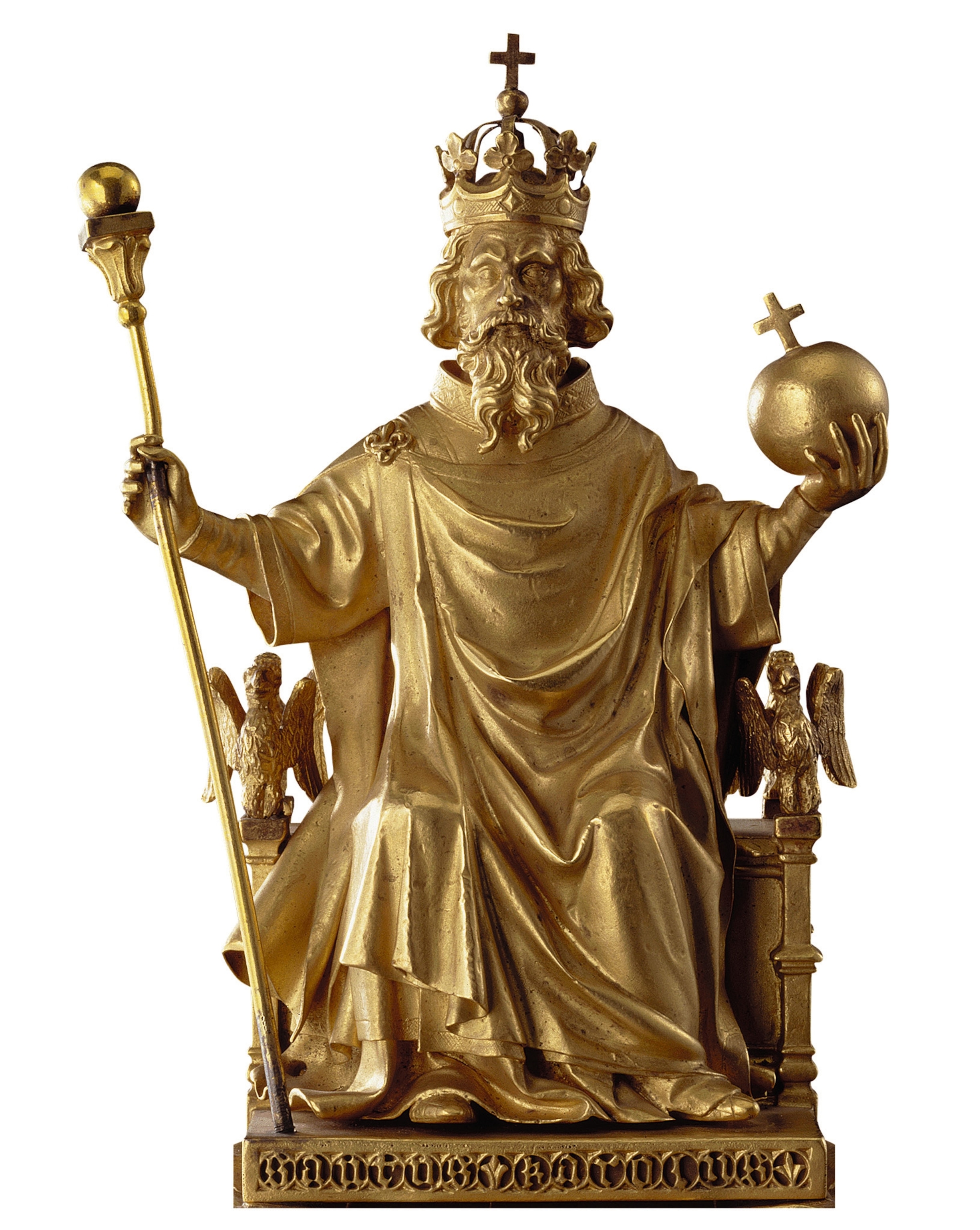
Despite his efforts to reclaim the legacy of the Roman Empire, Charlemagne was first and foremost Germanic. He always dressed in the manner of the Frankish people, wearing a shirt over a silk-trimmed tunic that showed off his stockings. In winter, he would don a jerkin made of otter skin or ermine. The contrast with the prevailing fashion in southern Europe, particularly in Italy, was striking. “He disliked foreign garments, however beautiful, and would never consent to wear them,” remarked Einhard. Only on two occasions, to please Pope Adrian I and then Pope Leo III, did he agree to dress in the Roman manner, with a long tunic and cloak. On feast days or for diplomatic occasions, he would put on “a garment of gold cloth, with jeweled boots and a golden girdle to his cloak, and distinguished further by a diadem of gold and precious stones.” But in general, he did not indulge in the excesses of courtly luxury, and most of the time, according to Einhard, “his dress differed little from that of the common people.”
Larger than life
In his biography of Charlemagne, Einhard depicts a robust man of remarkable stature. An analysis of his bones, preserved in the Palatine Chapel in Aachen, carried out by German specialists in 2010, suggests that he was around six feet tall, making him taller than 98 percent of his contemporaries. Einhard pointed out that the monarch’s “height was seven times the length of his own feet” in accordance with an artistic canon of beauty ascribed to at the time. Einhard also noted: “His nose was rather larger than is usual; he had beautiful white hair; and his expression was brisk and cheerful.” Instead of the bushy beard attributed to him by tradition, he likely had a thick Frankish-style mustache. Einhard judged his voice to be “clear, but hardly so strong as you would have expected.” No one seemed to notice his two main physical defects: a thick, short neck and a somewhat prominent belly. The latter was probably thanks to the excess of roast meat he consumed, an indulgence that contrasted with his great moderation in drinking, as he “had a fierce hatred of drunkenness in any man” and did not drink more than three times during a meal.
The authoritative biography
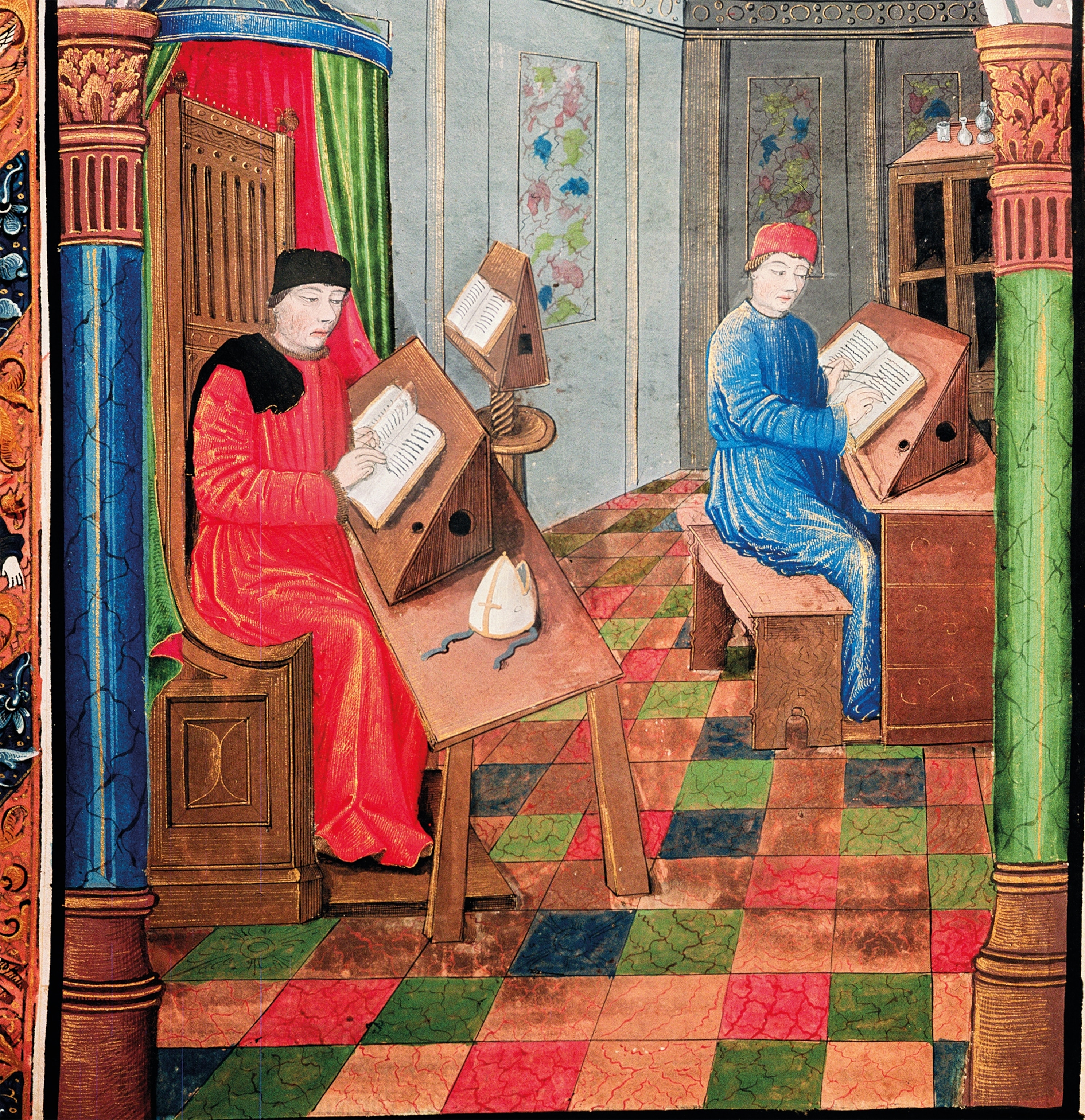
Charlemagne was apparently a light sleeper, getting up four or five times a night and in summer taking a daytime nap of two or three hours. His great hobbies were horse riding and hunting. He also loved bathing in hot springs, which was one of the reasons why, in the latter part of his life, he took up residence in Aachen, home to highly prized thermal springs. According to Einhard: “He used to invite not only his sons to the bath but also his nobles and friends, and at times even a great number of his followers and bodyguards.”

Despite his penchant for concubines, Charlemagne was deeply religious. He attended Christian services every morning and afternoon, and during meals he listened to readings from The City of God by St. Augustine, one of his favorite authors. He gave alms generously and made donations to the churches of his kingdom, including the basilica he had built in Aachen. In his will, he bequeathed part of his fortune and the goods from his personal chamber to the metropolitan churches of his kingdom and to assist the poor.
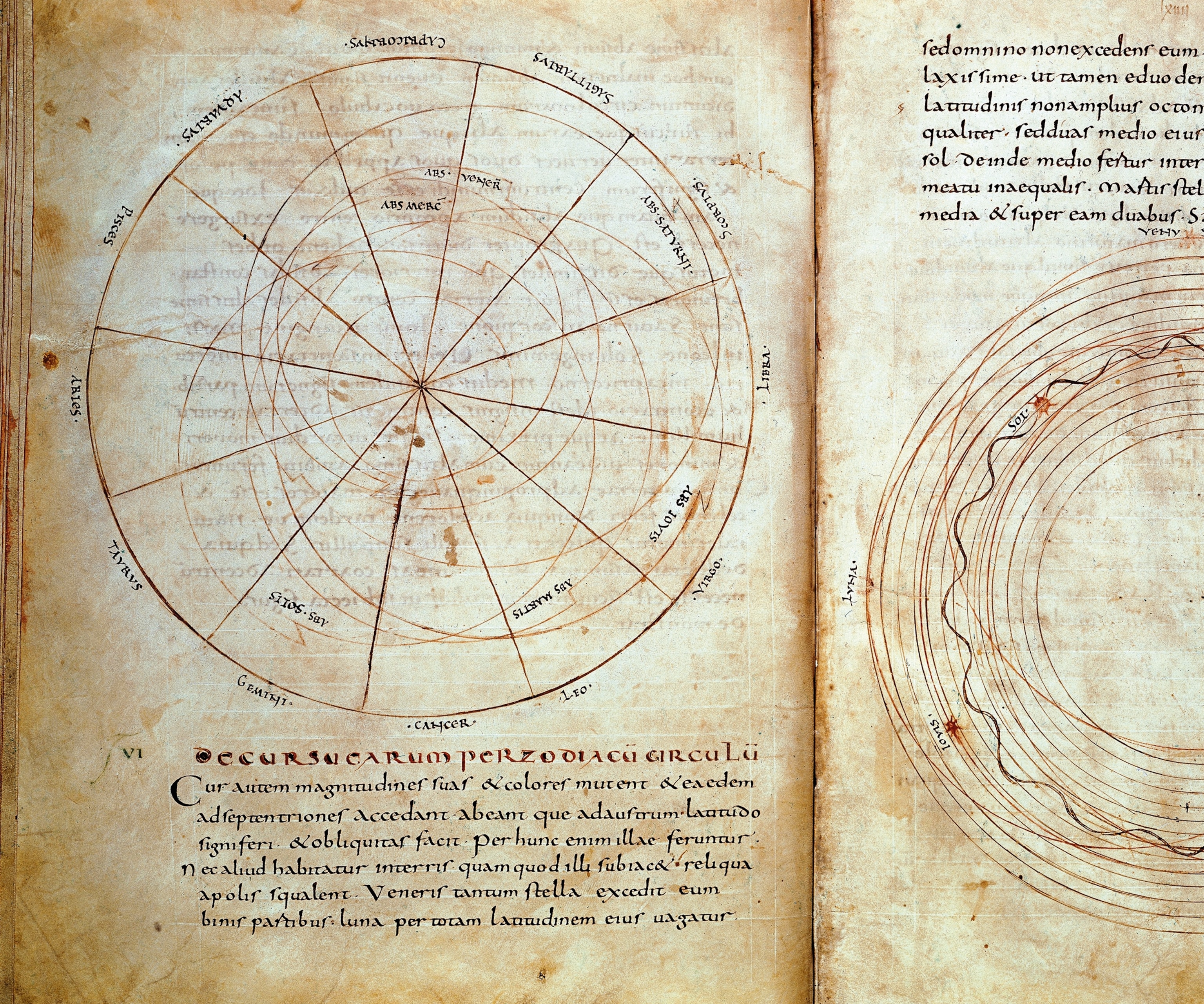
Charlemagne invited scholars from all over Christendom to join his court. Among them were Peter of Pisa and Paul the Deacon, both of Italian-Lombard origin; Anglo-Saxons such as Alcuin of York; and Spaniards such as Theodulf and Agobard. Charlemagne had a particularly close personal relationship with Alcuin, who is thought to have joined the court in 782 and stayed there until becoming the Abbot of Saint Martin in Tours, France, in 796. Under Alcuin’s supervision, Charlemagne studied rhetoric, dialectics, and, above all, astronomy.
(Is this the real reason the Roman Empire collapsed?)

Four (or five) wives
Family was undoubtedly a fundamental aspect of Charlemagne’s life. After the death of his father, Pippin the Short, he maintained a very close relationship with his mother, Bertrada of Laon, who always treated him as her favorite son. His childhood rivalry with his younger brother, Carloman, worsened when their father divided the kingdom between them. After Carloman’s early death (for which Charlemagne was blamed, apparently without foundation), the tension continued with Carloman’s widow, who ended up fleeing to Lombardy with her two sons. Charlemagne, after conquering the Lombard kingdom in 774, took charge of his two nephews and nothing more was heard of them, leading to speculation that he either had them killed or locked away in a monastery. By contrast, Charlemagne always had a close and affectionate relationship with his sister, Gisela, who would become Abbess of Chelles.
The stars and the months

Charlemagne’s first wife, Himiltrud, produced one son (although Charlemagne later claimed Himiltrud was merely a concubine). His marriage to his second wife, Desiderata (770–771), daughter of Desiderius, king of the Lombards, was a political union imposed by his mother, and it ended after just one year. His third wife, Hildegard (771–783), from Swabia, bore Charlemagne nine children, six of whom survived, including his heir, Louis the Pious. Hildegard died from complications during childbirth. Charlemagne’s fourth wife, Fastrada (783–794), who bore him two daughters, was the only wife said to have played a prominent political role. Einhard refers to her cruelty, which allegedly stirred up several conspiracies against Charlemagne, including one plot by the son he’d fathered with Himiltrud. No children are known to have been born to his last wife, Liutgard (circa 795–800). In addition, he had at least five concubines who also bore him children. In total, it is estimated that Charlemagne fathered at least 18 children.
The relationship he had with his offspring was unusually close for the era and is undoubtedly one of the most surprising aspects of his personality. Einhard recounts that he liked to be accompanied by his children at mealtimes and took them with him on his many travels: “His sons rode along with him, and his daughters followed in the rear.” And he took special care of their education, introducing the boys to the arts of war and hunting, while the girls focused on spinning and weaving.

A jealous father
If Einhard is to be believed, Charlemagne behaved protectively toward his daughters: “They were very beautiful, and much beloved by their father, and, therefore, it is strange that he would give them in marriage to no one, either among his own people or of a foreign state. But until his death he kept them all at home, saying that he could not forego their society.” One possibility is that he was trying to prevent sons-in-law from becoming a political threat. In any case, this did not keep at least two of his daughters from procreating. Bertha had three children with the poet Angilbert, while Rotrud had a son with Rorgon, Count of Maine.
Death of an emperor
Charlemagne seems to have turned a blind eye to his children’s out-of-wedlock affairs. According to Einhard: “He shut his eyes, however, to everything, and acted as though no suspicion of anything amiss had reached him, or as if the rumour of it had been discredited.” Einhard also noted that Charlemagne’s deep affection for his children was evident by the way he mourned them. “He bore the deaths of his two sons and of his daughter with less patience than might have been expected from his usual stoutness of heart, for his domestic affection, a quality for which he was as remarkable as for courage, forced him to shed tears.”
(How the ancient Romans became the world's greatest builders)
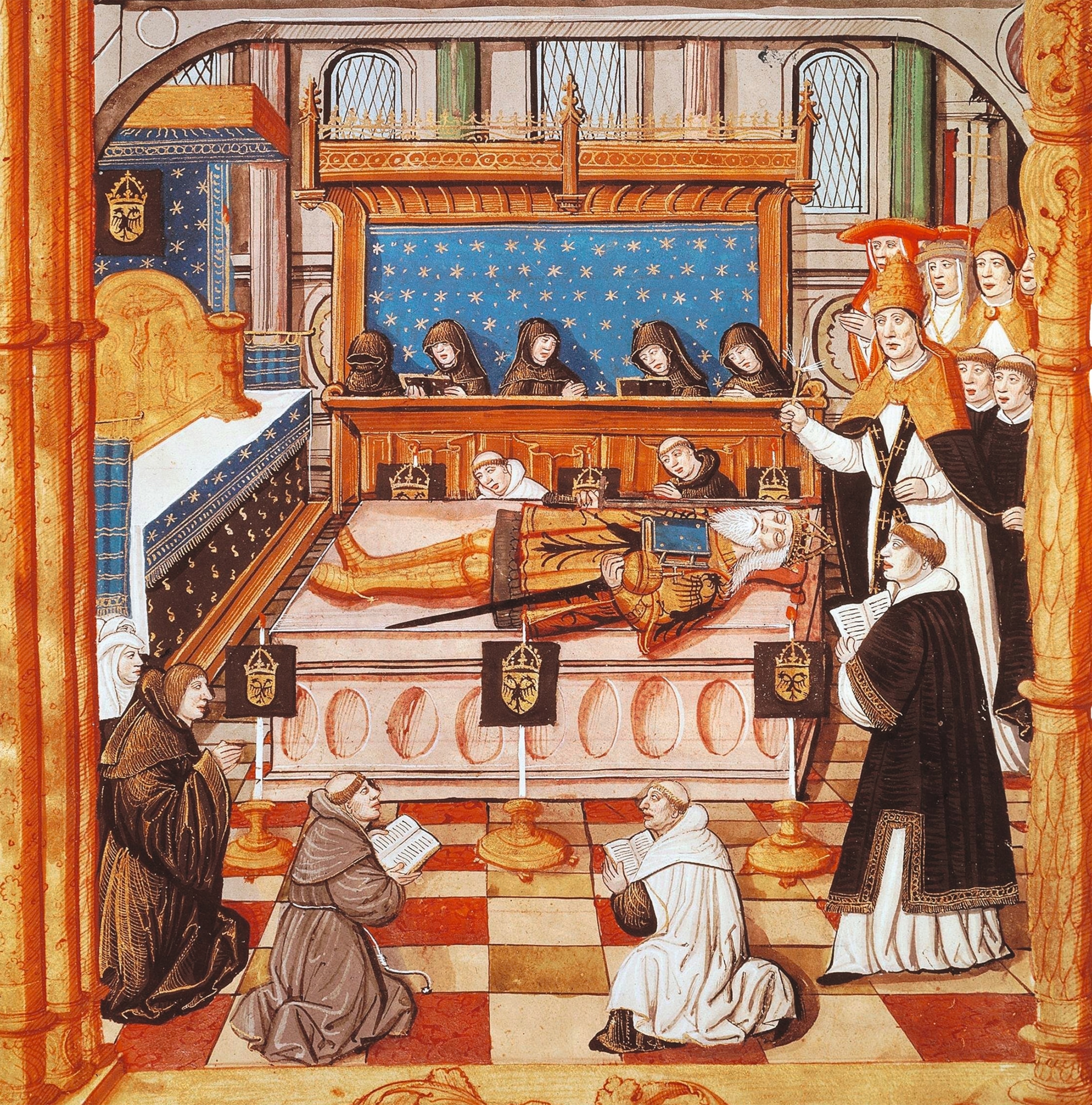
On January 28, 814, the emperor died at his Palatine seat in Aachen. It is believed that his body was placed in a Roman sarcophagus (known as the Proserpina sarcophagus) that Charlemagne himself had brought from Italy, before being laid to rest in the Palatine Chapel in Aachen. In the 12th century, the sarcophagus was moved to the altar of the chapel, and in 1215 it was replaced by a magnificent gold sarcophagus covered with reliefs. This is still on display in the chapel, which now forms part of Aachen Cathedral.

