This war-torn village is fighting to keep Christ’s language alive
Home to some of the last speakers of Aramaic, Maaloula was attacked in Syria’s civil war. Its residents are determined to rebuild–and preserve their mother tongue from extinction.

When Michline Zarour talks— anything from telling a friend a joke to whispering a lullaby to her son—she does so in Aramaic, the same language Jesus is said to have spoken. Zarour is from the small Syrian village of Maaloula, one of the few places left where Western Aramaic, Christ’s mother tongue, is still used in daily life.
“Maaloula is a magical town, and nothing like it will ever exist again throughout time. I am lucky to belong to this sacred place,” Zarour says. She certainly isn’t wrong: Her village is nestled in a cleft in the rugged limestone hills of the high-altitude Qalamoun Mountains. Squat, sun-bleached homes and churches cascade down the slopes. Steep and narrow alleys snake toward ancient monasteries overlooking the vast, arid valley below. The village’s name—derived from the Aramaic word ma’la, which means “entrance”— aptly reflects the setting: the mouth of a dramatic gorge.
This mystical cliffside community, located roughly 35 miles outside Syria’s capital, Damascus, is usually a quiet one. Church bells toll gently, incense carries on the wind, and elders sit streetside, playing chess and swapping stories. Despite its peaceful appearance, however, Maaloula wasn’t spared from the bloody Syrian civil war. In 2013, two years after the conflict erupted, rebels from the jihadist paramilitary group al-Nusra Front seized Maaloula, turning it into a de facto military base. Most of Maaloula’s residents were forced to flee.
(11 years into Syria's civil war, this is what everyday life looks like)
Iconic targets
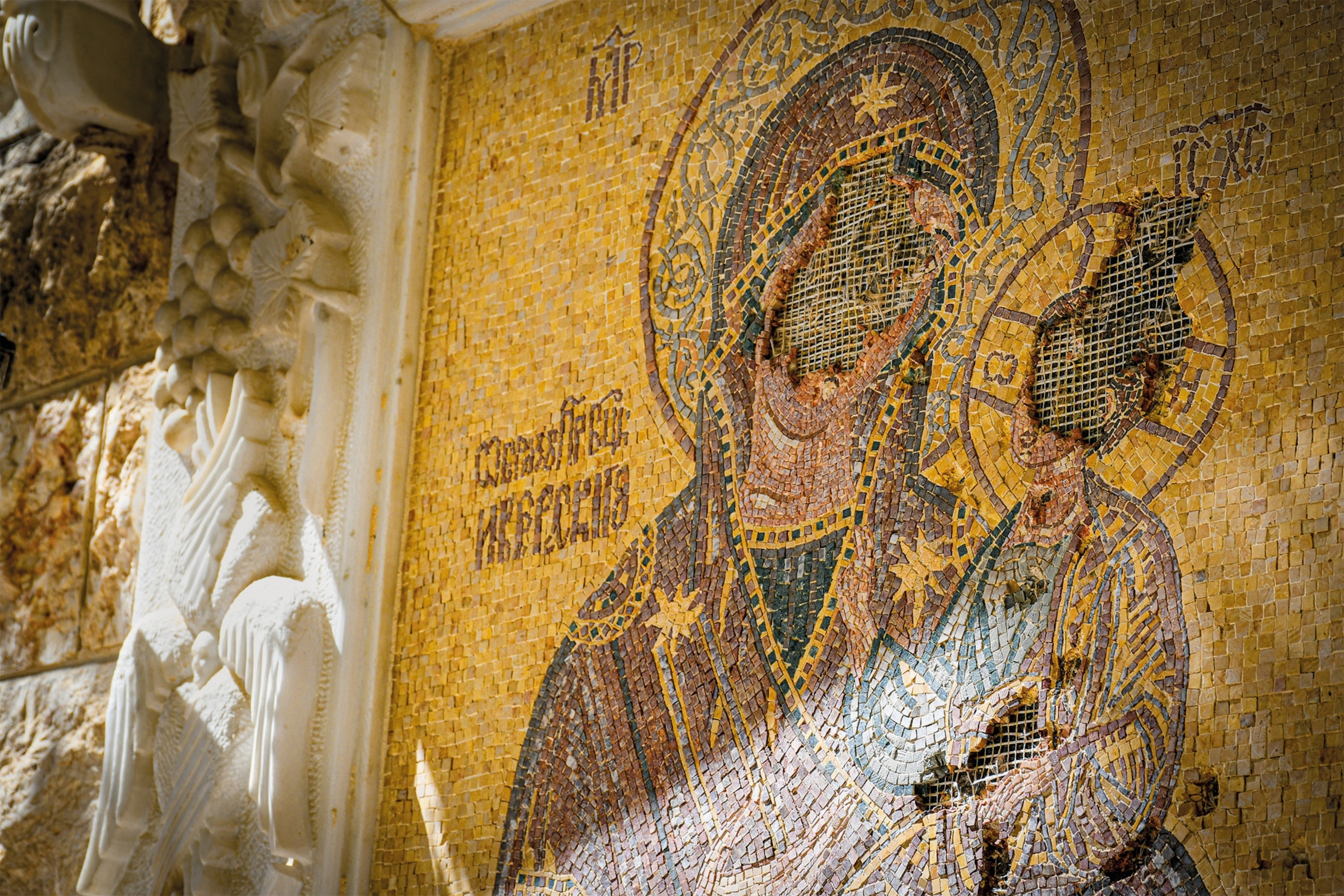

About a decade later, in December 2024, that same rebel group—now merged with other militias and rebranded as Hay’at Tahrir al-Sham—ousted former Syrian President Bashar al-Assad and appointed themselves Syria’s new rulers.
Years of conflict have hollowed Maaloula, and for a language like Aramaic, a fractured diaspora doesn’t bode well for its survival. Not to mention the proliferation of the smartphone, globalized social media, and classes being taught in Arabic and English, all of which have a hand in chipping away at the ancient language’s delicate hold.

And Maaloula’s long history of interfaith peace between Christian and Muslim residents has been strained too. After the 2013 battle in Maaloula, the village’s Muslims were barred from returning home by Assad’s forces. Now their Christian neighbors, a religious minority in Syria who make up the majority of the village, fear for their safety in light of rising sectarian violence and a new government composed of the former rebels,which assumed power quickly in 2024.
Edge of extinction
Local linguists have translated the Old Testament and the Liturgy of Saint John Chrysostom to Neo-Aramaic, and compared their translations to portions of the ancient manuscripts originally written in or translated to Aramaic. In doing so, scholars have concluded that, aside from a few grammatical changes and the inclusion of several loanwords from Greek and Arabic, Maaloula’s dialect of Aramaic remains fundamentally the same as it was in the first and second centuries, the period encompassing the lifetime of Jesus of Nazareth.
Nevertheless, today there is a grim consensus among many of Maaloula’s war-weary residents: their ancient mother tongue is at risk of extinction.
(Is this the world's oldest alphabet?)

“I am teaching my son Aramaic just as I learned it from my family,” Michline Zarour says.“However,I have discovered that the task is more challenging for me due to my surroundings.” The biggest issue, she says, is social media, “which has entered our lives without permission.” Because most content online is in Arabic and English, her son’s media diet lacks Aramaic altogether.
It doesn’t help that Maaloula’s one school dedicated to keeping the language alive—the Aramaic Language Teaching Center—has just four teachers, making it woefully understaffed and only sporadically operational throughout the year.
Michline’s uncle, George Zarour, is a renowned local professor and Aramaic researcher alarmed by the waning of his beloved language. Preserving Aramaic in Maaloula as an oral tradition was never an issue in the past. Before the 20th century, Maaloula’s residents worked almost entirely in agriculture. Aramaic was sustained while tilling the fields, on threshing floors, and at home. This, he says, ensured that children learned Aramaic before Arabic, Syria’s predominant language.
By the 21st century, that all changed. Drought decimated Maaloula’s agriculture sector and war sparked a mass exodus from the village. Residents say that this combination of events marked a dangerous turning point for their mother tongue’s survival.
Holding on to hope
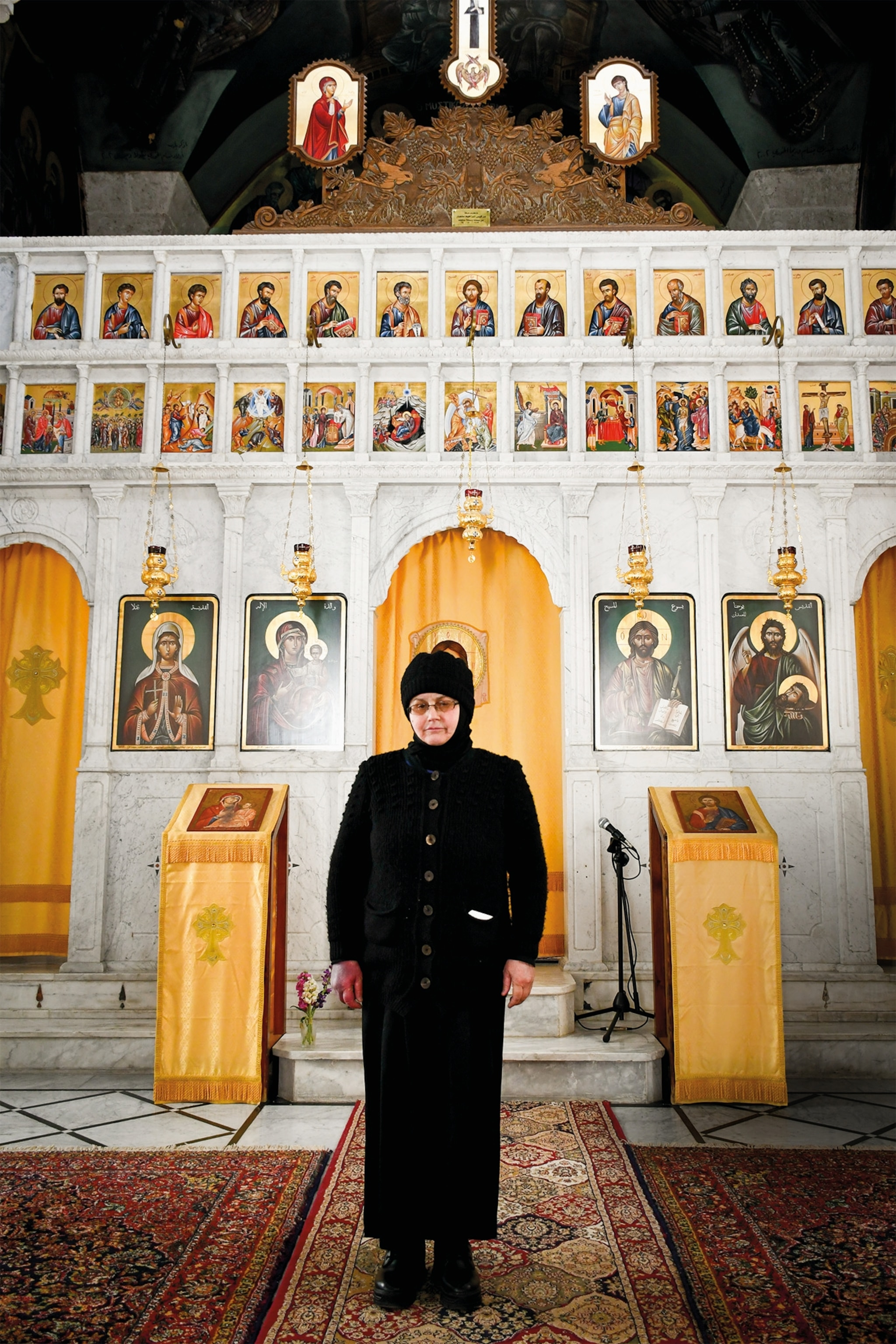
“This shift accelerated after 2013,” says Rimon Wehbi, a linguist, Aramaic scholar, and Maaloula local currently pursuing a Ph.D. in linguistics at Germany’s Heinrich Heine University Düsseldorf. Wehbi argues that, just like any language, Aramaic depends on active use in daily life. But because many residents left during the war and better work and education are available in Arabic-speaking parts of Syria, Aramaic is fading.
“Arabic is not the enemy,” Wehbi says. “Many of us are bilingual. The challenge is ensuring Aramaic has a meaningful role alongside Arabic, rather than being replaced by it. If we can foster pride in the language, create social spaces where it thrives, and support the community, Aramaic in Maaloula can survive, even in a globalized world.”
(How do you save a language from extinction?)
An uncertain future
Maaloula was all but emptied when the rebels captured it in 2013. George Zarour still remembers the heart-wrenching moment he and his family had to flee their treasured village.
A year later, the Zarour family returned to their home. It was a traumatic experience. They were deeply saddened to find that buildings were pockmarked with bullet holes, bomb craters pitted the streets,and several churches had been burned by the rebels. The local economy had collapsed as well—and still hasn’t recovered. “Despite the harsh economic conditions,” he says, “we continue to hold on to Maaloula.”

Since returning, he’s ramped up his efforts to keep Aramaic alive by trying to turn the next generation into fluent speakers, one young Syrian at a time. To safeguard the language, he has authored several books in Aramaic, conducts regular training courses for teacher qualifications, and began working with the Elias Hanna Foundation, which provides Syrians with free Aramaic lessons.
Like George Zarour, Wehbi is doing his part to ensure fluency in Aramaic for generations to come. He founded Yawna, a nonprofit whose explicit goal is to preserve his endangered vernacular.
“I’ve organized free courses for children and diaspora youth, created digital learning tools like a free online dictionary, and published educational articles on Yawna’s website to support language learning,” he says.
(The Māori saved their language from extinction. Here’s how.)
Rebuilding with words
Linguistic obstacles remain: a splintered diaspora, an Arabic-dominated social media, and a workforce and educational system where Aramaic is now largely obsolete. And yet the people of Maaloula, as usual, are reluctant to give up hope.
During the war, Maaloula’s iconic statue of Mary, the mother of Jesus, was blown up. But now, a new 10-foot statue of Mary (called the Lady of Peace) stands in its place atop a cliff, watching over the village below.
Rabi’ah Mustafa Saliba, a practicing Sunni Muslim, says the statue moves her every time she visits. “It represents hope not just for Christians, but for all Syrians,” she says. “It tells me we can always rebuild.”

As the language continues to disappear, Michline Zarour teaches with urgency, determined to pass on to her son what she herself learned as a little girl. And her efforts have not been in vain. Her six-year-old son can sing in Aramaic, understands conversation in Aramaic, and speaks it with a “moderate vocabulary.”
“The people of Maaloula know how to endure,” she says. “So, that’s what we will continue to do—endure.”
