This deadly crusade was the downfall of Constantinople
In 1204 the soldiers who had set out to retake Jerusalem in the Fourth Crusade changed course—but why? The result would change medieval Europe forever.

The Kings’ Crusade, better known as the Third Crusade, was a tactical win for conquering key cities but failed in its primary goal: to reclaim Jerusalem for Christians. It had, however, succeeded in securing a truce with Sultan Saladin, allowing Christians free access to Jerusalem. But, nonetheless, the Holy City, conquered by Saladin in 1187, remained in Muslim hands. By 1198, Pope Innocent III called for the Fourth Crusade to reclaim Jerusalem.
In November 1199, Count Theobald III of Champagne, a powerful noble and feudal magnate, organized a tournament in the town of Écry-sur-Aisne, today’s Asfeld, in northeastern France. Inspired by Fulk of Neuilly’s preachings throughout the region and the call to take up the cross, a group of nobles in Écry led by Theobald decided to start a new crusade to win back Jerusalem. Among them were three prominent figures: Geoffrey of Villehardouin, who later wrote one of the main accounts of this campaign, which would, in time, become known as the Fourth Crusade; Boniface of Montferrat, who would assume the leadership of the Crusaders after the premature death of Theobald in 1201; and Simon de Montfort, who would play an important role in the later Albigensian Crusade against the Cathars.

From crusaders to mercenaries
Reaching Jerusalem by land in this era was unthinkable because the Balkans, under Byzantine rule, were far too unstable. The Crusaders considered sailing to Egypt and then marching overland to the Holy Land from there, but they lacked the resources for ships and supplies and sought help from the prosperous trading republics of Genoa and Venice.
Although old and blind by this stage, the wily Venetian doge, Enrico Dandolo, made a deal with the Crusaders in 1201 to transport their men, horses, and supplies to Egypt in exchange for 85,000 silver marks. But by the time the Crusaders were due to embark, they had failed to collect the sum and the venture hung in the balance until a new deal could be reached.
French collection
Under pressure to pay up, the Crusaders decided to alter their planned route and head first for the Dalmatian city of Zara (modern-day Zadar, in Croatia). A commercial rival of Venice in the Adriatic, Zara was part of the Catholic kingdom of Hungary. The Crusaders’ new plan was to conquer the wealthy city and hand it over to Venice to settle their debt.
Doge Dandolo had long been keen to control the Dalmatian coast, which would give him power over the thriving trade that flowed across the Adriatic. With the Crusaders in his debt, Dandolo saw the perfect opportunity to use them to exploit
their potential and gain Zara for Venice. In November 1202, the Crusaders attacked the Catholic Zara—the first time a crusade had targeted a Christian community. Pope Innocent III was furious and swiftly excommunicated the entire expedition. Shortly afterward, he withdrew the excommunication from all except the Venetians, whom he blamed for the outrage.
(Who were the Cathars? Inside the religious group that dared to challenge the Catholic Church)

The episode at Zara may have foreshadowed what would then happen in April 1204 in Constantinople, the capital of the Byzantine Empire. When the Fourth Crusade began, Byzantium was in chaos. Years earlier, Byzantine Emperor Isaac II had been blinded and imprisoned by his brother Alexius, who then seized the imperial throne to become Alexius III. Isaac’s son, also named Alexius, called on the Crusaders for help. At Zara he offered them 200,000 silver marks, as well as troops and supplies, if they would support him against Alexius III. He also made a promise that the entire Byzantine Empire would offer obedience to the pope in Rome. The Crusaders accepted the deal, and the Fourth Crusade changed tack again: Apart from a handful of French knights who continued toward the Holy Land for the original mission, the majority of the Fourth Crusade headed for the Byzantine capital of Constantinople.

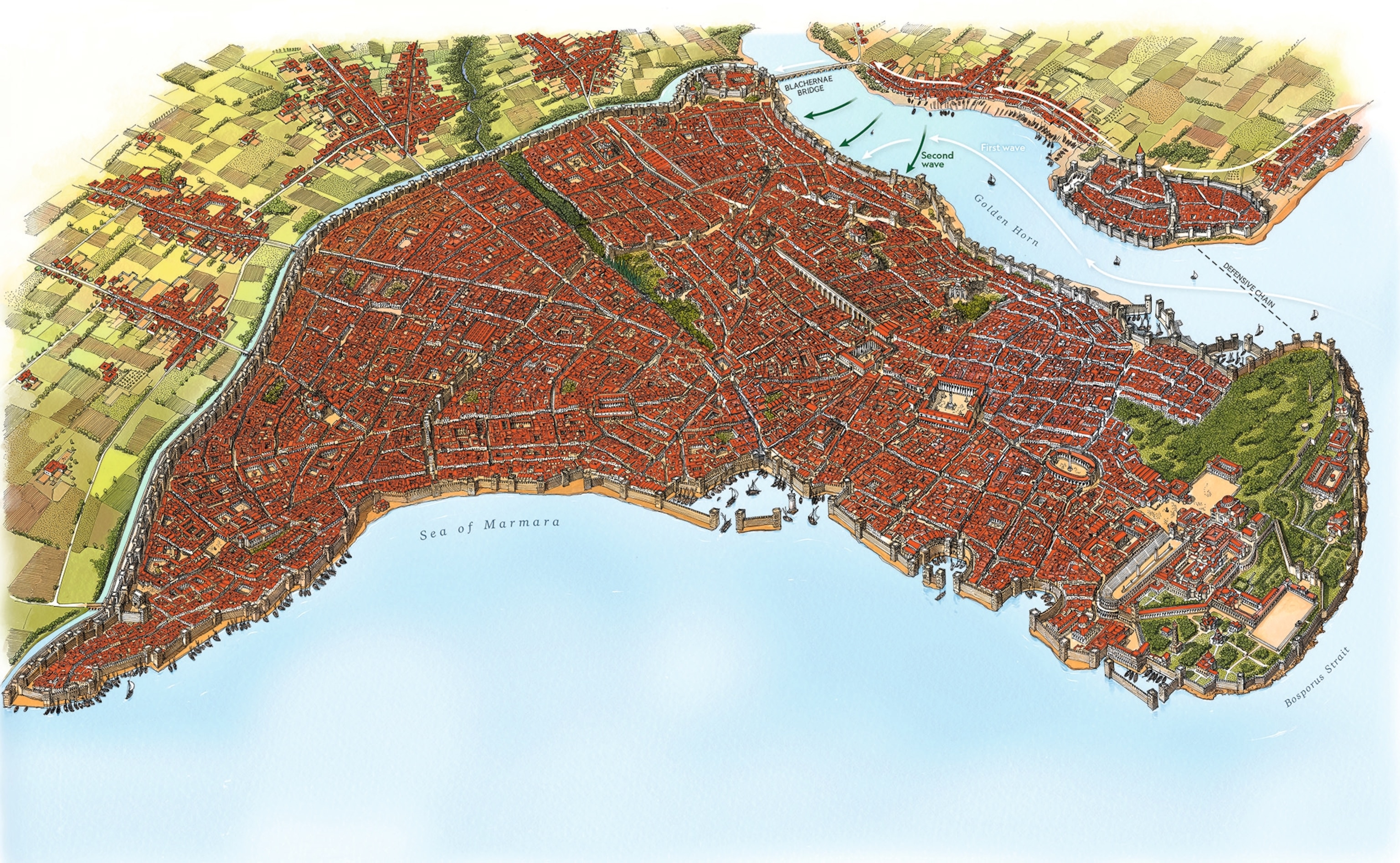
The Crusaders arrived in Constantinople at the end of June 1203, taking Isaac’s son Alexius, the would-be emperor, with them. The capital made a profound impression on them, as Geoffrey of Villehardouin writes: “They never thought there could be in all the world so rich a city; and they marked the high walls and strong towers that enclosed it round about, and the rich palaces, and mighty churches—of which there were so many that no one would have believed it who had not seen it with his eyes—and the height and the length of that city which above all others was sovereign ... no man there was of such hardihood but his flesh trembled.” In July, the Crusaders besieged and attacked the magnificent city. The Venetians managed to breach the walls and Alexius III fled in terror. In early August 1203 they crowned Alexius IV as co-emperor alongside his father Isaac II.
Victorious assault
A few months later, in February 1204, Alexius Ducas, the son-in-law of deposed emperor Alexius III, succeeded in imprisoning Alexius IV and taking the imperial throne as Alexius V, nicknamed Mourtzouphlus for his bushy brows. Alexius V had already stirred up opposition to westerners in general, and railed against Alexius IV for the debts he incurred to the Crusaders and their pact to bring the Orthodox empire under the control of Catholic Rome.

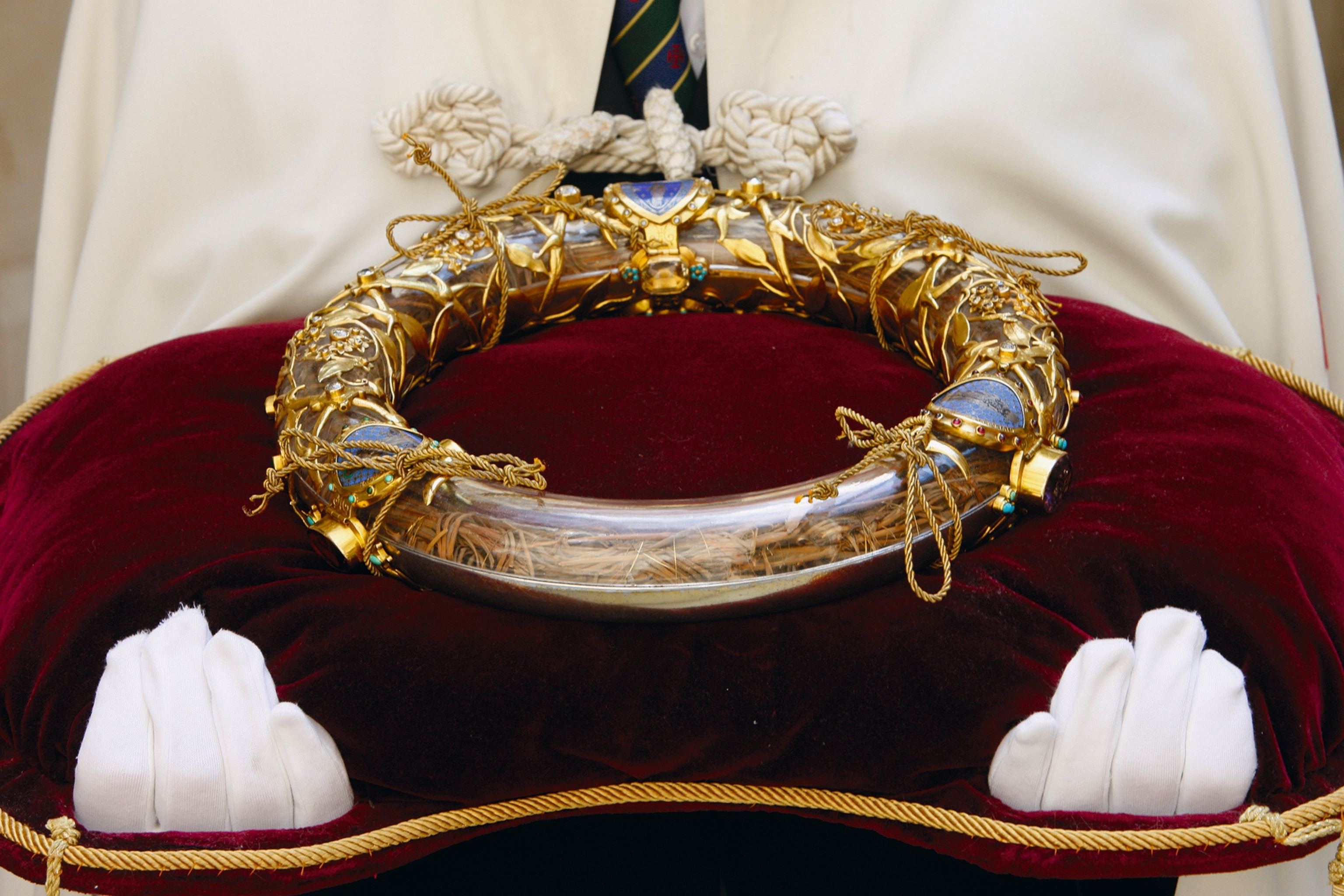
Now, with Alexius IV imprisoned by Alexius V, the Crusaders were left weak and without the funds they had been counting on. They began to have supply problems too, as Alexius V closed the markets of Constantinople to the Crusaders. Alexius V organized an army to attack their forces. The patriarch of Constantinople accompanied the emperor’s troops, carrying with him an icon of the Virgin Mary and other revered relics.
Although the surprise attack shook the Crusaders at first, they recovered, attacked the patriarch, and seized the sacred relics from him. Alexius V and his men were thrown into disarray and fled, abandoning the imperial standard, which, together with the loss of the relics, was a tremendous humiliation. In his eyewitness account, French knight and chronicler Robert of Clari describes the impact on the Byzantine troops: “They have so great faith in this icon that they fully believe that no one who carries it in battle can be defeated, and we believe that it was because [Mourtzouphlus (Alexius V)] had no right to carry it, that he was defeated.”
The incident left Alexius humiliated in front of his own people. After various unsuccessful attacks, he tried to negotiate with Dandolo, the wily Venetian doge, but could not reach a deal. War now seemed inevitable. Alexius still felt threatened by the young Alexius IV whom he’d usurped and imprisoned, but who had the support of the Crusaders. So Alexius V had Alexius IV assassinated, at which point chaos engulfed Constantinople. With Alexius IV’s death, the crusaders had lost their only Byzantine ally as well as the funds he’d promised them. They saw no choice but to take the city by force, and in early April 1204 they prepared to storm the mighty walls of Constantinople.
Flying bridges
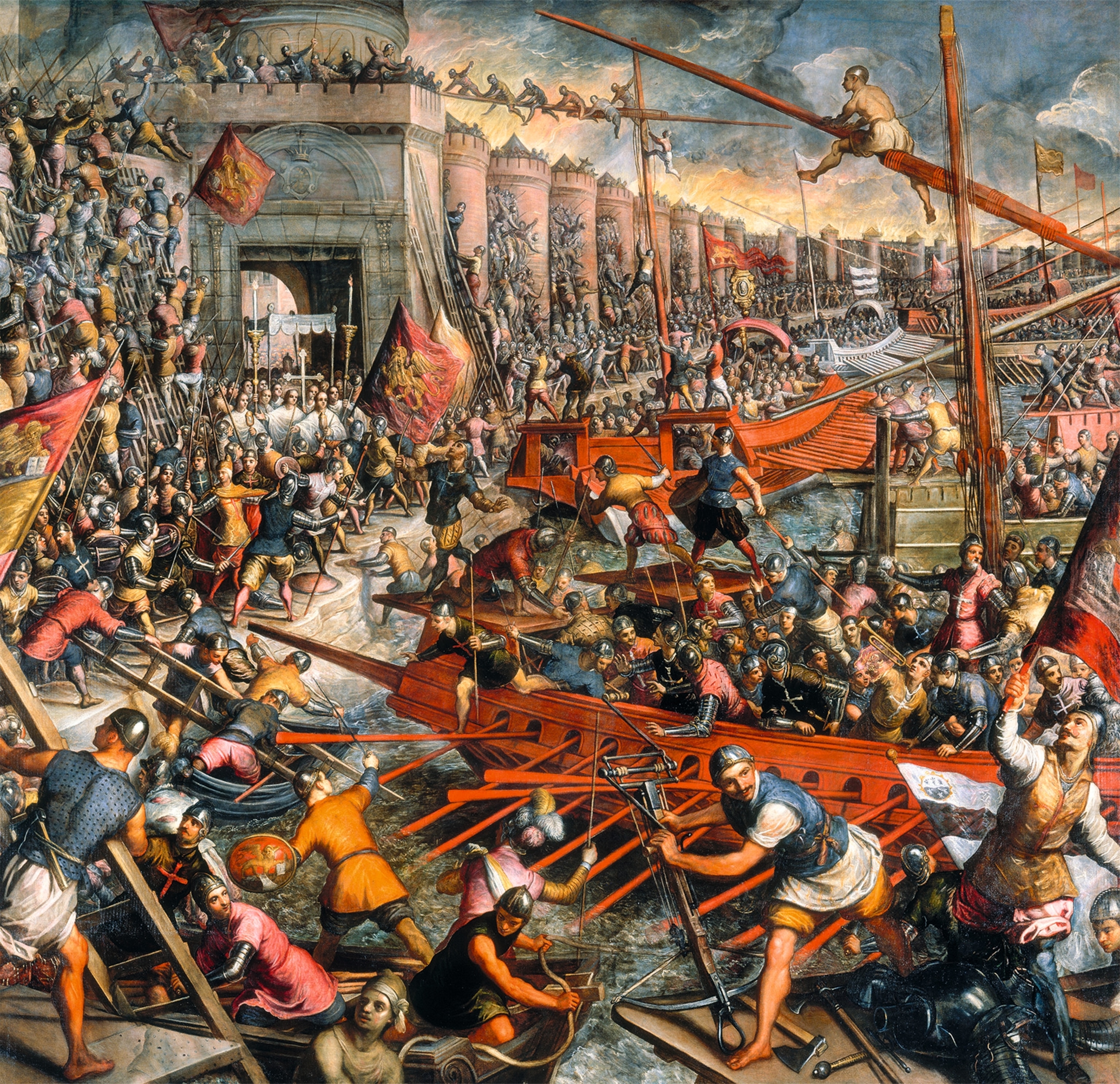
The Venetians armed and garrisoned their ships for the attack by sea, equipping them with petraries (stone-slinging siege engines) and covering them with skins soaked in vinegar to prevent them from catching fire. Atop the masts they installed “flying bridges” to help the soldiers reach the top of the city walls. The French crusaders focused on the land offensive, preparing their own war engines and amassing the tools and weapons needed for sappers—combat engineers—to open a breach in the ground defenses.
On the other side of the wall, the Byzantine armies were also preparing to fight. They reinforced their defenses and installed war machines and wooden towers on top of the city’s stone towers to gain height and firepower.
The western forces had already agreed that if the attack was successful, they would gather all the booty in one place and distribute it from there. The Venetians would receive three quarters, and the French would get what was left. In this way the Crusaders planned to settle their debts with Venice. They had also decided how they would go about appointing a Western emperor to rule the Byzantine Empire: he would be elected by six Venetians and six Frenchmen.

The attack began in the early hours of April 9, and at first the Byzantines managed to repel their assailants. But fortunes changed on April 12. A sudden favorable wind enabled one of the Crusaders’ double ships—two ships conjoined to increase range and power—to maneuver into position next to a tower in the city wall, which they began to attack. Meanwhile, the ship of Lord Peter of Amiens moved into position alongside another tower. Peter set his men to work on one of its side gates, which was walled up with bricks. They managed to open a small breach, large enough for only one person to squeeze through at a time. The defenders launched a rain of projectiles against the Crusaders: stones, boiled fish, and incendiary devices. According to Robert of Clari, it was his own brother, a clerk called Aleaumes of Clari, who, fired up with religious zeal and undaunted by the danger, squeezed through the hole first, sword in hand.
The defenders, shocked at this miraculous breach, fled in terror, followed by Alexius V, who escaped in a fishing boat but was later captured by Crusaders and killed. The Constantinople elite quickly elected a new emperor, but he also fled. Then, in a last ditch attempt to prevent their city from being sacked, a delegation of church officials went to offer the surrender of the city. The Crusaders accepted but sacked the city anyway.
(The Children's Crusade set out for the Holy Land in 1212. It never arrived.)
No mercy
Onslaught and vengeance
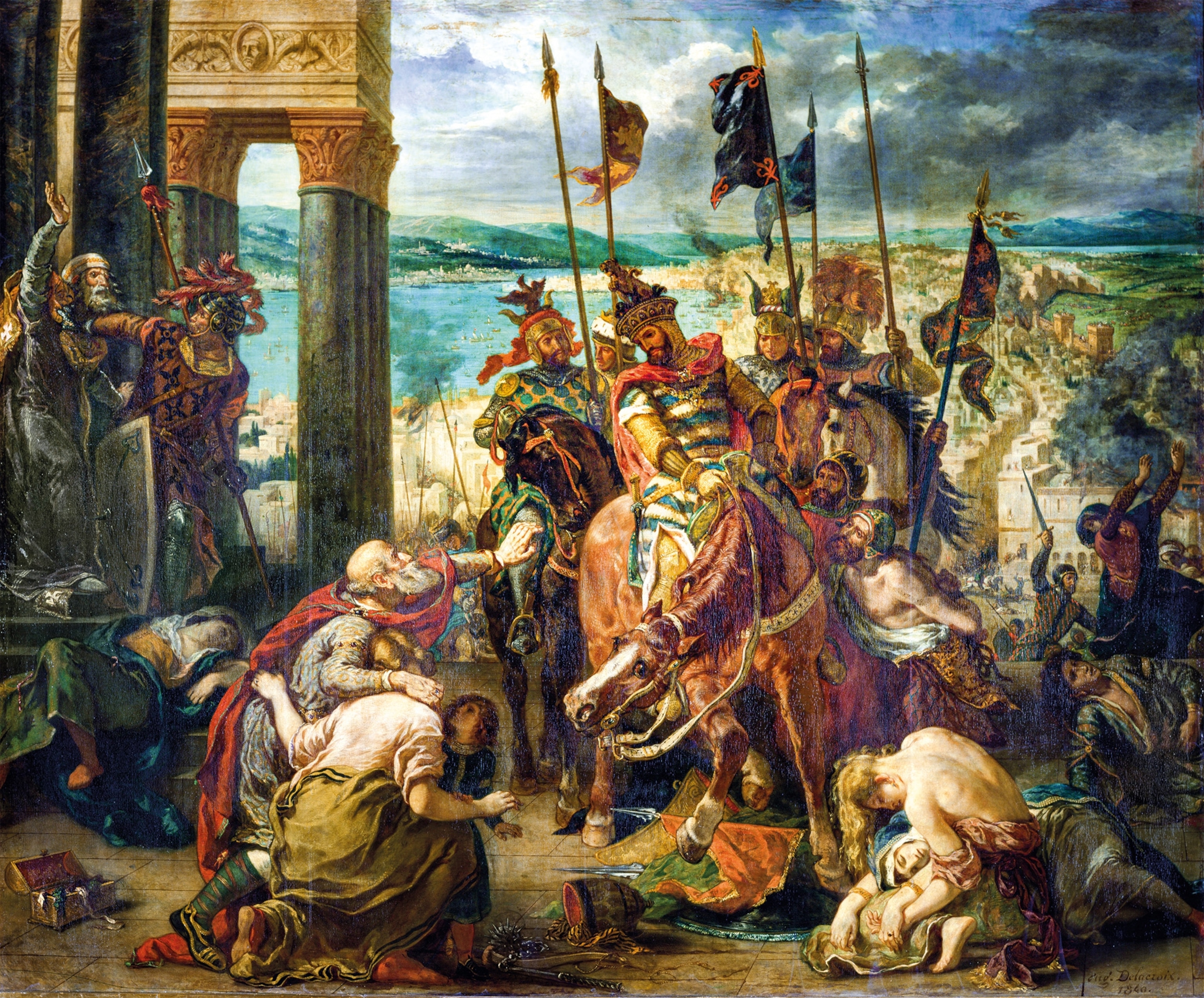
Villehardouin relays what happened after the Crusaders entered the city: “Then followed a scene of massacre and pillage. On every hand the Greeks were cut down ... So great was the number of killed and wounded that no man could count them.” Before the conquest, the Crusaders had sworn not to kill, rape, or loot churches, but from April 13 these pledges were disregarded. The Crusader chroniclers omitted the mayhem, but the Byzantine historian Nicetas Choniates did not hold back. The Crusaders were “nefarious men,” acting as “precursors of Anti-Christ, authors and heralds of his nefarious deeds which we momentarily expect.”
A capital collapses
The richly endowed churches became a key target for the looters. Nicholas Mesarites, another Byzantine chronicler, describes the plunder of “war-maddened swordsmen, breathing murder, iron-clad, and spear-bearing, sword bearers and lance bearers, bowmen, horsemen, boasting dreadfully, baying like Cerberus
and breathing like Charon, pillaging the holy places, trampling on divine things, running riot over holy things, casting down to the floor the holy images (on walls or on panels) of Christ and His holy Mother and the holy men who from eternity have been pleasing to the Lord God.”

The looting went on for days, accompanied by murder, rape, and kidnappings for ransom. As Mesarites recounts: “Lamentation, moan and woe were everywhere ... They slaughtered the new-born, killed prudent [matrons], stripped elder women and outraged old ladies; they tortured the monks,they hit them with their fists and kicked their bellies, thrashing and rending their reverend bodies with whips. Mortal blood was spilled on the holy altars, and on each, in place of the Lamb of God sacrificed for the salvation of the universe, many were dragged like sheep and beheaded.”
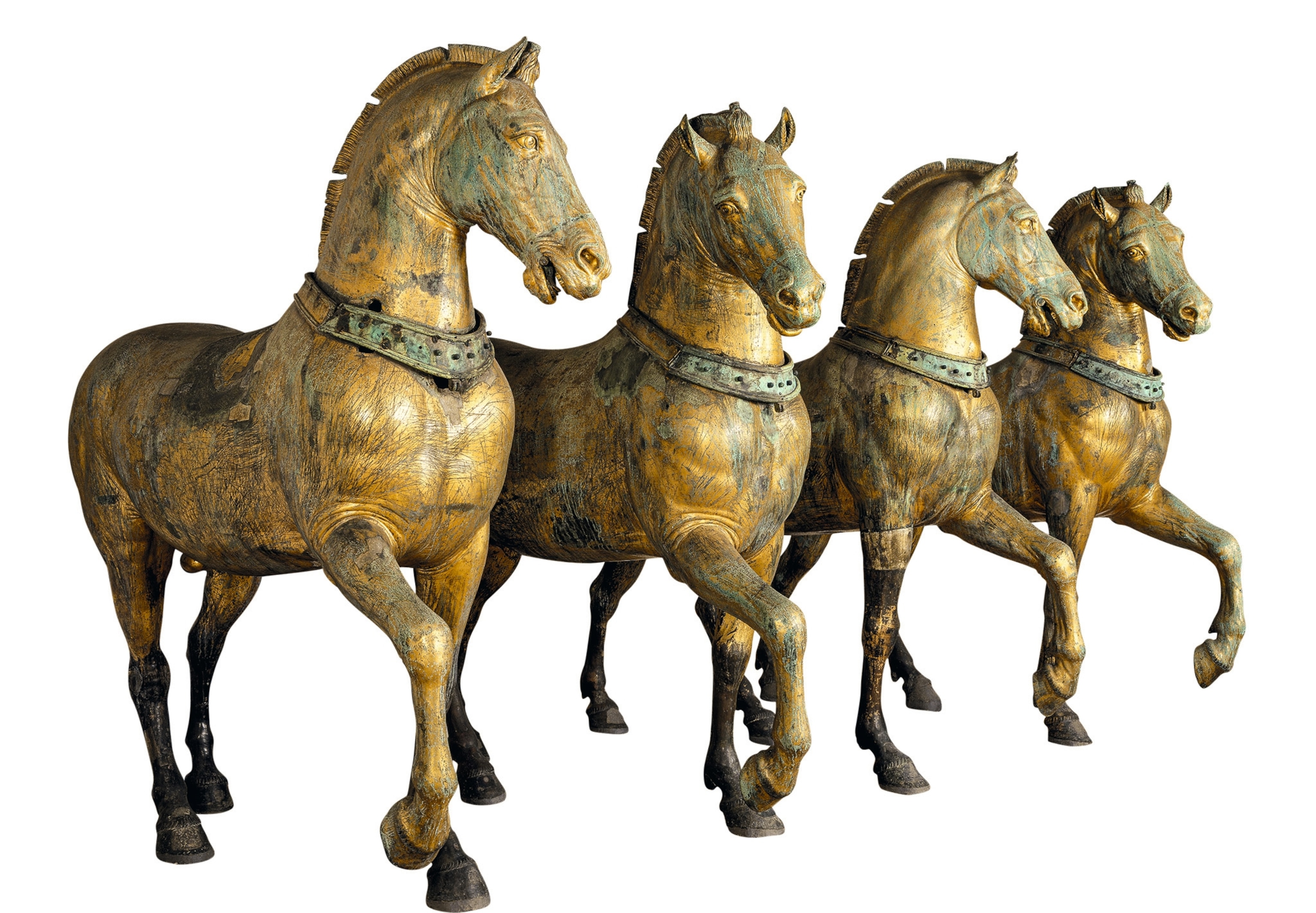
The Hagia Sophia was plundered, stripped of ornaments, liturgical objects, altars, precious vestments, and anything made of silver or gold. Another sacred building voraciously sacked was the Monastery of Christ Pantokrator in the center of the city, where treasures from surrounding monasteries had been brought in a bid to keep them safe from the Crusaders. Western bishops and clerics joined in the plundering and later took back treasures and relics to their dioceses.
Doge of vengeance
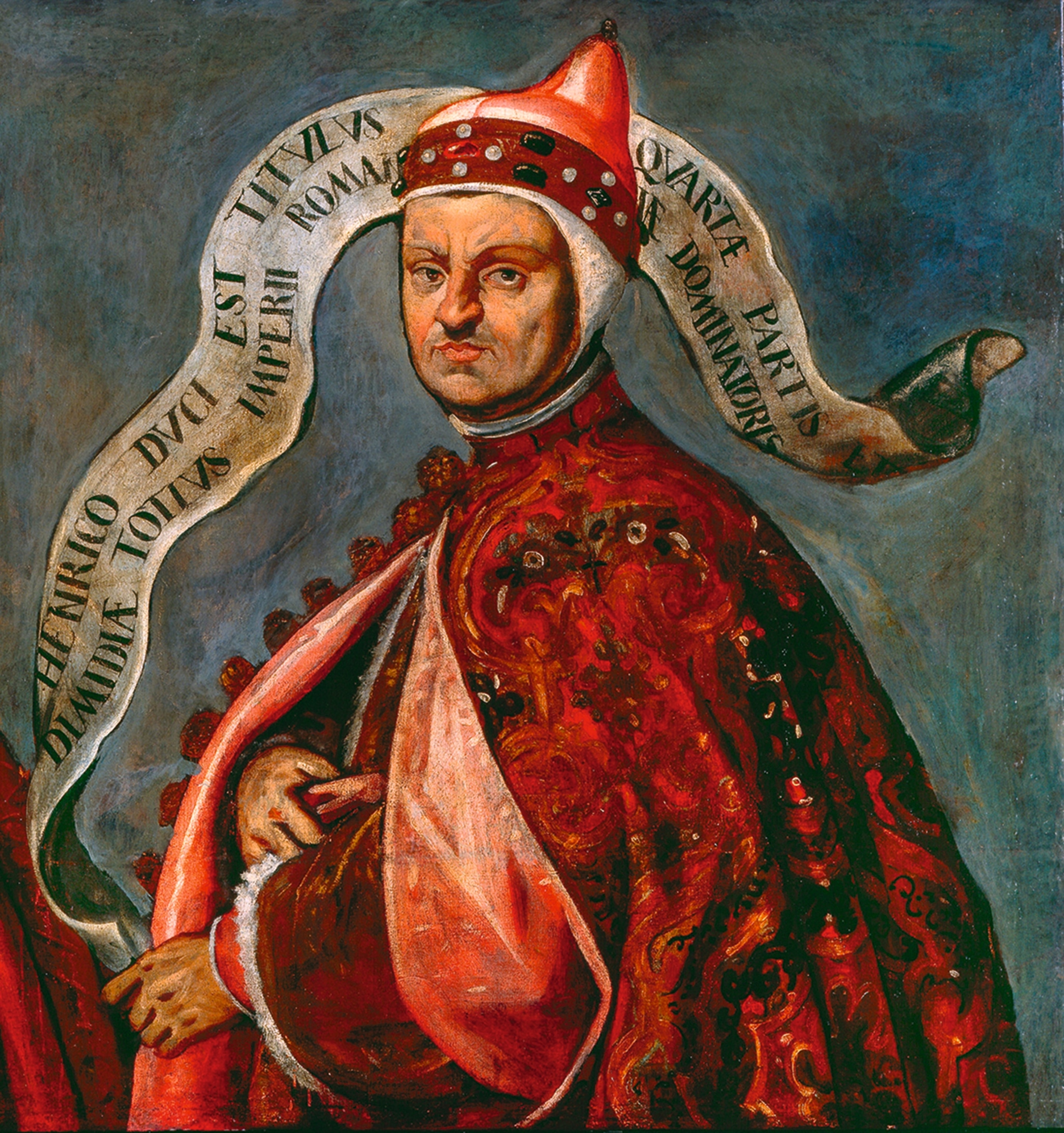
The Crusaders had already agreed to bring all the spoils to one church in the city, and having amassed it all there, they were astonished at the haul. Robert of Clari wrote: “Not since the world was made, was there ever seen or won so great a treasure or so noble or so rich, not in the time of Alexander nor in the time of Charlemagne nor before nor after.” The Venetians collected the 150,000 marks from what had been promised by Alexius IV, and the French leaders took 50,000. There was a need to appoint a new emperor, preferably one of the leaders from the Crusade. The support of Enrico Dandolo tipped the balance in favor of the count of Flanders, who, in May, was crowned Emperor Baldwin I. The Latin Empire of Constantinople was born, and would last until 1261.
Venetian booty